Content developed with the assistance of AI tools and reviewed by the author.
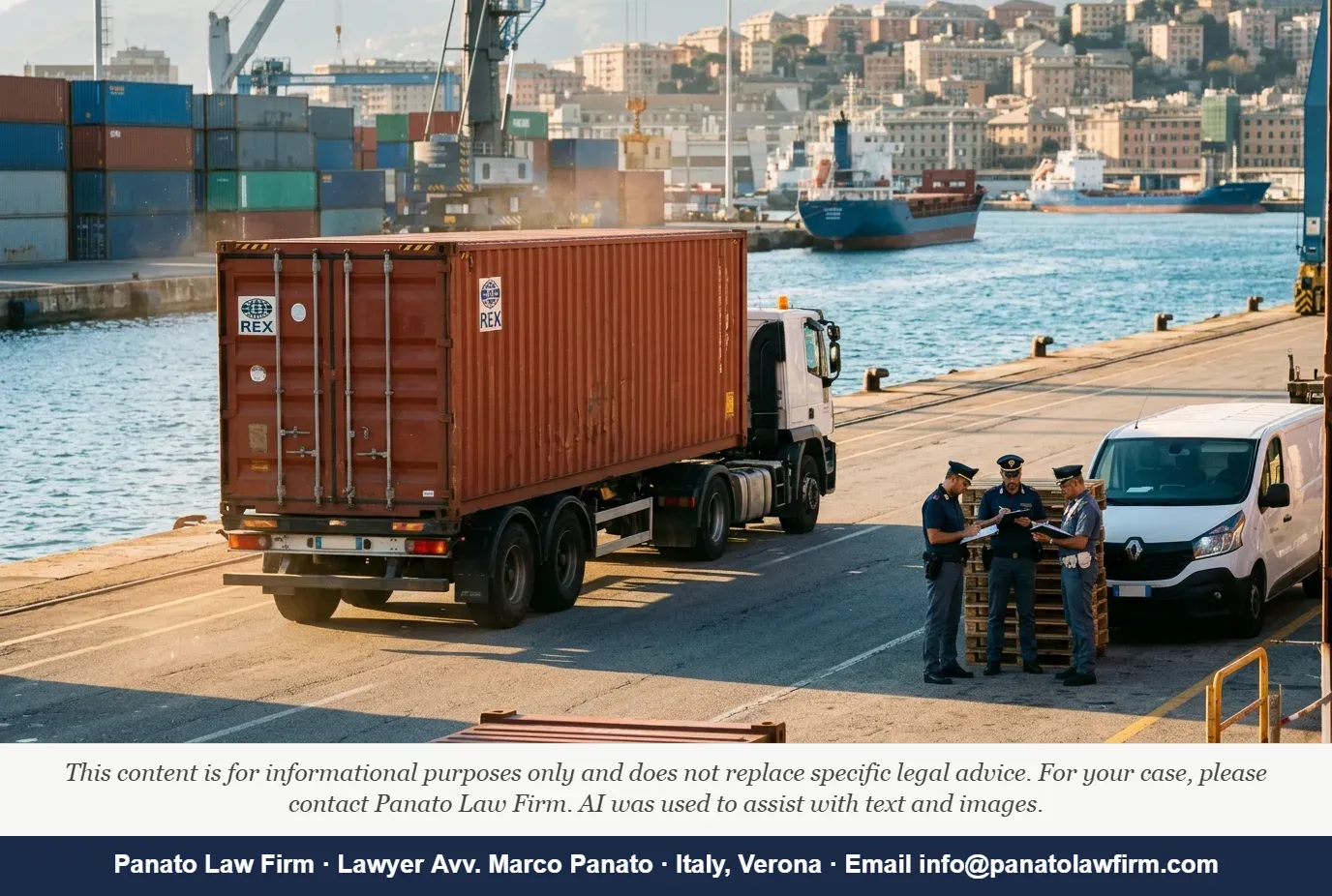
What Brazilian exporters must add to Italian import contracts before the next shipment leaves port
The contract your Italian buyer sent you looks standard. It says CIF Genova, references Incoterms 2020, and is silent on origin documentation. Sign it as written, and you will have just agreed to ship under the EU-Mercosur framework without allocating the single biggest commercial risk it creates: what happens if Genoa customs rejects your preferential-origin declaration and your buyer deducts the tariff shortfall from your invoice?
That situation is not hypothetical. It is the clause-level consequence of a political deal that most trade commentators have described only in headline terms.
Yes — but with a precise qualification that changes everything downstream.
The EU-Mercosur Interim Trade Agreement (iTA) entered provisional application on 1 May 2026. The EU Council adopted its decision in January 2026. The four Mercosur states — Brazil, Argentina, Uruguay and Paraguay — completed their ratification procedures on 17 March 2026. As of today, phased reductions of EU import duties on qualifying Brazilian goods are legally operative in Italy.
The qualification is this: provisional application covers only the trade and customs chapters of the broader EU-Mercosur Association Agreement (the Acordo de Associação). The full instrument — the Euro-Mercosur Partnership Agreement (EMPA), which includes investment protection and political dialogue — requires the consent of the European Parliament and ratification by all EU Member States. The European Parliament voted in January 2026 by 334 votes to 324 to refer the EMPA to the Court of Justice of the European Union for an opinion on compatibility with EU primary law. Until that opinion is issued, full entry into force of the EMPA remains suspended. Readers should check the CJEU docket against the date of publication for the latest procedural status.
This distinction matters contractually. An Italian court assessing a tariff dispute under a supply contract would apply the iTA framework as currently operative. But split into two sentences; the nested qualification is Italian periodic-sentence rhythm — would render any contractual clause built on an assumed preferential rate inoperative without notice.
Under the EU Customs Code, Regulation (EU) 952/2013 of the European Parliament and of the Council, preferential origin must be proved by one of two instruments: a movement certificate EUR.1, issued by the competent Brazilian authority (the Secretaria da Receita Federal, or by an authorised body, depending on the product sector involved), or a statement on origin made on / appearing on the commercial invoice by a Registered Exporter — known as a REX exporter — whose REX number is listed in the European Commission's REX database.
REX registration is mandatory for shipments above EUR 6,000. Below that threshold, any Brazilian exporter may self-certify. For the overwhelming majority of commercial shipments between Brazil and Italy, REX registration is therefore not optional. Your Brazilian trade counsel will confirm the procedural steps for REX registration with the Receita Federal and the timeline — typically several weeks from application to database publication.
The Italian Customs Agency (Agenzia delle Dogane e dei Monopoli, known as ADM) applies the EU Customs Code directly, with no separate Italian legislation imposing / adding further requirements for origin certification. ADM circulars issued in 2026 on the iTA have confirmed this. What ADM does apply strictly is post-clearance verification: under Art. 64 of the Italian Customs Code (Testo Unico delle Disposizioni Legislative in Materia Doganale, Presidential Decree No. 43/1973), and the parallel mechanism in Art. 48 of Regulation (EU) 952/2013, ADM may request verification of an origin declaration from the Brazilian issuing authority for up to three years after importation. If the verification fails, the importer owes the full most-favoured-nation duty, plus interest, plus penalties.
Under Italian customs enforcement practice, the importer of record — almost always the Italian buyer — is the legally liable party before ADM. But the commercial loss falls on the Brazilian exporter to the extent the contract so provides — or by default where it is silent.
Nemo dat quod non habet — no one gives what they do not have. A Brazilian exporter cannot transfer a preferential tariff rate they have not properly documented; they can only transfer the risk of the shortfall if the contract says so.
Most Italian CIF or DAP supply contracts in use today were drafted before 1 May 2026 and contain no provision specific to EU-Mercosur preferential origin. A contract silent on this point leaves three questions unanswered, each of which has a predictable answer under Italian law — and none of them favours the Brazilian exporter.
First, who bears the cost of obtaining and presenting proof of preferential origin? Under the Italian Civil Code (codice civile), the seller's obligation is to deliver goods free of defects in title, including customs classification defects. Italian case law has treated a mis-declared tariff classification as a breach of the conformity obligation under Arts. 1476 and 1490 of the Italian Civil Code. An Italian court would likely apply the same logic to a failed preferential origin declaration: the goods did not arrive with the tariff advantage the parties assumed. The financial consequence, a post-clearance duty recovery by ADM, would land on the Italian buyer, who would then have a damages claim against the Brazilian supplier under the general contractual liability rules of Art. 1218 of the Italian Civil Code.
Second, what happens during a suspension gap? The CJEU referral does not automatically suspend the iTA. But EU law provides a mechanism by which provisional application can be terminated. If the EU Council were to suspend or withdraw provisional application — even temporarily — a shipment that left Brazil before suspension and arrives at Genoa after it would face full most-favoured-nation duties. A contract that builds a price on the preferential rate, without a clause explicitly addressing this risk, creates an immediate dispute about price adjustment. Unlike in most common-law jurisdictions, Italian contract law does not have a freestanding doctrine of frustration that automatically dissolves a contract when circumstances change. The Italian Civil Code provides instead the doctrine of eccessiva onerosità sopravvenuta (supervening excessive burden, Arts. 1467–1469), which allows a party to seek judicial termination or renegotiation — but only after commencing proceedings, and only if the supervening event was unforeseeable and extraordinary. A CJEU referral that was publicly voted on in January 2026 is neither. A Brazilian exporter who does not include an express suspension clause will face a price dispute they cannot resolve by invoking Italian contract doctrine.
Third, who signs off on the REX declaration? The exporter. Personally. Art. 19(2) of Delegated Regulation (EU) 2015/2446 makes the registered exporter personally responsible for the accuracy of the statement on origin. If ADM finds the declaration incorrect, the Italian buyer recovers the duty from the exporter under the contract. If the contract is silent, the buyer's lawyers will draft the demand letter for them.
The clauses that address these three gaps are not complex. They run to four or five sentences. They name the party responsible for REX registration, allocate the post-clearance risk, provide a price-adjustment mechanism tied to a published EU Council act suspending provisional application, and impose a warranty that the goods meet the product-specific rules of origin set out in the iTA Annex. No Italian court will find such clauses unusual or unenforceable.
A shipment in transit is not automatically protected by the date of departure. EU customs law applies at the time of release for free circulation in Italy — the moment goods clear ADM's control. If the iTA is suspended between loading in Santos and berthing in Genoa, the goods clear at the full most-favoured-nation rate.
The commercial solution is a price-review clause tied to a specific trigger: an EU Council implementing act or Commission notice published in the Official Journal of the European Union suspending provisional application of the iTA. The clause should specify a deadline for the Italian buyer to notify the Brazilian exporter of changed customs clearance costs, an adjustment formula (typically the difference between the preferential rate and the applicable MFN rate on the HS code of the goods), and a cap or shared-risk arrangement above a defined threshold.
Without this clause, the dispute resolution provision of the contract — which in most Italian commercial contracts designates Italian courts or the Chamber of Arbitration of Milan or Verona — will govern a price claim that could not be anticipated and cannot be resolved cleanly under Italian contract doctrine alone.
An indemnity and notification clause works as follows. The Brazilian exporter warrants, as a condition of payment, that the goods satisfy the product-specific rules of origin under the iTA. The Italian buyer undertakes to notify the exporter within 30 days of any ADM post-clearance demand. The exporter has the right to contest the demand through the buyer at its own cost, within the 60-day administrative appeal period provided under Italian customs law (Art. 66 of the Italian Customs Code and the general administrative appeal rules of Legislative Decree No. 374/1990). The exporter's liability for duties arising from an incorrect origin declaration is capped at the duty differential, not extended to consequential losses of the Italian buyer such as delayed onward sales.
This structure matters because ADM post-clearance proceedings move slowly — sometimes two to three years after importation — and a Brazilian exporter who is not notified promptly cannot contest the factual basis of the verification result.
In our files, the most common drafting error we see when reviewing Italian import contracts submitted by Brazilian suppliers is the use of a standard force majeure clause to address tariff risk. Force majeure under Art. 1256 of the Italian Civil Code applies to performance becoming objectively impossible. A change in customs duty does not make delivery impossible; it makes it more expensive. Italian courts will not apply force majeure to a cost increase, however large. The suspension clause and price-review mechanism must be drafted separately and specifically. A generic causa di forza maggiore provision will not save a Brazilian exporter from a post-clearance duty demand.
Can a Brazilian exporter use a EUR.1 certificate or must they register as a REX exporter?
For shipments above EUR 6,000 — the threshold that covers virtually all commercial consignments — only a REX statement on origin is accepted under the EU-Mercosur iTA framework. EUR.1 certificates are no longer the standard instrument for preferential origin proof in EU preferential trade agreements under the current EU Customs Code framework. Your Brazilian trade counsel will confirm REX registration steps with the Receita Federal.
Does provisional application mean the preferential tariff rate is guaranteed for the life of my contract?
No. Provisional application can be terminated by an EU Council decision. The CJEU referral voted by the European Parliament in January 2026 does not suspend the iTA automatically, but it introduces legal uncertainty that a multi-year supply contract must address contractually. The full entry into force date of the EMPA is to be verified at the date of publication.
If ADM rejects the origin declaration, who pays the duty — my Italian buyer or me?
Before ADM, the Italian importer of record pays. Whether that cost is recovered from the Brazilian exporter depends entirely on what the supply contract says. A contract silent on origin warranties and post-clearance liability will be interpreted under Arts. 1476 and 1490 of the Italian Civil Code, which treat a failed origin declaration as a potential breach of the seller's delivery obligation. Draft the warranty and notification clause before the first shipment, not after the first demand letter.
HREFLANG BLOCK:

Editorial Team — Panato Law Firm Staff