Content developed with the assistance of AI tools and reviewed by the author.
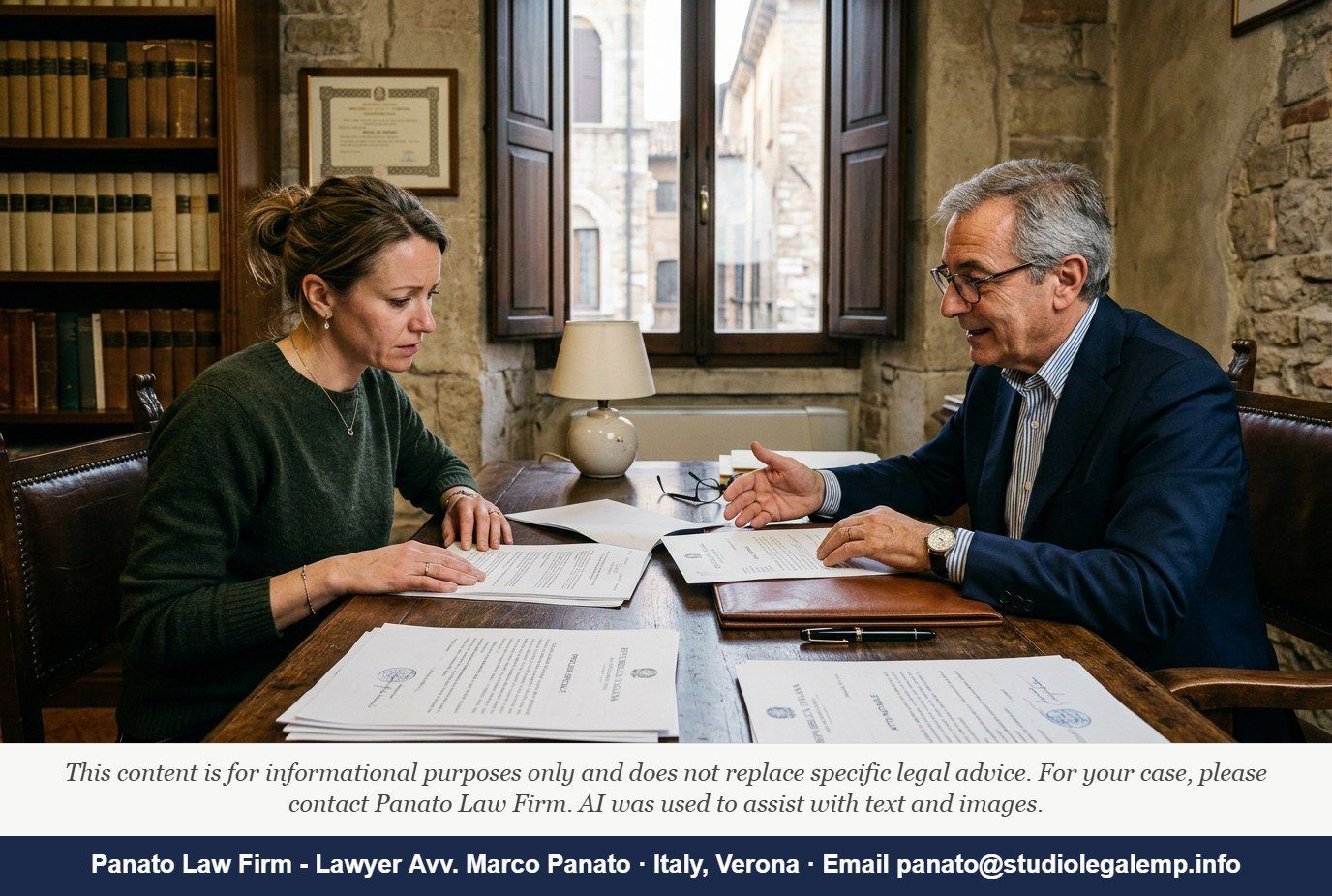
Parents abroad who want to transfer an Italian flat or a sum to their children often think of a simple private agreement. For gifts, Italian law requires more.
A gift must be made by public deed, on pain of nullity (art. 782 c.c.). Notarial law also requires, for gifts, the presence of two witnesses.
Gifts of modest value of movable goods can be valid by delivery, depending on the economic situation of the donor (art. 783 c.c.). Lifetime gifts count when calculating the reserved shares of heirs.
At a glance
What to do
Legal basis: Arts. 769, 782 and 783 Italian Civil Code; art. 48 Law 89/1913.
This note is general information and does not replace advice on a specific case.

Avv. Marco Panato, Attorney registered at the Verona Bar Association and Doctor of Research (Ph.D.) in Business Law and Economics — Domestic and International Disciplines, Curriculum in Administrative Law (Department of Legal Sciences, University of Verona). Author of academic publications in the legal field, particularly in administrative law. He also delivers lectures and advanced professional training.