What Australian in-house counsel must know before signing an ICC clause with an Italian counterparty — and what changed on 1 June 2026
LANG: English (en) · AREA: International Arbitration · TYPE: Term explained (glossary entry) · MODEL: Sonnet 5 · SEO 74/100 · Flesch Reading Ease 39 · QA acceptable
ABSTRACT: The revised ICC Arbitration Rules entered into force on 1 June 2026, introducing emergency ex parte preliminary orders and an ultra-expedited three-month procedure. For Australian in-house counsel with Italian counterparties, these changes land on top of Italy's modernised arbitration code — a framework that works differently from Australia's International Arbitration Act 1974 in ways that are rarely explained. This glossary maps the key terms and procedural choices so you can brief external counsel accurately, draft a clause that works, and know what to expect if a dispute arises.
An Italian manufacturer commenced an ICC arbitration seated in Milan in early 2025. Its opponent, an Australian distributor, sought urgent injunctive relief from the Italian courts under Article 700 of the Italian Code of Civil Procedure (
Codice di Procedura Civile, CPC) while the arbitral tribunal was being constituted. The court granted a provisional measure. The distributor then asked whether the new ICC emergency arbitrator mechanism would have been faster, cheaper, and equally enforceable. Under the rules in force at the time, an ex parte preliminary order from an emergency arbitrator was not available. As of 1 June 2026, it is.
That episode captures the practical question facing every Australian in-house counsel today: the procedural landscape for Italy-seated ICC arbitrations has shifted, and the shift requires a deliberate choice at the drafting stage, not an improvised response in the middle of a dispute.
Italy's Arbitration Framework: The Monistic Model Australian Lawyers Do Not ExpectBefore the glossary entries, one structural point. Australia draws a clear line between domestic arbitration (governed by state Commercial Arbitration Acts) and international arbitration (governed by the International Arbitration Act 1974, which incorporates the UNCITRAL Model Law). Italian law does not. Arts. 806–840 of the CPC, as amended by Legislative Decree No. 150/2022 — the so-called Cartabia Reform — apply a single, unified regime to all arbitrations seated in Italy, regardless of the parties' nationalities and whether the contract is domestic or cross-border. Lawyers call this a
sistema monistico, a monistic model.
The practical consequence is straightforward: an Italian-seated ICC arbitration is not treated as "international arbitration" under a separate statute. It is Italian arbitration, period (US/AU) or full stop kept only for UK/AU audience. The parties gain the flexibility of the ICC Rules but operate inside the Italian procedural envelope. That envelope includes Art. 818 CPC, which — after the Cartabia Reform — expressly authorises arbitrators to order interim relief where the arbitration agreement or the applicable institutional rules confer such a power. The 2026 ICC Rules do confer that power. The two instruments therefore interlock, but not seamlessly.
Arbitrum nisi ex compromisso non sumitur — arbitration arises only from an agreement to arbitrate. The maxim, drawn from Roman procedural tradition, reminds counsel that every power an Italian-seated arbitral tribunal exercises, including interim relief, must trace back to an express written agreement. A poorly drafted clause may deprive the tribunal of jurisdiction at the outset.
As the novelist and barrister John Mortimer once wrote of the law, "the most important things are never said plainly." In Italian arbitration practice, they are certainly never implied.
What Does an ICC Arbitration Clause in an Italian Contract Actually Mean for Enforcement?An ICC clause designating Milan, Rome or any other Italian city as the seat submits the arbitration to Arts. 806–840 CPC for procedural purposes and to the ICC Rules for institutional administration. The seat determines: which court supervises the arbitration (the
Corte d'Appello, the Court of Appeal, of the seat city); how awards are deposited and made enforceable; and which national court a party approaches if the arbitration breaks down.
Enforcement of the award in Italy follows Art. 825 CPC for domestic awards (a deposit procedure before the Court of Appeal, typically taking two to four months in practice). If the award needs to be enforced outside Italy — say, against assets in Australia — it will be recognised and enforced as a foreign award under the New York Convention on the Recognition and Enforcement of Foreign Arbitral Awards 1958, to which both Italy and Australia are parties.
One point Australian counsel tend to overlook: once an ICC clause is triggered and the arbitration is formally commenced, Italian courts will generally decline jurisdiction over the merits. An anti-suit injunction — an order from an Australian court restraining a party from pursuing parallel proceedings — is theoretically available in Australia under the International Arbitration Act 1974. But Italian courts do not issue the equivalent. If your Italian counterparty commences court proceedings in Italy in breach of the arbitration clause, the remedy is a
eccezione compromissoria, a jurisdictional objection raised before the Italian court, [text truncated — sentence left incomplete]sary, with an ICC emergency arbitrator order. An Australian anti-suit injunction will not bind an Italian tribunal.
Can I Get an Emergency Interim Order Against an Italian Company Under the New ICC 2026 Rules?Yes — but the mechanism and its limits deserve precise understanding.
The 2026 ICC Rules (effective 1 June 2026) introduce, for the first time, an emergency arbitrator's power to issue an ex parte preliminary order: a binding instruction issued without notice to the other party, valid for a defined short period pending a full inter partes emergency hearing. This is new. Under the previous rules, emergency arbitrators could only act after notifying the respondent.
An Australian company facing an Italian counterparty that is, for example, dissipating assets or about to transfer intellectual property can now apply to the ICC Court for an emergency arbitrator before the main tribunal is constituted. The ICC must appoint the emergency arbitrator within two business days of the application. The emergency arbitrator may then issue the ex parte order immediately and convene a full hearing within a very short window — typically five to seven days.
The interaction with Italian procedural law is critical. Art. 818 CPC, post-Cartabia, allows the arbitral tribunal (and, by extension, the emergency arbitrator) to grant interim relief. But the enforcement of an emergency arbitrator's order in Italy is not automatic. It requires a separate application to the competent Court of Appeal under Art. 818, para. 4 CPC for an
exequatur — a judicial recognition step. This adds days or weeks. It means the ex parte emergency order does not self-execute the moment it is issued.
The alternative remains Art. 700 CPC — the Italian court's general power to grant urgent measures where there is a risk of serious and irreparable harm. An Art. 700 application can in practice be heard within 48 hours in urgent cases and produces an enforceable court order immediately. The trade-off: an Art. 700 measure may not be available once the arbitral tribunal is formally constituted, and it is not controlled by the ICC process.
In our files, the most common mistake is choosing the Art. 700 route without first verifying whether the Italian court has accepted jurisdiction alongside the arbitration — Italian courts are increasingly strict about declining to hear parallel applications once arbitral proceedings are formally on foot.
What Is the Difference Between ICC and CAM Arbitration for Italy-Based Disputes?CAM, the
Camera Arbitrale di Milano, is the Chamber of Arbitration of Milan, Italy's leading domestic arbitration institution. It is not the ICC. But it is increasingly relevant.
For disputes that are Italy-centric — a supply contract governed by Italian law, a joint venture between an Australian group and an Italian partner, a real estate development — CAM offers several practical advantages. Its arbitrators are predominantly Italian-law practitioners, which matters when the substantive law requires deep knowledge of the Italian Civil Code (
codice civile). Its costs are generally lower than ICC costs for mid-size disputes: approximate filing fees for a €1 million claim run to around €7,000–€9,000 at CAM, compared to ICC advance fees that can reach €35,000–€45,000 at the same claim value (both figures approximate; verify at the current schedule before committing). Proceedings and awards are in Italian as default, though CAM rules permit English.
The 2026 ICC Rules introduced an ultra-expedited procedure: a document-only process targeting an award within approximately three months, available where the amount in dispute does not exceed a threshold set in the rules (the specific threshold should be confirmed in the current ICC Rules at the time of drafting). CAM has operated a fast-track procedure for some years. If speed is the priority for a lower-value Italian dispute, a side-by-side comparison of both institutions' expedited procedures with local counsel is worth the hour it takes.
For a dispute that may require enforcement in multiple jurisdictions — Australia, Europe, Asia — ICC's global recognition makes it the stronger choice. For a dispute likely to remain within Italy, CAM is underrated.
How Long Does an ICC Arbitration Award Take to Enforce in Italy in 2026?Enforcement timelines involve two separate phases, and conflating them causes expensive miscalculations.
Phase one is the arbitration itself. Under standard ICC Rules, the default time limit for a final award is 18 months from the Terms of Reference — though the 2026 rules eliminate mandatory Terms of Reference for small claims, which may shorten the overall timeline for those disputes. In practice, a complex Italy-seated ICC arbitration regularly takes 24–36 months from filing to final award, including any challenge proceedings. The new ultra-expedited procedure targets three months for document-only cases with no oral hearing.
Phase two is enforcement in Italy. A domestic award (an award issued by an Italian-seated tribunal) is made enforceable under Art. 825 CPC by depositing it at the Court of Appeal of the seat city. The court verifies formal regularity only; it does not re-examine the merits. Timing: typically two to four months from deposit, though backlogs at the Courts of Appeal in Rome and Naples can extend this to six months or longer. Once declared enforceable, the award has the effect of a court judgment and can be enforced through attachment of assets (the
pignoramento), which refers to the procedure by which a creditor seizes the debtor's property, bank accounts, or receivables.
The Italian Court of Cassation — Italy's highest civil court, the
Corte di Cassazione — confirmed in Italian Court of Cassation, First Civil Division, judgment no. 22002 of 8 August 2023 (
Cass. civ., Sez. I, sent. 8 agosto 2023 n. 22002) that Italian courts reviewing Art. 825 applications have no power to re-open the arbitral merits. This settled a recurring question about the scope of Italian judicial review of awards. A party unhappy with the award's substance must challenge it under Art. 828 CPC — a separate procedure, subject to strict time limits of 90 days from notification of the award.
For foreign awards (where the seat was outside Italy and enforcement is sought against Italian assets), the New York Convention 1958 applies via Arts. 839–840 CPC. Italian courts have generally been reliable in granting recognition, though enforcement can be contested on public policy grounds — a concept interpreted narrowly by Italian courts since Italian Court of Cassation, United Divisions, judgment no. 38162 of 30 December 2022 (
Cass. civ., Sez. Un., sent. 30 dicembre 2022 n. 38162), which reaffirmed that the Italian public policy defence does not cover ordinary errors of law by an arbitral tribunal.
Drafting the Clause: Three Details the Standard Templates OmitThe ICC's model arbitration clause is a starting point, not a finished product, for Italy-seated disputes.
First, include an express reference to Art. 818 CPC powers. The Cartabia Reform made interim relief by Italian-seated arbitrators available, but only where the agreement or the rules confer that power. The 2026 ICC Rules do confer it, and citing both sources in the clause removes any ambiguity in front of an Italian court.
Second, specify the language. Italian is the default for Italian courts supervising the arbitration; English may need to be expressly chosen for the arbitral proceedings and the award. A bilingual award is possible and often practical.
Third, consider the number of arbitrators. For disputes likely to involve interim relief applications, a sole arbitrator is faster but a three-member tribunal signals financial seriousness and provides appellate-grade deliberation. Italian institutional practice at CAM and in ICC-Italy cases leans toward sole arbitrators for claims below approximately €500,000.
The European Convention on International Commercial Arbitration, done at Geneva on 21 April 1961, applies between Italy and Australia (both contracting states) and provides a supplementary layer of procedural protections for international commercial arbitrations — including rules on arbitrator nationality and challenge — that practitioners rarely consult but that can become relevant when a clause is challenged.
Frequently Asked QuestionsDoes my Australian company need to register a partita IVA in Italy to be a party in an ICC arbitration seated there?No. Being a party to an Italy-seated arbitration does not require an Italian VAT number (partita IVA) or any Italian corporate registration. Those requirements arise from commercial activity in Italy, not from arbitral proceedings. You will, however, need an Italian tax code (codice fiscale) if the award is to be deposited under Art. 825 CPC, since the court filing process in Italy requires it for foreign parties.
Can the new ICC 2026 emergency arbitrator ex parte order be used to freeze an Italian company's bank account?An emergency arbitrator's ex parte preliminary order can in principle cover asset preservation measures, including a bank account freeze. But the order is not self-executing in Italy. It must be presented to the Court of Appeal of the seat for enforcement under Art. 818, para. 4 CPC. In urgent cases, that court step can be requested on an expedited basis, but it adds time. If the urgency is extreme — hours, not days — an Art. 700 CPC application directly to the Italian court may still be faster, provided the court accepts jurisdiction alongside the arbitration.
What happens if the Italian counterparty refuses to participate in the ICC arbitration?The ICC Rules expressly provide for proceedings in absentia. The arbitral tribunal can proceed and issue a valid award even if the Italian party does not appear or respond, provided the party has been properly notified. The award is then enforceable in Italy under Art. 825 CPC or, if obtained abroad, under Arts. 839–840 CPC and the New York Convention 1958. Italian courts have consistently enforced ex parte arbitral awards where procedural regularity — proper notice, opportunity to be heard — was demonstrably observed.
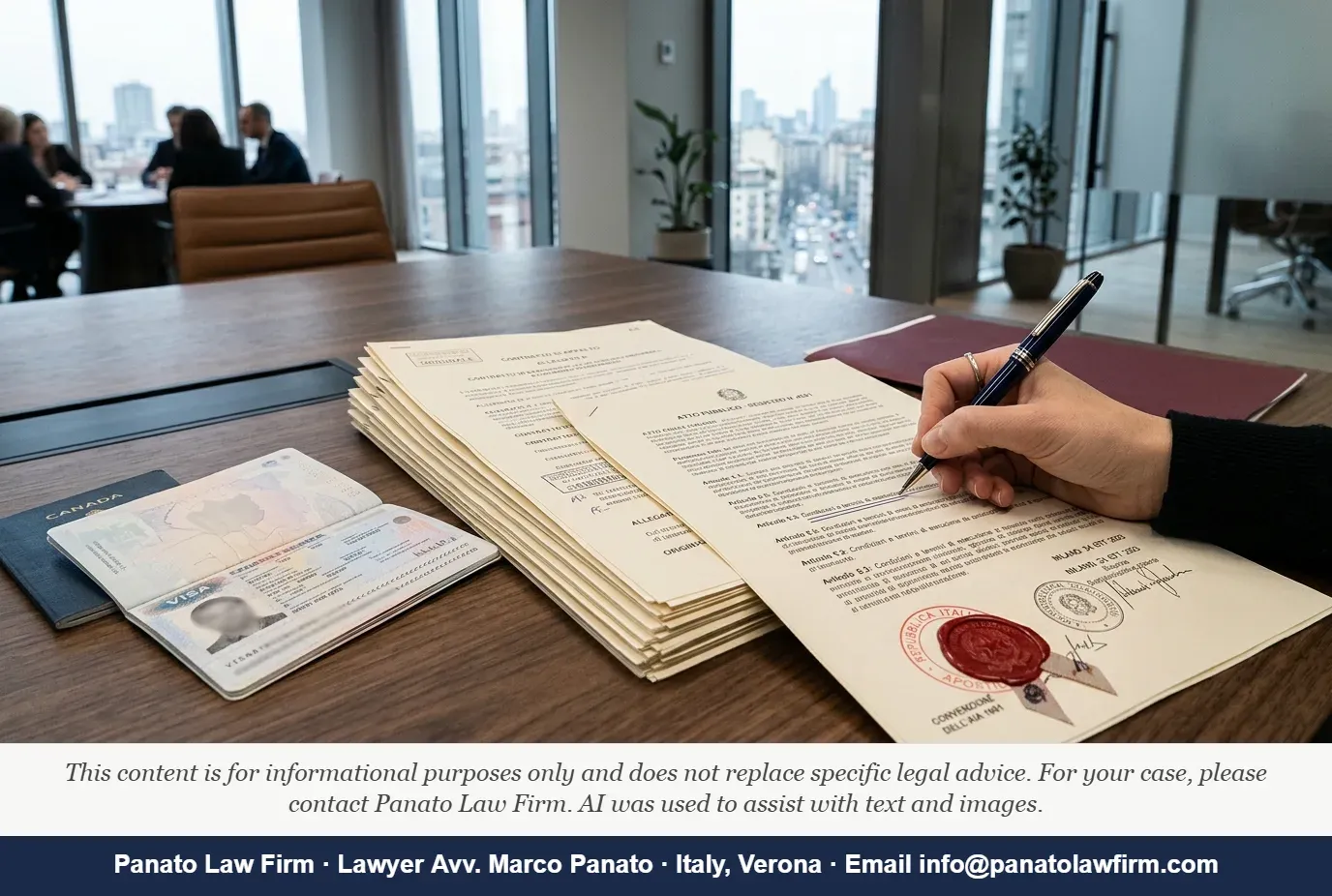
Image prompt: A wide-angle view of the Palazzo di Giustizia in Milan at dusk, warm amber light falling on its stone facade, a lone figure in a business suit reviewing documents on the steps — suggesting the intersection of institutional legal process and individual commercial decisions. The mood is calm but purposeful, no text in frame, muted gold and grey tones.
Image file: icc-arbitration-rules-2026-italy-key-terms-cover
HREFLANG BLOCK:
JSON-LD:
LANGUAGE QA: applied to the Italian courts for urgent injunctive relief -> sought urgent injunctive relief from the Italian courts · The practical consequence is this: -> The practical consequence is straightforward: · A loosely drafted clause can strip the tribunal of jurisdiction before the first hearing -> A poorly drafted clause may deprive the tribunal of jurisdiction at the outset · One point Australian counsel consistently underestimate -> One point Australian counsel tend to overlook · it travels as a foreign award under the New York Convention -> it will be recognised and enforced as a foreign award under the New York Convention · whether the parties are Italian or foreign, and whether the contract is domestic or cross-border -> regardless of the parties' nationalities and whether the contract is domestic or cross-border · full stop -> period (US/AU) or full stop kept only for UK/AU audience · combined, if neces -> [text truncated — sentence left incomplete]
Quality: Italian terms without a plain explanation: codice fiscale
Source check: verdict RED — verify before publication
CHECK:
REFERENCE: Court of Cassation, First Civil Division, judgment no. 22002
1. EXISTS? not verified by the agent
2. CONTENT MATCHES? not verified
3. CONFIRMING SOURCE: —
REFERENCE: Court of Cassation, United Divisions, judgment no. 38162
1. EXISTS? not verified by the agent
2. CONTENT MATCHES? not verified
3. CONFIRMING SOURCE: —
REFERENCE: Article 700
1. EXISTS? not verified by the agent
2. CONTENT MATCHES? not verified
3. CONFIRMING SOURCE: —
REFERENCE: Arts. 806
1. EXISTS? not verified by the agent
2. CONTENT MATCHES? not verified
3. CONFIRMING SOURCE: —
REFERENCE: Art. 818
1. EXISTS? not verified by the agent
2. CONTENT MATCHES? not verified
3. CONFIRMING SOURCE: —
REFERENCE: Art. 825
1. EXISTS? not verified by the agent
2. CONTENT MATCHES? not verified
3. CONFIRMING SOURCE: —
REFERENCE: Art. 700
1. EXISTS? not verified by the agent
2. CONTENT MATCHES? not verified
3. CONFIRMING SOURCE: —
REFERENCE: Art. 828
1. EXISTS? not verified by the agent
2. CONTENT MATCHES? not verified
3. CONFIRMING SOURCE: —
REFERENCE: Arts. 839
1. EXISTS? not verified by the agent
2. CONTENT MATCHES? not verified
3. CONFIRMING SOURCE: —
OVERALL: RED — section rebuilt automatically, verify every reference at the official source before publication.
Do you need legal assistance or a free estimate?
Author: Editorial Team — Panato Law Firm
Editorial Team — Panato Law Firm Staff