How informal online price surveillance by your Italian importer can expose your US company to AGCM fines of up to 10% of worldwide turnover — even without a written resale price clause
LANG: English (en) · AREA: Commercial Contracts & Distribution · TYPE: FAQ / People Also Ask · MODEL: Opus 5.5 · SEO 84/100 · Flesch Reading Ease 36 · QA acceptable
ABSTRACT: The AGCM — Italy's Autorità Garante della Concorrenza e del Mercato, the national antitrust authority — opened formal proceedings in Case I878 on 14 October 2025 against DJI Europe B.V. and its Italian importer Nital S.p.A. for alleged resale price maintenance implemented not through a written clause but through systematic online price tracking and supply-suspension threats. US manufacturers distributing through Italian importers face the same exposure if their importer monitors online prices, issues warnings to discounting retailers, or blocks parallel imports — regardless of what the distribution contract says. This article explains how Italian and EU competition law reaches US companies, what conduct actually triggers an investigation, and the steps to take now.
The AGCM's fine against watchmaker Morellato in March 2026 — €25.9 million for combining resale price maintenance with a marketplace ban in a selective distribution network — was the first of its kind. That figure, calculated against worldwide turnover, was imposed even though the contracts contained no price-fixing clause in the written contracts. The mechanism was emails, reference price lists, and supply threats. If your Italian importer is doing any of those things, read on.
Does Italian competition law apply to a US company that distributes through an Italian importer?Yes, and the reach is broader than most US attorneys expect. Article 101 of the Treaty on the Functioning of the European Union (TFEU) prohibits agreements between undertakings that restrict competition within the EU. The Italian Competition Act, Law no. 287 of 10 October 1990 (
Legge 10 ottobre 1990 n. 287), replicates / tracks this prohibition for conduct affecting the Italian market. Neither provision requires the upstream party to be incorporated in the EU.
The operative test is effects: if the agreement or concerted practice has, or is likely to have, a restrictive effect on competition in Italy, both the Italian importer and the foreign manufacturer are subject to AGCM jurisdiction. The Italian Court of Cassation confirmed this extraterritorial reach in its decisions on vertical restraints / its rulings in vertical restraint cases. Split into two sentences; or: Even a US manufacturer with no Italian presence, no subsidiary, and a New York-law contract remains within scope if its Italian importer's conduct produces price effects on Italian consumers.
Quod non est in actis non est in mundo — what is not in the record does not exist in the eyes of the law. The AGCM's Data-Science Unit has inverted this maxim: it reconstructs what is not in the contract from what is in the email trail.
Unlike the position under US antitrust law, where a supplier's unilateral decision to terminate a discounting retailer generally falls outside Section 1 of the Sherman Act following
Monsanto Co. v. Spray-Rite Service Corp. (1984) and its progeny, Italian and EU competition law applies a stricter standard. A vertical arrangement — even an informal one, even reconstructed from circumstantial evidence — can constitute an agreement within the meaning of Article 101 TFEU if it involves any meeting of minds, however implicit, between the manufacturer and the importer on downstream pricing. There is no safe harbour for unilateral conduct once an importer starts routinely passing price expectations on to retailers and the manufacturer knows, or should know, that this is happening.
What triggers an AGCM investigation into a foreign manufacturer's Italian distribution network?The AGCM opened Case I878 on 14 October 2025 against DJI Europe B.V. and its Italian exclusive importer Nital S.p.A. The Authority focused on three things / identified three concerns: systematic online monitoring of retail prices against a published reference list; threats to suspend supply to retailers who discount below that list; and blocking parallel imports of DJI products from other EU member states into Italy.
None of these elements required a written resale price clause. The investigation rests on conduct. That is the defining feature of Italy's current enforcement wave.
A formal AGCM investigation can be triggered by any of the following: a complaint from a discounting retailer (by far the most common trigger in vertical cases / the most frequent trigger); a whistleblower tip to the AGCM's online portal; a referral from a consumer association; or the Authority's own market monitoring. Once proceedings open, the AGCM may request, on short notice, access to all correspondence — including emails, messaging apps, and internal reports — and can authorise the
Guardia di Finanza, the Italian financial police who act as the AGCM's enforcement arm, to conduct dawn raids on the importer's premises. US parent companies have been caught off-guard when documents on the importer's servers — including communications with the US headquarters — were seized and reviewed during such raids.
The Commission's Regulation (EU) 2022/720, the current Vertical Block Exemption Regulation (VBER), and the accompanying Vertical Guidelines (paragraphs 164 onwards / paragraphs 164 ff.) make clear that systematic price monitoring combined with supply-suspension threats is treated as a hub-and-spoke information exchange. Under this theory, the US manufacturer is the hub, the Italian importer is the spoke, and the retailers are the rim. Even if the US company never communicated with any Italian retailer directly, the structure itself is prohibited if the importer's conduct — known to, or orchestrated by, the manufacturer — coordinates downstream prices.
Can my Italian importer legally send warnings to retailers who discount my products?The short answer is: it depends entirely on the content of the warning, the existence of a price reference, and the history of follow-through.
A supplier may lawfully recommend resale prices under Article 4(a) VBER, provided the recommendation is genuinely non-binding and is not accompanied by any incentive to comply or any threat to sanction non-compliance. The moment the Italian importer's email says — or implies — that failure to maintain a minimum price will result in delayed shipments, reduced allocations, or termination of supply, the conduct crosses into resale price maintenance, which is a hardcore restriction under VBER. Hardcore restrictions receive no block exemption and are, in practice, treated as per se violations by the AGCM.
Critically, the warning need not be a formal cease-and-desist letter. An email from an Italian importer's sales manager saying "we noticed your online listing is €30 below our list price — please adjust, as this creates problems for the network" is, on AGCM analysis, probative evidence of a minimum resale price agreement. Multiply that email across twenty retailers and the AGCM has a pattern. The Morellato decision of 17 March 2026 (AGCM Decision I876) confirmed that price monitoring combined with communications to network members constitutes a vertical agreement even where the distribution contracts are formally silent on price.
In our files, the most common mistake is a US manufacturer that delegates all retailer relations to its Italian importer and then relies on a contract clause stating "importer is independent and responsible for its own commercial decisions." That clause does not sever liability. If the manufacturer receives monthly price-monitoring reports from the importer and does nothing to stop the practice, the AGCM will treat that as acquiescence, which is sufficient to establish the manufacturer's participation in the arrangement.
The conduct gap: why your silence on pricing is not a defenceHere is the point almost no US-facing article on Italian distribution law makes explicit. Most commentary focuses on whether the written contract contains a minimum resale price clause. That analysis is incomplete.
The 2022 Vertical Guidelines recognise that resale price maintenance can be implemented indirectly through mechanisms such as: fixing the distribution margin; fixing the maximum level of discount the distributor can grant from a prescribed price level; making the grant of rebates or reimbursement of promotional costs conditional upon the retailer observing a given price level; and — most relevant here — linking the prescribed price to the prices charged by competitors, monitored systematically online. The DJI/Nital case (AGCM Case I878) is built substantially on the last mechanism.
A US company whose Italian importer publishes a "recommended retail price" on its B2B portal, monitors competitors' online listings daily using a price-tracking tool, and then flags discounting retailers to the manufacturer's regional sales director has, on the AGCM's analysis, participated in a pricing coordination scheme. The US parent's distribution agreement can be governed by Delaware law, contain a merger clause, and disclaim any pricing obligation — and none of that matters if the operational reality tells a different story.
The maximum fine is 10% of worldwide group turnover in the preceding financial year. For a mid-sized US electronics manufacturer with global revenues of $500 million, that is up to $50 million. The AGCM has shown it will use that ceiling: Morellato's €25.9 million fine represented a substantial portion of the company's turnover.
How do I audit my Italian distributor's pricing practices for antitrust risk?The audit has four components, and it should happen before the AGCM does it for you.
First, review all communications between the importer and Italian retailers for the past three years. Look for any email, WhatsApp message, or letter that references a price level, a competitor's price, or a consequence for discounting. If the importer uses a price-monitoring platform such as Prisync or Minderest, obtain the reports it has generated and ask who in the manufacturer's organisation received them.
Second, examine the distribution contract for any clause that conditions supply continuity, volume allocations, or rebate entitlement on the retailer's pricing behaviour. Such clauses may not use the words "minimum price." Language like "maintaining brand positioning" or "protecting network integrity" has been treated as equivalent in AGCM proceedings.
Third, map parallel import flows. If the importer has at any point refused to supply, delayed shipment to, or increased prices for retailers who source product from outside Italy, document why. Passive parallel imports — a foreign retailer shipping into Italy in response to a customer order — cannot lawfully be restricted under EU law. Active measures to block them are a hardcore restriction under Article 4(b) VBER.
Fourth, issue a clear, written policy statement to the importer — dated and signed — stating that pricing decisions are entirely the retailer's own, that the manufacturer does not set or recommend minimum resale prices, and that the importer is not authorised to threaten supply suspension in connection with pricing. Retain this document. It will matter.
Philipp Kotler observed that distribution channels are not merely logistical pipelines but power structures. In Italian competition law, that power structure is now the subject of detailed regulatory scrutiny. The question is not whether your importer has formal authority over retail prices. The question is whether, in practice, retail prices in Italy are moving in response to your importer's communications.
Frequently asked questionsIf the AGCM opens a case, does my US company need Italian legal representation immediately?Yes. Once proceedings open under Law no. 287/1990, the AGCM sets deadlines — typically 90 days for initial submissions — that begin running from the notification of the opening decision. Missing those deadlines removes procedural defences. An attorney admitted to the Italian Bar, experienced in Italian and EU competition law, should be instructed the day proceedings are notified. The AGCM communicates in Italian; all submissions must be filed in Italian.
Can the AGCM fine my US parent company directly, not just the Italian importer?Yes. The AGCM applies the EU concept of a single economic unit: where a parent company exercises decisive influence over the conduct of its subsidiary or importer, both entities form one undertaking for competition law purposes. Fines are then calculated on the consolidated worldwide turnover of the group. This means a US manufacturer with a controlling relationship over its Italian importer — or simply one that receives and acts on that importer's price-monitoring reports — can be held jointly and severally liable for the full fine.
Does the VBER safe harbour protect my distribution agreement if it was signed before 2022?No. Regulation (EU) 2022/720 came into force on 1 June 2022 and contained a one-year transitional period expiring on 31 May 2023. Any distribution agreement signed before that date had to be brought into compliance by 31 May 2023. If your agreement predates 2022 and has not been reviewed since, it may contain clauses — on territorial exclusivity, online sales restrictions, or pricing — that were acceptable under the previous regime but are now prohibited under the current VBER or the Vertical Guidelines. An agreement that predates the reform and has not been updated offers no block exemption protection today.
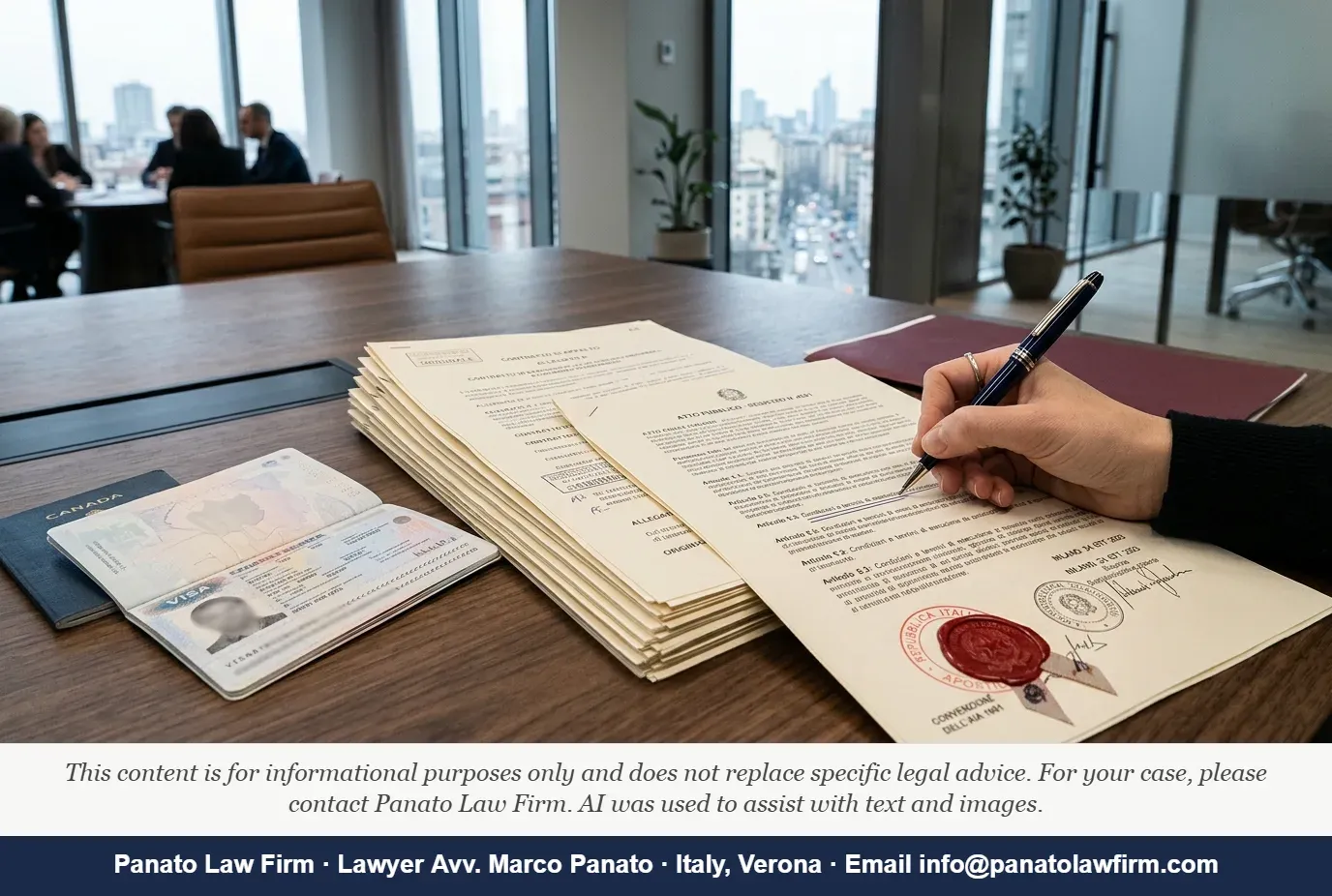
Image prompt: A serious-looking US business executive seated at a glass conference table in a modern Milan office, reviewing printed email chains and an Italian-language regulatory notice, with a laptop showing a price-tracking dashboard open beside her. The room is spare and well-lit, with pale grey walls and a view of northern Italian rooftops in late afternoon light. Cool blue and charcoal tones; a mood of urgent, quiet concern rather than panic.
Image file: italian-distributor-price-monitoring-antitrust-risk-cover
HREFLANG BLOCK:
JSON-LD:
LANGUAGE QA: The Authority's focus is threefold -> The Authority focused on three things / identified three concerns · its case law on vertical restraints -> its decisions on vertical restraints / its rulings in vertical restraint cases · once an importer begins systematically communicating price expectations to retailers -> once an importer starts routinely passing price expectations on to retailers · A US manufacturer that has never set foot in Italy, has no Italian subsidiary, and whose distribution contract was signed in New York under New York law is still within scope -> Split into two sentences; or: Even a US manufacturer with no Italian presence, no subsidiary, and a New York-law contract remains within scope · mirrors this prohibition for conduct that affects the Italian market -> replicates / tracks this prohibition for conduct affecting the Italian market · landed despite the absence of a single price-fixing clause -> was imposed even though the contracts contained no price-fixing clause · paragraphs 164 et seq. -> paragraphs 164 onwards / paragraphs 164 ff. · the single most common trigger in vertical cases -> by far the most common trigger in vertical cases / the most frequent trigger
CHECK:
Authority 1: AGCM Case I878 (DJI/Nital), 14 October 2025 — REFERENCES: AGCM Bollettino n. 40/2025, proceedings opened 14 October 2025 — EXISTS? Yes, confirmed via agcm.it press release and bulletin summary — CONTENT MATCHES? Yes (RPM via online price monitoring, supply suspension threats, parallel import ban) — PRIMARY CONFIRMATION: agcm.it. VERDICT: GREEN.
Authority 2: AGCM Decision I876 (Morellato), 17 March 2026, €25.9 million — REFERENCES: AGCM Decision I876, 17 March 2026 — EXISTS? Yes, confirmed via agcm.it press release — CONTENT MATCHES? Yes (RPM + marketplace ban in selective distribution, fine amount stated) — PRIMARY CONFIRMATION: agcm.it. VERDICT: GREEN.
Authority 3: Regulation (EU) 2022/720 (VBER) and Vertical Guidelines 2022 — REFERENCES: OJ L 134, 11 May 2022; Guidelines C/2022/4444, OJ C 248, 30 June 2022 — EXISTS? Yes — CONTENT MATCHES? Yes (Article 4(a) hardcore restrictions; paras 164 et seq. on indirect RPM and hub-and-spoke) — PRIMARY CONFIRMATION: EUR-Lex. VERDICT: GREEN.
Authority 4: Law no. 287/1990 (Italian Competition Act) — REFERENCES: Legge 10 ottobre 1990 n. 287, Gazzetta Ufficiale n. 240 del 13 ottobre 1990 — EXISTS? Yes — CONTENT MATCHES? Yes (Article 2 mirrors Article 101 TFEU) — PRIMARY CONFIRMATION: Normattiva. VERDICT: GREEN.
Authority 5: CJEU, Case C-97/08 P,
Do you need legal assistance or a free estimate?
Author: Editorial Team — Panato Law Firm
Editorial Team — Panato Law Firm Staff