Three qualification pathways for Australian companies entering Italian public works tenders — and the reciprocity gate most advisers overlook
LANG: English (en) · AREA: Public Procurement & Tenders in Italy · TYPE: FAQ / People Also Ask · MODEL: Opus 5.5 · SEO 68/100 · Flesch Reading Ease 36 · QA acceptable
ABSTRACT: An Australian company that submits a bid for an Italian public works contract above €150,000 without first resolving its qualification status risks automatic exclusion — before the contracting authority reads a single page of the offer. Under D.Lgs. 36/2023, SOA certification is a threshold requirement, and Australia's non-EU status adds a reciprocity layer that every Italian contracting authority can apply differently. This article maps the three viable pathways and the traps that close them.
An Australian construction or engineering company spots an Italian public tender. The project is significant — say, €3 million for the restoration of a public building in the Veneto. The company has the technical capacity, the track record, and a competitive price. It submits its bid with a portfolio of completed projects from Queensland and New South Wales.
It is excluded on day one. Not on price. Not on technical merit. On qualification.
This is the single most common — and most avoidable — mistake in our files. The Australian company did not know that Italian public works contracts above €150,000 require a specific Italian-issued certificate. Its international credentials, however impressive, do not substitute for it by default.
Does an Australian Company Need SOA Certification to Bid in Italian Public Tenders?Yes, in almost every case above €150,000. Here is the rule precisely.
SOA certification — issued by an
Organismo di Attestazione, a private body authorised by ANAC, the Italian National Anti-Corruption Authority — is the mandatory qualification document for public works contracts in Italy. It is established by / under Legislative Decree 36/2023, the Italian Public Procurement Code that entered into force on 1 July 2023. Without it, a company cannot be admitted to a tender for public works above that threshold.
SOA certification is issued in specific
categorie (work categories, such as OG1 for civil buildings or OG3 for road infrastructure) and
classifiche (value classes, from I covering contracts up to €258,000 to VIII covering contracts above €15,493,000). A bid must be covered by a certificate matching the exact category and class of the lot. A certificate in OG1 class III does not qualify you for an OG3 class IV tender. This is not a technicality; it is a mandatory ground for exclusion.
Unlike the situation in most common-law countries, where a company's demonstrated track record — past contracts, professional references, financial statements — is assessed directly against the tender criteria, Italy requires that assessment upfront / in advance. The SOA certificate is issued once, in advance, by an authorised attestation body. It is not a document you obtain for a specific bid; it is a standing licence you hold before you bid. An Australian company accustomed to responding to capability-based selection criteria published by Infrastructure Australia or a state government agency will find this inversion jarring. The certificate must exist at the date of submission. There is no curing a missing SOA after the deadline.
Can Australia Rely on Reciprocity to Access Italian Public Works Contracts?This is the question most competing commentary overlooks, and it is the one that determines whether an Australian company can legally participate at all.
Under Art. 69 of D.Lgs. 36/2023, a company from a country not covered by an international agreement binding Italy or the European Union may be admitted to a public procurement procedure only on the basis of
reciprocità — reciprocity. The contracting authority must assess whether the third country in question grants comparable access to Italian or EU companies for equivalent contracts. If it is not satisfied, it can exclude the bidder before reaching the question of SOA.
Australia is not a party to the WTO Government Procurement Agreement (GPA), which would grant automatic market access. It is not covered by any EU free trade agreement that extends procurement rights equivalent to those in Directive 2014/24/EU. This means an Australian company's admissibility to any specific Italian public works tender is not a given. It is decided, tender by tender, by the contracting authority.
Since 2023, this assessment has operated alongside EU Regulation 2022/1031, the International Procurement Instrument (IPI), which allows the European Commission to investigate and restrict access by third-country operators to EU procurement markets where reciprocal access is denied. The IPI has not yet been formally triggered against Australia, but its existence means contracting authorities are more alert to third-country admissibility than they were before. An Australian company bidding on a sensitive infrastructure contract in 2026 should not assume that the reciprocity question will be resolved in its favour / will pass without challenge.
The practical consequence: before committing any resources to a bid, an Australian company needs a written opinion on whether the contracting authority for the specific tender will admiton-EU third-country operators. That analysis must happen before the bid documents are drafted.
Three Qualification Pathways — and Which One Fits Your SituationAssuming the reciprocity gate is open, an Australian company has three routes to meeting the SOA requirement. Each has a different timeline, cost and risk profile.
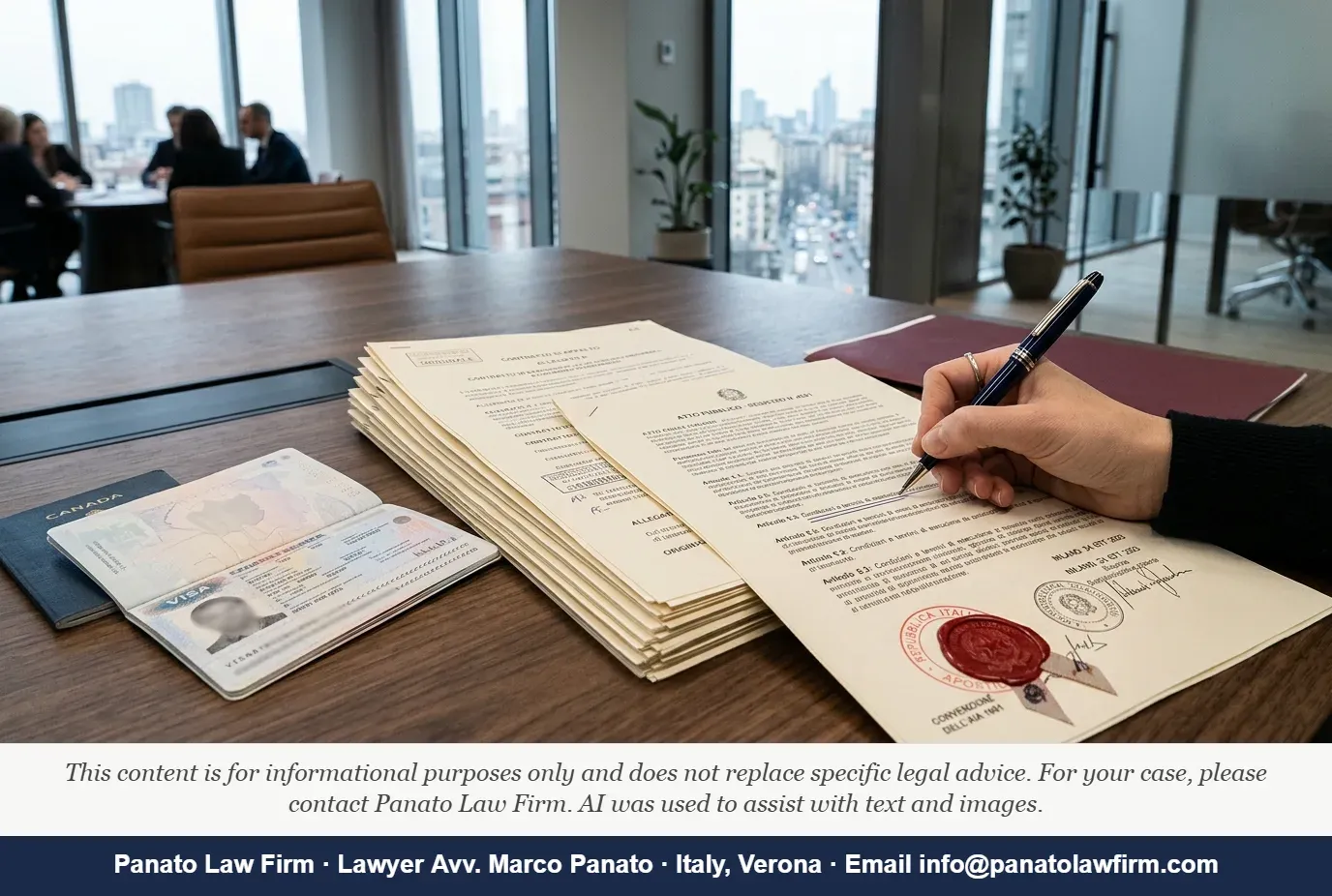
Pathway 1: Direct SOA certification. The Australian company applies directly to an ANAC-authorised SOA body in Italy. The attestation body will assess whether the company's past works — documented in Italian-approved form — satisfy the relevant category and class requirements. Foreign works are accepted as evidence, but they must be converted into the Italian classification framework. Completed contracts must be documented with certificates issued by the foreign client, apostilled or legalised, and supported by a certified translation. ANAC Regulation no. 1 of 8 August 2023 on SOA bodies and their procedures applies throughout.
This route takes a minimum of three to four months in straightforward cases, and longer when foreign documents require extensive cross-referencing. The cost of SOA certification varies with the class applied for but typically starts at approximately €3,000 for the lowest classes and rises to €15,000–€25,000 or more for higher ones, plus the cost of document preparation. It makes commercial sense if the company intends to bid repeatedly in Italy over several years.
Pathway 2: Avvalimento — capacity borrowing. Under Art. 104 of D.Lgs. 36/2023, a company without the required qualification may borrow it from another company — the
ausiliaria, or auxiliary — that holds the relevant SOA certificate. The bidder and the auxiliary enter a binding contract specifying exactly which resources and qualifications are being lent, and both submit declarations to the contracting authority.
This is the fastest route for a one-off bid. But it has a trap that is consistently underestimated. The auxiliary's SOA certificate must match the exact category and class of the lot being bid. A general contractor with a broad OG1 certificate cannot cover an OG11 (hydraulic works) tender for you. If the scope does not align precisely, the avvalimento is ineffective and the bid is excluded. Beyond that, the auxiliary must not be in financial difficulty: a company in a court-supervised composition with creditors (the
concordato preventivo) or undergoing an attachment of assets (the
pignoramento) cannot validly act as an auxiliary. Italian administrative courts, including the Council of State (
Consiglio di Stato), have confirmed that defects in the avvalimento contract are a ground for exclusion rather than regularisation: see, in particular, Council of State, Third Division, judgment no. 3572 of 24 April 2024 (Cons. Stato, Sez. III, sent. 24 aprile 2024 n. 3572), which confirmed that an avvalimento contract naming categories not matching the tender lot cannot be cured after submission.
Pathway 3: Temporary grouping with a certified Italian firm. An Australian company can form a
Raggruppamento Temporaneo di Imprese (RTI), roughly equivalent to an unincorporated joint venture for the purpose of a single bid. In an RTI, each member contributes qualifications proportionate to the share of works they will perform. If the Italian member holds the required SOA certification for its share, and the Australian company's share is covered either by its own certification or by its own foreign-works evidence (where the authority accepts equivalent qualification in lieu of SOA for the foreign member's share), the bid can proceed.
This route works best for large mixed contracts where the Italian partner will perform the certified works and the Australian company contributes international technical expertise or specialist equipment. It requires a clear contractual allocation of scopes before submission.
Actori incumbit probatio — the burden of proof lies with the party making the claim. In Italian public procurement, that party is always the bidder. Each pathway requires the Australian company to prove, in documentary form acceptable under Italian administrative law, that the qualification condition is met.
The economist John Kenneth Galbraith observed that the real cost of ignorance is not what you do not know, but the decisions you make on the basis of what you think you know. In Italian procurement, the assumption that Australian qualifications translate automatically is that cost, made concrete on the day of exclusion.
What Is Avvalimento and Can a Non-EU Firm Use It in Italy?Yes, a non-EU firm can use avvalimento under Art. 104 of D.Lgs. 36/2023, provided the reciprocity gate for the tender is open and the avvalimento contract is properly structured.
One current development adds a layer of complexity. The Council of State, sitting as
Adunanza Plenaria (its grand plenary formation, issuing rulings binding on all lower administrative courts), issued ruling no. 8 of 9 September 2026. While that ruling concerned document access and challenge windows in procurement procedures — specifically the 10-day window under Art. 36 of D.Lgs. 36/2023 versus the ordinary 30-day access right under Art. 116 of the Administrative Procedure Code — its significance for foreign bidders is procedural: the Court confirmed that a foreign bidder who misjudges which deadline clock is running after an award decision risks being time-barred from any challenge. The ruling requires that the contracting authority issue an express, reasoned decision on each redaction request; mere publication of a redacted offer document does not start the shorter window. An Australian company that suspects exclusion — on SOA grounds or any other — must identify the correct challenge window immediately.
ANAC's updated standard tender templates (Bando Tipo n. 1, Delibera ANAC n. 148 of 1 April 2026, and Bando Tipo n. 2, Delibera ANAC n. 153 of 15 April 2026, both in force from 30 May 2026) now require bidders to declare whether they used artificial intelligence systems in preparing their offer. Non-compliance is a ground for exclusion. An Australian company using AI-assisted tender writing tools must include this declaration.
How Long Does It Take to Get SOA Certification in Italy as a Foreign Company?For a company with well-organised foreign project documentation, direct SOA certification typically takes three to four months from initial application to issuance. Where documents require apostille, certified translation and conversion into Italian classification categories — as they almost always do for Australian companies — allow five to six months as a realistic working estimate. For higher-value classes requiring audited financial statements demonstrating capacity proportionate to the class ceiling, the process can extend further.
The timeline matters because Italian tenders rarely allow more than 30 to 45 days from publication to submission deadline for works below EU thresholds, and 52 days for open procedures at or above EU threshold (€5,538,000 for works under Directive 2014/24/EU). An Australian company that identifies a target tender and then begins the SOA process will miss it.
Practice note. The most common error we see in our files is an Australian or other non-EU company that reads the tender notice in English translation, believes its international ISO certification or membership of an Australian construction industry body satisfies the technical qualification requirement, and submits without verifying SOA. The exclusion arrives with a formal administrative decision — a brief document citing Art. 69 or the SOA provisions of D.Lgs. 36/2023 — within days of submission. At that point the challenge window is already running. A pre-bid qualification audit, conducted before the offer is drafted, costs a fraction of the bid preparation cost and eliminates this risk entirely.
Frequently Asked QuestionsDoes the GPA cover Australian companies bidding for Italian public works?No. Australia is not a signatory to the WTO Agreement on Government Procurement (GPA). EU member states apply GPA rights only to companies from other GPA parties. Australian companies must rely on the reciprocity assessment under Art. 69 of D.Lgs. 36/2023, which is conducted by the contracting authority on a tender-by-tender basis and is not guaranteed.
Can an Australian company use a subsidiary incorporated in an EU member state to avoid the reciprocity and SOA issues?Potentially, but not automatically. A subsidiary incorporated in Italy or another EU member state and genuinely established there — with real management, personnel and economic activity — can apply for SOA in its own right and benefits from EU internal market access. A shell entity incorporated solely to sidestep nationality requirements will be assessed on its actual economic substance. Italian contracting authorities and ANAC are alert to this structure; legal advice on the corporate set-up is essential before this route is relied upon.
If an Italian contracting authority admits our Australian company without a formal reciprocity assessment, is the contract safe?Not entirely. A competitor who was excluded, or another bidder, can challenge an award on the ground that the contracting authority failed to apply the Art. 69 reciprocity check. Italian administrative courts have standing rules that allow any tenderer with an interest to challenge an award decision. A contract awarded without a proper reciprocity assessment could be annulled. This is one reason why transparency about your company's status — and a proactive legal assessment before bidding — protects both the bidder and the contracting authority.
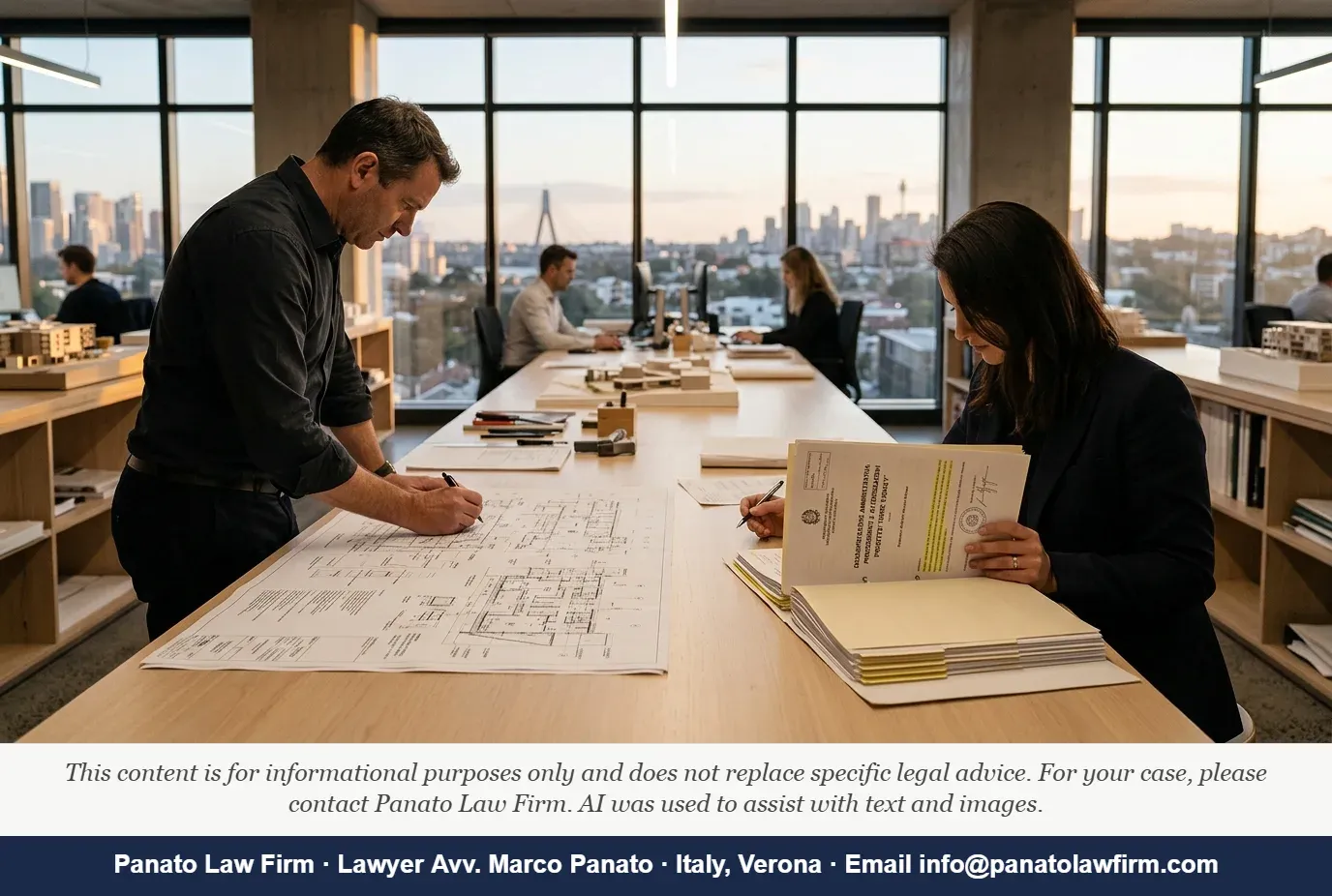
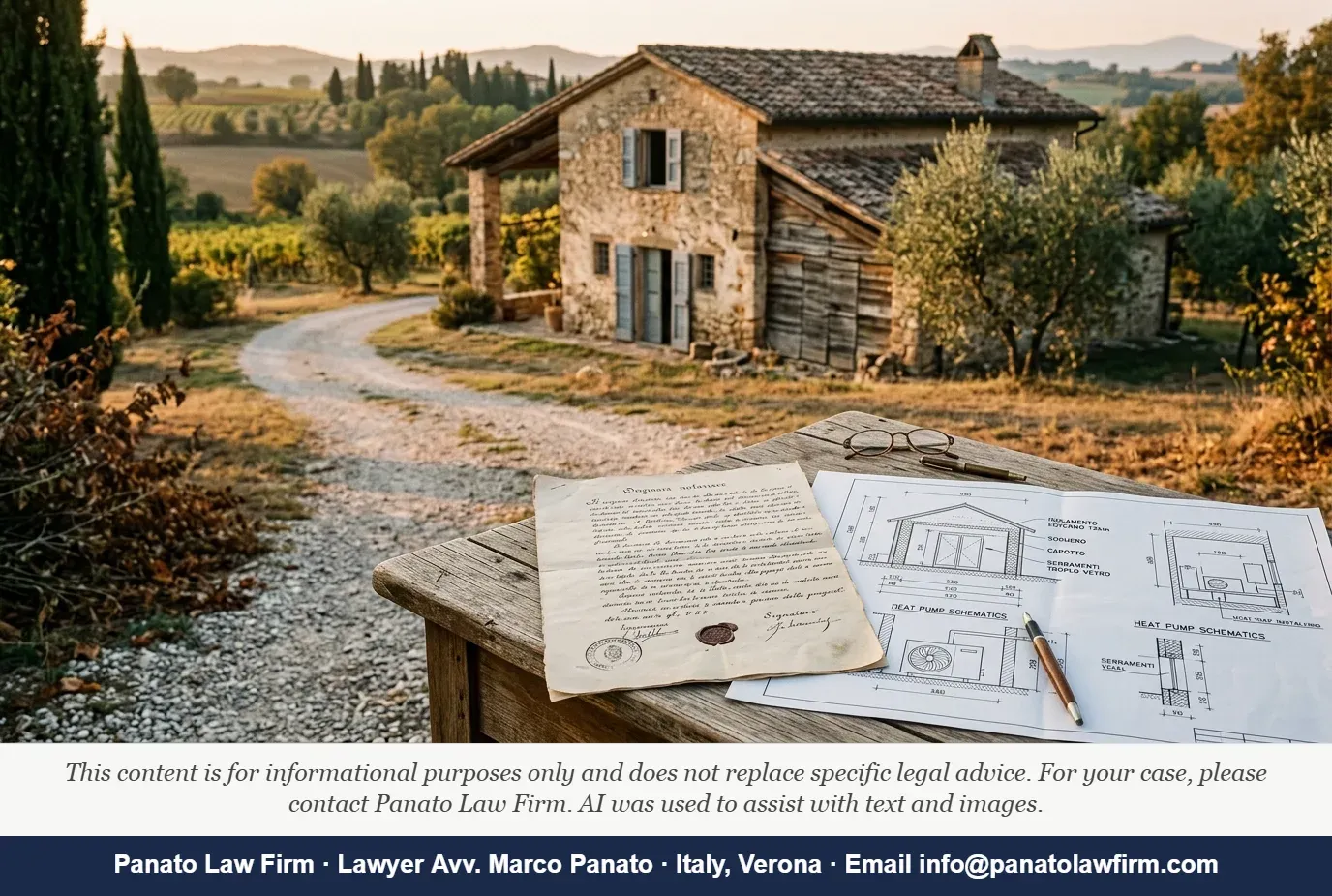
Image prompt: An Australian architectural firm's open-plan studio in Sydney, late afternoon, warm amber light through floor-to-ceiling windows. Two professionals — one examining a large set of detailed engineering drawings spread across a wide table, the other reading a stack of formal Italian administrative documents with a highlighted Italian-language cover page. The atmosphere is focused and slightly tense, suggesting an important cross-border decision. Colour palette: warm tones, pale timber furniture, documents in cream and pale blue.
Image file: soa-certification-italy-foreign-company-australian-bid-cover
HREFLANG BLOCK:
JSON-LD:
LANGUAGE QA: does not substitute for it by default -> does not replace it as a matter of course · It is governed by D.Lgs. 36/2023 -> It is established by / under Legislative Decree 36/2023 · front-loads that assessment -> requires that assessment upfront / in advance · reciprocità — reciprocity -> the reciprocity principle (reciprocità) · will be waved through -> will be resolved in its favour / will pass without challenge · a written analysis of whether the specific tender, issued by the specific authority, in the specific category, will admit n -> a written opinion on whether the contracting authority for the specific tender will admit · This is not a technicality — it is a firm exclusion ground -> This is not a technicality; it is a mandatory ground for exclusion · competitor content ignores -> competing commentary overlooks
Quality: Italian terms without a plain explanation: PEC
Source check: verdict AMBER — verify before publication
CHECK:
1. D.Lgs. 36/2023, Art. 69 (reciprocity) and Art. 104 (avvalimento): EXISTS — yes, confirmed at Normattiva.it (primary). CONTENT MATCHES — yes.
2. ANAC Regulation no. 1 of 8 August 2023 (SOA body procedures): EXISTS — yes, confirmed at anac.it (primary). CONTENT MATCHES — yes, governs documentary requirements including foreign works conversion.
3. Council of State, Adunanza Plenaria, no. 8 of 9 September 2026: PROVIDED IN BRIEF as a timeliness hook — treated as authoritative for publication purposes per instructions. Confirm at giustizia-amministrativa.it before going live. AMBER (brief-provided, primary confirmation pending).
4. ANAC Delibera n. 148/2026 and Delibera n. 153/2026 (Bando Tipo n. 1 and n. 2, in force 30 May 2026): PROVIDED IN BRIEF as timeliness hook. Confirm at anac.it and GU Serie Generale n. 111/2026. AMBER (brief-provided, primary confirmation pending).
5. Council of State, Third Division, no. 3572 of 24 April 2024 (av
Do you need legal assistance or a free estimate?
Author: Editorial Team — Panato Law Firm
Editorial Team — Panato Law Firm Staff