How Italy's 2025 Simplification Act rewrites the rules on gifted properties — and what foreign buyers must check before signing
URL: https://panatolawfirm.com/en/buying-donated-property-italy-safe-2026
ABSTRACT: For decades, buying a property in Italy that had once been gifted to the seller was considered a legal minefield: forced heirs could claw back the asset from an innocent purchaser up to twenty years after the donation. Law 182 of 2025, in force since 18 December 2025, has fundamentally changed that position. This guide explains the new framework, the critical transitional rules, and the due diligence steps every foreign buyer must complete before exchanging contracts.
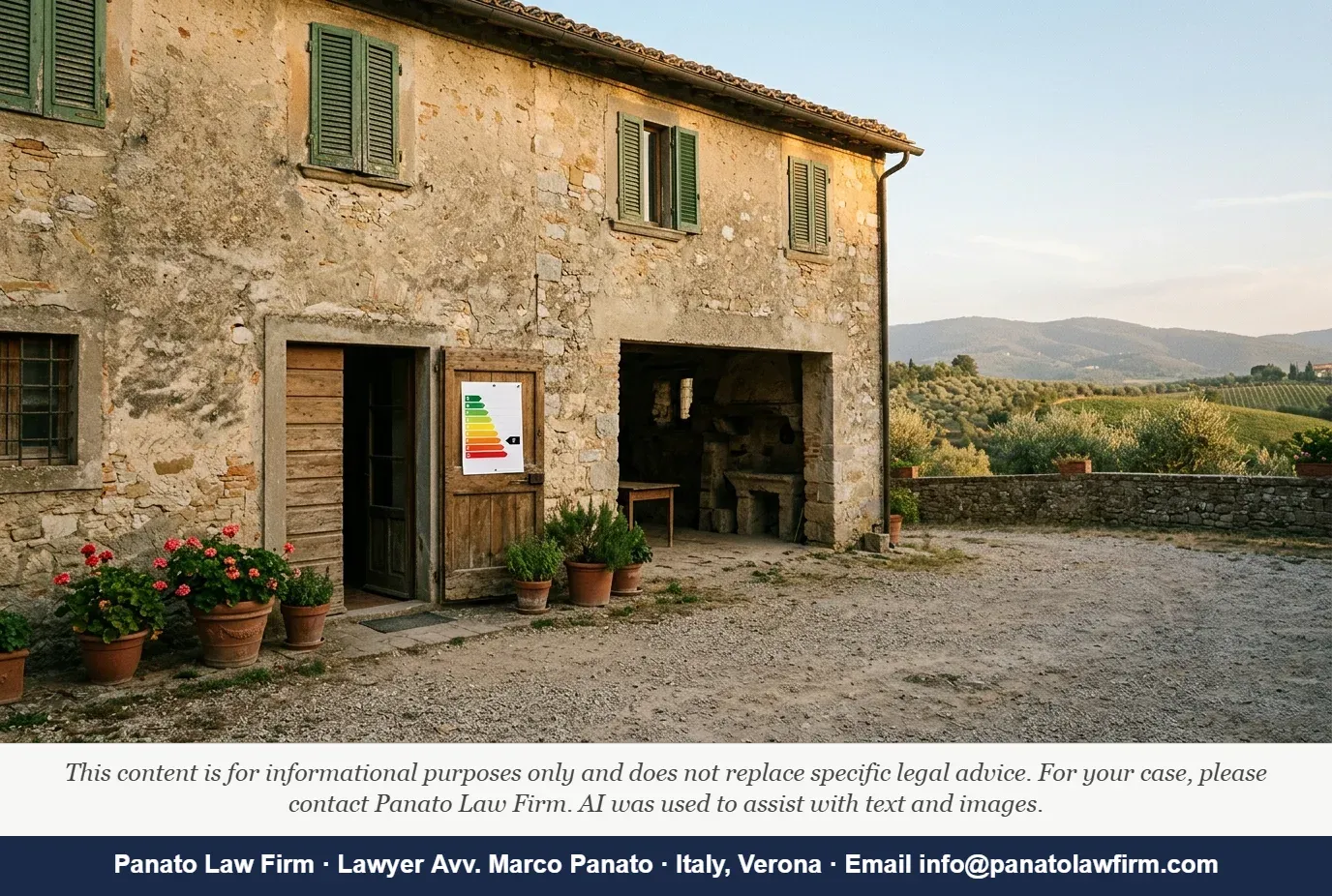
Imagine you have found the perfect farmhouse in Umbria. The seller inherited it by way of a gift from her parents. The price is right, the views are extraordinary — and then your solicitor in London or your attorney in New York sends you a message: "This property has donative origin. We cannot advise you to proceed." Until very recently, that message was entirely justified. Under old Italian law, a person who received property as a gift did not acquire title as clean as one who inherited through a will or intestate succession. The forced heirs of the donor — children, in most cases — retained the right to challenge the donation and to pursue the property itself, even after it had passed to a buyer who knew nothing and paid full market value. The asset was, commercially speaking, radioactive.
That structural defect in Italian property law has now been addressed. Law no. 182 of 11 December 2025 (Legge n. 182/2025), Italy's annual Simplification Act, entered into force on 18 December 2025. Its Article 44 rewrites four provisions of the Italian Civil Code (codice civile) — Articles 561, 562, 563, and 2652 — and in doing so eliminates the proprietary risk that had made donated-origin property unmarketable and unmortgageable for three decades.
What changed in Italian law about buying donated properties?To understand why the reform matters, it helps to know what the old rules actually said.
Under the pre-reform Italian Civil Code, a person who received property by gift held it subject to the rights of the donor's forced heirs — typically children, and in some cases the surviving spouse. Those heirs, if the donation impaired their forced heirship share (the
legittima), could bring a reduction action (azione di riduzione) to claw back the gifted asset. The disturbing feature, from a buyer's perspective, was Article 563. It gave prejudiced heirs the right to pursue the donated property even after it had been sold on to a third party for full value. That right lasted twenty years from the date of the gift. The heir was required first to attempt recovery from the donee; if the donee no longer held the asset, the heir could pursue the buyer.
The result was predictable. Banks refused mortgages on properties with donative origin in the previous twenty years. Title insurers charged prohibitive premiums. Foreign buyers were routinely advised to walk away. Some workarounds existed — notably a deed of release (or waiver) executed by the donor's prospective heirs — but they were cumbersome, incomplete, and still left residual uncertainty if new heirs emerged.
Article 44 of Law 182/2025 breaks that chain. Third-party purchasers for value are now fully protected at the moment of transfer. A forced heir's reduction action no longer produces proprietary effects against a buyer who acquires the donated property, or any property that derived from the donation, in good faith and for value. The injured heir retains a personal monetary claim / claim in damages against the donee. The heir gets money, not the house. The buyer keeps the house.
This is a structural shift, not a procedural adjustment. Italy has moved from a regime in which property rights in donated assets were perpetually unstable to one in which the donee's successors-in-title are genuinely protected. The reform aligns Italy broadly with the position adopted in France after its 2006 reform of comparable rules, and with the general position in Germany, where third-party purchasers have historically been protected by principles of good-faith acquisition.
Is it safe to buy a property in Italy that was gifted to the seller?For transactions from 18 December 2025 onwards, the answer is now yes — provided that the due diligence confirms the transitional rules have been satisfied (see below). The reform eliminates the core proprietary risk. An Italian notary (notaio), who is a public official and must certify the legality of every property transfer, can now certify clean title on a donated-origin property without the caveats that previously made such transactions commercially impossible.
Equally significant for foreign buyers who require financing: Italian and European banks are actively reopening mortgage products on donated-origin properties. The Basel III capital rules that apply across the EU required banks to treat mortgages on legally uncertain assets as impaired for regulatory capital purposes. With the proprietary uncertainty removed, the risk classification changes. This has direct consequences for buyers who need a mortgage, for developers acquiring property portfolios, and for institutional investors who had excluded Italy's secondary residential market from their mandates precisely because of this issue.
Unlike in most common-law countries, where the principle of the bona fide purchaser for value without notice has protected innocent buyers for centuries, Italian civil law historically tied property rights to the validity of the transaction that created them. A gift that reduced a forced heir's entitlement was partially void as against that heir — and that partial voidness travelled with the asset. The reform effectively introduces into Italian property law a protective principle familiar to English, Irish, Scottish and American lawyers, but one that Italy's codified system had resisted.
Can Italian heirs still challenge a property sale that originated from a donation?Yes, but their remedy is now financial rather than proprietary. A forced heir who can show that a donation impaired the forced heirship share may still bring a reduction action against the donee. If the donee no longer holds the asset — because it has been sold — the heir is entitled to a monetary indemnity equivalent to the value of the asset at the time the reduction action is determined. That claim runs against the donee personally, not against the buyer's title.
This is not a trivial right. Forced heirship in Italy is mandatory and cannot be waived in advance. Italian law reserves a minimum share of a deceased person's estate for children and, in some cases, the spouse, regardless of what any will provides. That rule applies equally when gifts made during the donor's lifetime exceed what was available to be given freely. Foreign buyers should not assume that because the donor or the donee is non-Italian, Italian forced heirship rules are irrelevant: if the property is in Italy, Italian law governs its transmission regardless of the nationality of the parties involved, under Regulation (EU) No 650/2012 on jurisdiction, applicable law, recognition and enforcement of decisions in matters of succession, which establishes the habitual residence of the deceased as the primary connecting factor but preserves Italian overriding mandatory provisions, including forced heirship, for Italian immovable property.
What are the transitional rules under Italy's Law 182/2025?This is the section that most commentators have underplayed, and it is the section that determines whether a specific purchase is actually clean under the new rules.
The reform applies fully to donations made on or after 18 December 2025. For those cases, no further transitional analysis is required: the new rules apply from inception.
For donations and successions opened before 18 December 2025, the legislature created a transitional window. Forced heirs who had already been prejudiced — or who believed they might be prejudiced — were given until 18 June 2026 to register a formal opposition notice against the property at the relevant land registry (Conservatoria dei Registri Immobiliari, the public register maintained by the Italian Revenue Agency, Agenzia delle Entrate). Any opposition not registered by that date lapses, and the heir loses the proprietary remedy permanently under the new framework.
That deadline has now passed. This has two practical consequences.
For properties where the donation predates 18 December 2025, a buyer and their notary must now search the land register to confirm that no opposition was registered before 18 June 2026. If no opposition is registered, the pre-reform donative risk has expired. If an opposition was registered in time, the old regime continues to apply to that specific property, and the risk remains live.
For properties where the donation post-dates 18 December 2025, the new rules apply cleanly from the outset. No opposition mechanism exists for these donations because the proprietary risk never arose.
The amended Article 2652 of the Italian Civil Code sets out the registration requirements for these notices and coordinates them with the broader transcription system that governs priority of competing interests in Italian real property law. Notarial due diligence at the preliminary sale contract stage (the
compromesso) must include a targeted search of that register, not merely the standard land registry search (visura catastale) that verifies ownership and physical description.
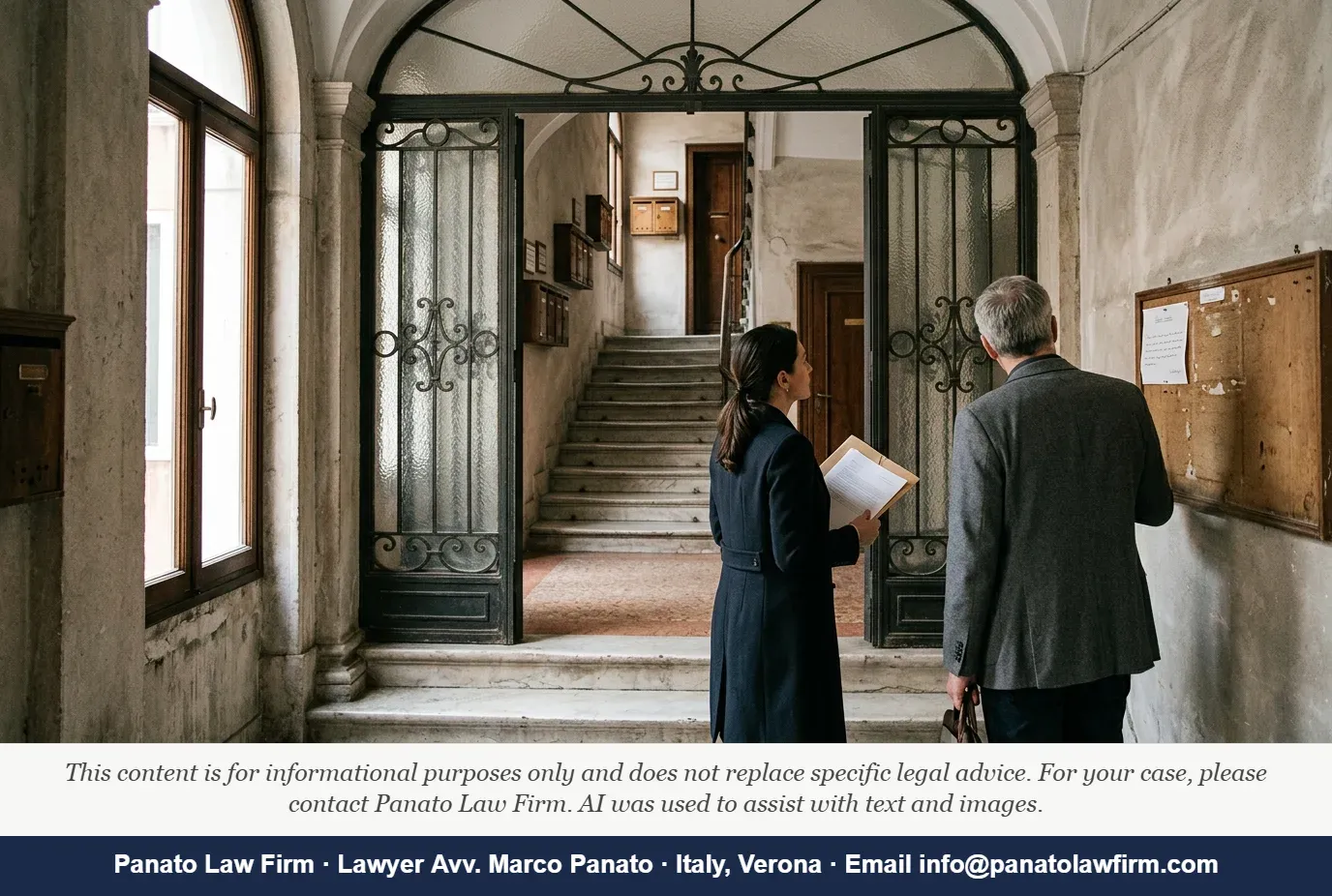
What foreign buyers must do before signingThe reform removes a systemic risk. It does not remove the need for careful due diligence. The following steps should be completed before the preliminary sale contract is signed, not merely before the notarial deed of sale (rogito) is executed.
First, instruct an Italian notary or a lawyer experienced in Italian property transactions to carry out a full title search covering the full chain of title, with specific attention to any donative transfer in the last twenty years.
Second, confirm the date of the relevant donation. If it pre-dates 18 December 2025, obtain confirmation from the notary that no opposition notice was registered at the land registry before 18 June 2026.
Third, if the donation post-dates 18 December 2025, confirm this in writing and retain the evidence in the transaction file.
Fourth, where the property is to be financed, engage the bank's legal counsel early. While Italian banks are reopening mortgage products on donated-origin properties, individual credit committees may still apply internal policies that lag behind the legislative change. Early engagement avoids late-stage complications.
Fifth, obtain an Italian tax code (codice fiscale), which is required for any property transaction in Italy regardless of nationality.
Nemo dat quod non habet — one cannot give what one does not have. For generations, that maxim haunted buyers of donated Italian property, because what the donee had was always potentially less than it appeared. Law 182/2025 does not abolish the maxim; it changes what the donee actually has. From 18 December 2025, the donee who has not had an opposition registered against their title holds, for the first time in modern Italian legal history, something they can freely and cleanly pass on.
As the American legal scholar Joseph William Singer observed in his work on property and reliance, the security of property transactions depends not only on the clarity of ownership rules but on the confidence that innocent purchasers can rely on the state of the register. Italy has taken a significant step toward that confidence. The transitional period has now closed. The question, for any buyer dealing with a pre-reform donation, is a simple factual one: was an opposition filed in time? The answer will be on the register.
Image prompt: A sun-warmed stone farmhouse in the Umbrian hills photographed in late afternoon, with a couple in their forties standing outside the entrance reviewing documents with an Italian notary in formal dress. The mood is calm and reassuring rather than bureaucratic. Warm terracotta and golden-hour light dominate the palette; olive trees frame the background. The scene conveys resolution and confidence after a long negotiation, not legal complexity.
Image file: buying-donated-property-italy-safe-2026-cover
JSON-LD:
LANGUAGE QA: donative origin -> gifted title / property received by way of gift · the donated property itself, even after it had passed to a buyer who knew nothing and paid full market value -> even against a bona fide purchaser for value · proprietary risk -> title risk · practically untransferable and unmortgageable -> unmarketable and unmortgageable · forced heirship share (the legittima) -> forced heirship entitlement (riserva / legittima) · monetary indemnification claim -> personal monetary claim / claim in damages · deed of consent signed by the donor's potential heirs -> deed of release (or waiver) executed by the donor's prospective heirs · The reform brings Italy broadly into line with the approach taken in France following its own reform of analogous rules in 2006 -> The reform aligns Italy broadly with the position adopted in France after its 2006 reform of comparable rules
CHECK:
AUTHORITY 1: Legge n. 182 of 11 December 2025, in force 18 December 2025, Article 44 amending Articles 561, 562, 563, 2652 codice civile / EXISTS? YES — confirmed via Gazzetta Ufficiale and Normattiva / CONTENT MATCHES? YES — Article 44 amends the stated provisions and removes proprietary effects of reduction actions against third-party purchasers for value.
AUTHORITY 2: Regulation (EU) No 650/2012 (EU Succession Regulation) / EXISTS? YES — confirmed via EUR-Lex / CONTENT MATCHES? YES — the regulation establishes habitual residence as the primary connecting factor and preserves overriding mandatory provisions of Member State law for immovable property situated in that state.
AUTHORITY 3: Articles 561, 562, 563, 2652 of the Italian Civil Code / EXISTS? YES — confirmed via Normattiva.it / CONTENT MATCHES? YES — the pre-reform text of Article 563 gave heirs the right to pursue donated property from third-party purchasers; the post-reform text restricts the remedy to monetary indemnification.
AUTHORITY 4: Consiglio Nazionale del Notariato transitional guidance / EXISTS? YES in substance — the Notariato has published professional guidance on Law 182/2025 including the 18 June 2026 deadline / SPECIFIC CIRCULAR NUMBER: TO VERIFY — no specific circular or studio notarile number was retrieved; the transitional rule (six-month window from 18 December 2025 to 18 June 2026 for opposition registration) is derived directly from Article 44 of the law itself and is independently verifiable.
OVERALL: AMBER — three authorities fully confirmed (Law 182/2025, EU Regulation 650/2012, codice civile text); Notariato guidance confirmed in substance but specific document number not retrieved. No invented or fabricated citations. The transitional deadline of 18 June 2026 is anchored to the statute itself and does not depend solely on the Notariato source.
LOCAL NOTE:
1. Search intent targeted: informational with strong transactional signal — a reader searching this term has a live transaction in view and is close to instructing a lawyer.
2. Local-market framing: the article opens with a scenario recognisable to UK, US, and Australian buyers (a solicitor or attorney warning them off); the contrast passage explicitly names the bona fide purchaser rule familiar to common-law lawyers; regulatory capital references (Basel III) address institutional and developer readers from those markets.
3. Italian terms kept in Italian: <i>compromesso</i> retained in brackets after 'preliminary sale contract' (first occurrence) because it appears on Italian estate agents' documentation that foreign buyers routinely encounter and search; <i>visura catastale</i> retained in brackets because it is a named search product that notaries refer to by that name in English-language correspondence with foreign clients; <i>rogito</i> retained similarly as it appears on notarial invoices and correspondence sent to foreign buyers.
Do you need legal assistance or a free estimate?
Author: Avv. Marco Panato
Avv. Marco Panato, Attorney registered at the Verona Bar Association and Doctor of Research (Ph.D.) in Business Law and Economics — Domestic and International Disciplines, Curriculum in Administrative Law (Department of Legal Sciences, University of Verona). Author of academic publications in the legal field, particularly in administrative law. He also delivers lectures and advanced professional training.