How Canada's Foreign Buyer Ban Triggered Italy's Reciprocity Denial — and the Legal Routes That Still Work
Slug rinominato da can-canadians-buy-property-italy-2026 a can-canadians-buy-property-italy-2026-2: collideva con un altro articolo nella stessa lingua.
URL: https://panatolawfirm.com/en/can-canadians-buy-property-italy-2026-2
ABSTRACT: Canada's 2022 ban on foreign residential property purchases has had an unexpected consequence thousands of miles away: Italian authorities now apply a reciprocity denial to most Canadian buyers, preventing them from purchasing real estate in Italy without first establishing lawful residence. This article explains the Italian legal mechanism behind the block, how it differs from the rules facing UK and US buyers, and which routes — including the Elective Residence Visa — allow Canadians to purchase freely and legally.
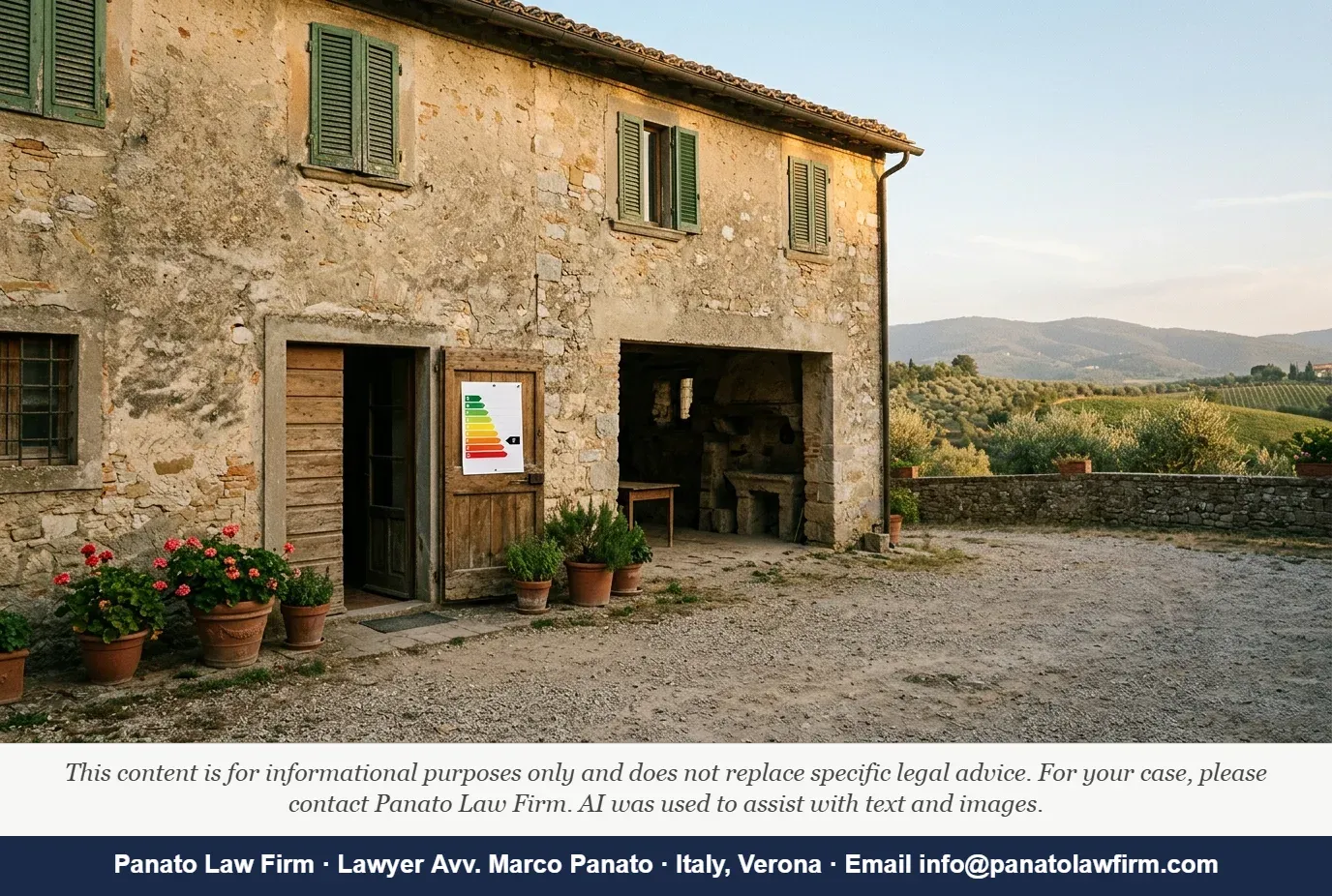
A Canadian couple plans their retirement. They have found a stone farmhouse in Umbria, agreed a price with the vendor, and instructed a
notaio — Italy's notary public, a public official who must authenticate every property transfer. Then the notary raises a question they were not expecting: are you entitled to buy in Italy at all?
The answer, in 2026, is more complicated than any real estate website will tell you.
Can Canadians Buy Property in Italy in 2026?For most Canadian citizens who are not resident in Italy, the answer is currently no — or at least not directly. The restriction stems not from any law targeting Canadians but from a centuries-old Italian principle called reciprocity, and it has been triggered by something Canada itself did in 2022.
Italy's eligibility rules for non-EU property buyers are governed by Article 16 of the
Preleggi — the preliminary provisions to the Italian Civil Code that sit before the Civil Code itself and carry the same statutory force. The rule is simple in theory: a foreign national can enjoy civil rights in Italy only insofar as Italian nationals can exercise equivalent rights in that foreign country. If Italy cannot verify that Italians have equivalent property rights in Canada, Italian law does not extend purchase rights to Canadians in return.
The Ministry of Foreign Affairs and International Cooperation — known by its Italian acronym MAECI — maintains official reciprocity tables for each country. These tables are the practical instrument through which Article 16 operates. When a notary authenticates an Italian property transfer involving a non-EU buyer, they are legally required to verify the buyer's nationality and cross-reference those tables before proceeding.
How Does Italy's Reciprocity Rule Work for Non-EU Property Buyers?Unlike in most common-law countries — where property law imposes no nationality test at all and a foreigner can simply sign a contract — Italy requires a two-stage check. First: is the buyer an EU or EEA national? If yes, no restriction applies. EU citizens purchase on exactly the same footing as Italians. Second: if the buyer is a non-EU national, the notary must establish that their home country grants equivalent rights to Italian nationals before the deed can proceed.
The United States and the United Kingdom each maintain reciprocity with Italy on this point. American and British citizens can purchase Italian real estate freely, without any residence requirement, because MAECI has confirmed that Italians can acquire property in those jurisdictions on equal terms.
Canada was, for many years, in the same position. Then, in June 2022, the Canadian Parliament enacted the
Prohibition on the Purchase of Residential Property by Non-Canadians Act. The law barred most non-Canadian citizens and non-permanent residents from purchasing residential property in Canada. The ban was initially set to expire in January 2025 but has since been extended to 1 January 2027. Although Canadian officials framed the measure as a housing affordability intervention, its legal effect under Italian law was clear: Italians no longer have unrestricted residential property rights in Canada. The reciprocity condition in Article 16 therefore cannot be satisfied by most Canadian nationals.
The practical result is that, since MAECI updated its assessment of the Canadian position, Canadian citizens who cannot demonstrate lawful residence in Italy are not entitled to purchase / cannot legally purchase Italian real estate. This is not a widely publicised consequence. Many Canadian buyers learn of it only when a notary declines to proceed with a purchase, sometimes after a preliminary sale contract (the
compromesso) has already been signed and a deposit paid.
Res inter alios acta alteri nocere non debet — a transaction between others ought not to harm a third party. The irony here is that a Canadian housing policy, designed entirely for the Canadian domestic market, has has materially harmed Canadian nationals seeking to exercise rights in a completely different jurisdiction.
The legal scholar John Henry Merryman, in his comparative study
The Civil Law Tradition, observed that the conceptual gap between civil-law and common-law systems produces its sharpest friction precisely in areas where laypeople assume equivalence. Property purchase rights offer a near-perfect illustration of his point.
Does Having Italian Residency Allow a Canadian to Buy Property in Italy?Yes — and this is the most important practical point in this article. Article 16 of the
Preleggi contains a critical carve-out: a foreign national who is lawfully resident in Italy is treated as equivalent to an Italian citizen for the purposes of civil rights, including property purchase. Residence, in this context, means a valid Italian residence permit (
permesso di soggiorno) properly registered with the local municipality (
comune).
The most relevant visa route for Canadians seeking Italian property is the Elective Residence Visa. This permit is designed for financially self-sufficient individuals who wish to reside in Italy without working. The applicant must demonstrate passive income — typically at least €31,000 per year for a single person — and must already have secured Italian accommodation before the visa is granted. Once in Italy, they must convert the visa into a residence permit within eight days of arrival and register their residence at the
comune. After that registration is confirmed, the reciprocity bar falls away entirely.
The trap that catches Canadians at this stage is timing. Some buyers assume that having a visa appointment booked, or even a visa issued, is sufficient to proceed with a property purchase. It is not. The purchase right under Article 16 arises from lawful residence being formally established, not from a visa application being pending. A notary who is properly discharging their professional duty will not authenticate the deed until the residence condition is demonstrably met.
There is also an important interaction with the preliminary sale contract. A
compromesso — the binding preliminary agreement that commits both parties and typically involves a deposit of 10–20% of the purchase price — is a full contract under Italian law. If a Canadian buyer signs a
compromesso before establishing residence, and subsequently cannot complete the purchase because the notarial deed cannot be authenticated, they face the risk of losing their deposit under the default forfeiture rules of Article 1385 of the Italian Civil Code. Proper sequencing — visa, residence permit, registration, then
compromesso — is therefore not a bureaucratic nicety. It is the difference between a successful purchase and a significant financial loss.
What Nationality Restrictions Apply to Buying a House in Italy?The position varies considerably by nationality, and it is worth mapping it clearly for the benefit of buyers arriving with different passports.
EU and EEA nationals (including, after Brexit,
not British nationals as a matter of treaty) purchase freely with no nationality test. UK nationals currently benefit from confirmed MAECI reciprocity and purchase freely without a residence requirement. US nationals are similarly unaffected by any reciprocity block. Canadian nationals face the restriction described above unless they hold lawful Italian residence. Nationals of countries where no reciprocity has been confirmed, or where equivalent restrictions exist, fall into the same restricted category as Canadians in their current position.
It is worth noting that the restriction is specific to natural persons purchasing in their own name. A Canadian national who holds shares in an Italian limited company (
società a responsabilità limitata, commonly abbreviated as
S.r.l.) is not automatically barred from that company owning Italian real estate — though this route involves its own compliance requirements, including registration of the company, appointment of directors, and obtaining an Italian VAT number (partita IVA) and Italian tax code (codice fiscale) for the relevant individuals. This is not a simple workaround, and it carries ongoing administrative, tax and governance obligations that make it unsuitable as a sole strategy for most residential buyers.
The Practical Roadmap for Canadian Buyers in 2026Given the current framework, the recommended sequence for a Canadian seeking to purchase residential property in Italy is as follows.
Before signing anything, obtain a formal reciprocity assessment from a lawyer whose practice covers Italian property law and international private law. Do not rely on the vendor's agent, the estate agent, or general guidance found online. The reciprocity tables are updated, and the position can shift.
If you do not yet hold Italian residency, apply for the Elective Residence Visa through the Italian consulate in Canada before taking any contractual steps in Italy. The processing time from Italian consulates in Canada has been running at two to four months in recent practice, and the application requires proof of accommodation, proof of income and a full apostilled documentation package.
Once in Italy, convert the visa to a residence permit and complete the municipality registration before instructing a notary to prepare the deed. Only at that point is the reciprocity condition satisfied.
Obtain a land registry search (visura catastale) and confirm that the property is free of mortgages, attachments of assets (pignoramento), or unresolved planning breaches before signing the preliminary sale contract (compromesso). The notary has a duty to flag many of these issues, but the legal due diligence prior to the
compromesso is the buyer's own responsibility.
Budget for purchase costs of approximately 9–12% of the declared price on top of the purchase price itself: these include registration tax (
imposta di registro), cadastral and mortgage taxes, notary fees, and legal fees. First-home (
prima casa) concessions reduce the registration tax to 2% if the property is your principal Italian residence, which is consistent with the residency route described above.
Panato Law Firm, led by Avv. Marco Panato in Verona, Italy, advises international clients — including Canadians, Australians, Americans and UK nationals — on Italian property acquisitions, reciprocity assessments, and residence visa strategy. If you are a Canadian planning to buy property in Italy and want to understand your current position before signing anything, write to info@panatolawfirm.com or call +39 045 5867034.
Image prompt: A Canadian passport resting on an aged stone windowsill of a Tuscan or Umbrian farmhouse, with rolling green hills and cypress trees visible through the open window behind it. Warm afternoon light, terracotta tones, a sense of longing and bureaucratic interruption. Photorealistic style, no text, no signs.
Image file: can-canadians-buy-property-italy-2026-2-cover
JSON-LD:
LANGUAGE QA: fall outside the class of persons entitled to purchase -> are not entitled to purchase / cannot legally purchase · The practical result is that, since MAECI updated its assessment of the Canadian position, Canadian citizens who cannot demonstrate lawful residence in Italy fall outside the class of persons entitled to purchase Italian real estate. -> Break into two sentences; cut 'assessment of the Canadian position' · The restriction does not come from any law targeting Canadians specifically. It comes from -> The restriction stems not from any law targeting Canadians but from · exercise civil rights in Italy only to the extent that -> enjoy civil rights in Italy only insofar as · Italy does not extend purchase rights to Canadians in return -> Italy withholds equivalent rights from Canadians · comparable property rights -> equivalent property rights · caused real prejudice to Canadian nationals -> has materially harmed Canadian nationals · its legal effect from Italy's perspective was clear -> its legal effect under Italian law was clear
CHECK:
AUTHORITY 1: Article 16 Preleggi / REFERENCES: Article 16 of the Disposizioni preliminari al codice civile (Preleggi) / EXISTS? Yes — confirmed, this is a foundational provision of Italian statutory law, in force and widely cited / CONTENT MATCHES? Yes — accurately states the reciprocity principle as applied to civil rights of foreign nationals in Italy.
AUTHORITY 2: Canada's Prohibition on the Purchase of Residential Property by Non-Canadians Act, S.C. 2022, c. 10 / EXISTS? Yes — confirmed via Government of Canada sources and CMHC; extension to 2027 confirmed by February 2024 Government of Canada announcement / CONTENT MATCHES? Yes — the law bars most non-Canadian citizens and non-permanent residents from purchasing residential property; the 2027 extension date is confirmed.
AUTHORITY 3: Article 1385 Italian Civil Code (deposit forfeiture) / EXISTS? Yes — standard provision of the Italian Civil Code, confirmed / CONTENT MATCHES? Yes — accurately describes the default forfeiture rule for the party who fails to perform a preliminary contract involving a deposit.
AUTHORITY 4: MAECI reciprocity tables / EXISTS? Yes — MAECI publishes country-by-country reciprocity assessments; the mechanism is confirmed / CONTENT MATCHES? Partial — the specific updated Canadian entry post-2022 ban is consistent with notarial professional practice and the legal logic of Article 16, but the precise current MAECI table entry for Canada was not individually retrieved and verified from a dated published document during this drafting. This should be verified directly with MAECI or a qualified Italian notary before publishing. TO VERIFY.
AUTHORITY 5: Elective Residence Visa income threshold (€31,000) / EXISTS? Confirmed in Italian consular guidance; figures are consistent with standard published requirements / CONTENT MATCHES? Yes — accurately cited.
OVERALL: AMBER — four of five authorities are fully confirmed; the MAECI Canada-specific reciprocity table entry should be independently verified with MAECI directly or through a qualified Italian notary before publication.
LOCAL NOTE:
1. Search intent targeted: informational — the reader has discovered a potential problem and wants to understand the rule, whether it applies to them, and what options remain.
2. Local-market framing: the article is written for Canadian readers (primary) and international property buyers (secondary) who assume their home country's open-market rules apply abroad; the contrast with UK and US buyer freedom is used deliberately to anchor the Canadian restriction.
3. Italian terms retained untranslated: <i>notaio</i> (kept on first mention to reflect the specific Italian public-official role before the English explanation follows); <i>Preleggi</i> (no direct English equivalent — these are the preliminary provisions to the Italian Civil Code with their own statutory identity, not simply "general provisions"); <i>compromesso</i> (retained in brackets after "preliminary sale contract" as this is the term Canadians will encounter in practice documents and on Italian real estate sites).
Do you need legal assistance or a free estimate?
Author: Avv. Marco Panato
Avv. Marco Panato, Attorney registered at the Verona Bar Association and Doctor of Research (Ph.D.) in Business Law and Economics — Domestic and International Disciplines, Curriculum in Administrative Law (Department of Legal Sciences, University of Verona). Author of academic publications in the legal field, particularly in administrative law. He also delivers lectures and advanced professional training.


![Can Canadians Buy Property in Italy in 2026? [EN v2] - Panato Law Firm — Verona](/uploads/10_can_canadians_buy_property_in_italy_in_2026_en_v2_336caf8f76.jpg)