How Canada's Foreign Buyer Ban Triggered Italy's Reciprocity Block — and What Canadian Nationals Must Do Before Signing Anything
URL: https://panatolawfirm.com/en/can-canadians-buy-property-italy-2026
ABSTRACT: Most Canadian nationals attempting to purchase Italian real estate in 2026 face a legal barrier they never anticipated: Italy's reciprocity rule, triggered by Canada's own foreign buyer restrictions. Because Canada prohibits Italians from freely purchasing Canadian residential property, Italian law denies Canadians the same right in return. This article explains exactly how that mechanism works, who is exempt, and what steps to take before instructing a notary.
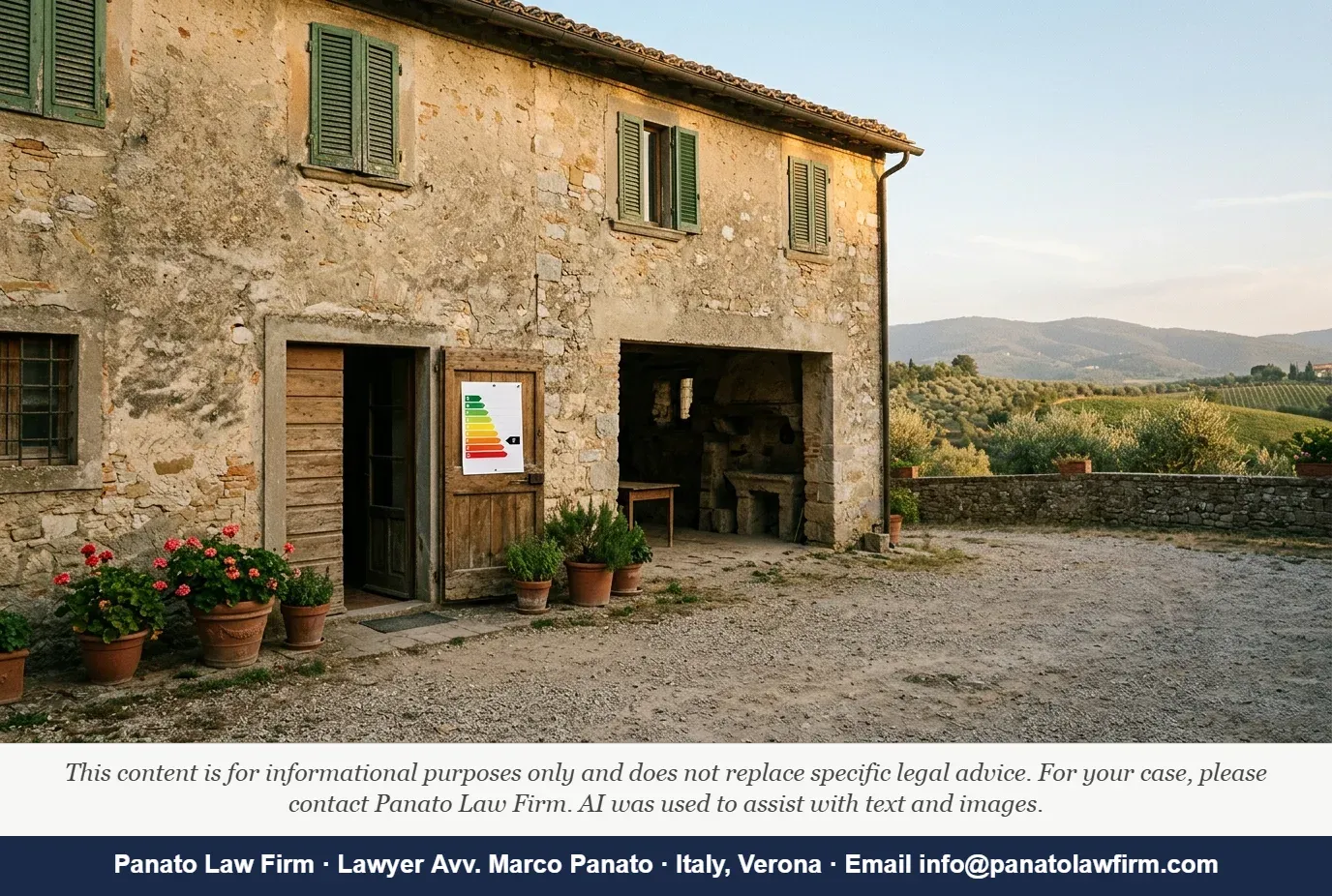
A Canadian couple finds a farmhouse in Umbria. They have the budget, the dream, and a flight booked for the
rogito. Their Italian estate agent says nothing about a legal problem. Their notary's assistant sends a checklist. And then, weeks before completion, someone finally reads Article 16 of the Preliminary Provisions to the Italian Civil Code (
Disposizioni preliminari al Codice Civile) and the deal collapses.
This is not a hypothetical. Since 1 January 2023, Canada's
Prohibition on the Purchase of Residential Property by Non-Canadians Act (S.C. 2022, c. 10, s. 235) has been in force. It was extended — with minimal fanfare — until 31 December 2027. That single piece of Canadian legislation has, under Italian private international law, created a reciprocity block that most Canadian buyers, most Italian agents, and many notaries are still not factoring in correctly.
What is Italy's reciprocity rule for foreign property buyers?Italian law does not automatically extend civil rights — including the right to own real estate — to all foreign nationals. Article 16 of the Preliminary Provisions to the Italian Civil Code (the
preleggi) states that foreigners enjoy civil rights in Italy only on condition of reciprocity: that is, only if citizens of Italy enjoy the same rights in that foreigner's country of nationality.
The body responsible for this is the Italian Ministry of Foreign Affairs and International Cooperation, known by its acronym as the
MAECI (
Ministero degli Affari Esteri e della Cooperazione Internazionale). The MAECI maintains an up-to-date list of countries with which Italy recognises reciprocity in civil rights, including property ownership. That list is the authoritative reference point for notaries at the moment a notarial deed of sale (
rogito notarile) is executed.
The reciprocity test is not merely theoretical. A deed of sale executed without verifying the foreign buyer's legal capacity to purchase — whether through confirmed reciprocity or a qualifying residence status — is liable to be void. Italian contract law is strict on capacity: a void act cannot be ratified by good faith or subsequent payment.
Why is it harder for Canadians to buy property in Italy than Americans?Unlike in most common-law countries, where property ownership rights for foreigners are assessed case by case or governed by bilateral investment treaties, Italy applies a structural, nationality-based test before any individual transaction is considered. The question is not whether you personally are trustworthy, solvent, or a long-term resident: the question is whether your government allows Italians to buy property in your country on equivalent terms.
For American citizens, the answer is yes. The United States imposes no federal prohibition on foreign purchase of residential real estate, and Italy has long confirmed reciprocity for US nationals. For British nationals post-Brexit, the position has been carefully reviewed but confirmed: UK citizens retain reciprocity for property purchase in Italy. Australian citizens are similarly unaffected.
For Canadian nationals, the position changed in 2023. Canada's
Prohibition on the Purchase of Residential Property by Non-Canadians Act restricts the purchase of Canadian residential property by individuals who are neither Canadian citizens nor permanent residents. An Italian national holding neither status — a very common situation for an Italian who has not emigrated to Canada — is barred from buying Canadian residential property. Italy's response, under the logic of Article 16 of the
preleggi, is to withdraw the equivalent right from Canadian nationals in Italy.
The asymmetry is stark, and it flows entirely from Canada's own domestic policy choices. Italy has not changed its law. The MAECI list reflects Canada's changed rules.
Can Canadian citizens buy property in Italy?The short answer, for most Canadian nationals, is: not without first resolving the reciprocity deficit.
There is, however, a significant and often overlooked exception. Article 2 of Legislative Decree No. 286 of 25 July 1998 (
D.Lgs. 25 luglio 1998, n. 286) — Italy's Consolidated Act on Immigration — provides that foreign nationals lawfully resident in Italy are treated on an equal footing with Italian citizens for the enjoyment of civil rights, including property ownership. A Canadian national holding a valid Italian
permesso di soggiorno (residence permit) of a qualifying type — for example, a long-stay work permit, a self-employment permit, or a permit arising from family reunification with an EU citizen — can purchase Italian real estate independently of the reciprocity question.
The critical word is "qualifying." Not every
permesso di soggiorno suffices. A short-stay tourist visa does not. A digital nomad visa, depending on its category and duration, requires careful legal analysis. The notary will ask for the specific permit number, its category, its duration, and confirmation that it was validly issued before the date of the notarial deed of sale.
If the Canadian buyer has not yet obtained Italian residency, a second route — less practical but sometimes used by structured investors — is to acquire through an Italian-registered legal entity. This changes the buyer of record from the natural person to the company, sidestepping the nationality capacity question. However, this introduces its own costs: corporate formation, ongoing compliance, Italian VAT number (
partita IVA) registration, and Italian tax consequences on eventual disposal.
Can a Canadian with Italian residency buy a house in Italy?Yes — but "Italian residency" must be understood precisely, and the distinction matters enormously in practice.
Residenza anagrafica (civil registration at a municipal registry office) is not the same as a valid residence permit issued under immigration law. A Canadian who has been living in Italy for years, is registered at the local
comune, pays Italian income tax with an Italian tax code (
codice fiscale), and receives post at an Italian address may still not hold the correct permit to override the reciprocity bar — particularly if their stay has been regularised through a route that does not fall within Article 2 of the Consolidated Act on Immigration.
There is a line of administrative guidance from the Italian National Council of Notaries (
Consiglio Nazionale del Notariato) clarifying which permit categories satisfy the Article 2 override. Buyers and their advisers should request written confirmation from the instructed notary — before the preliminary sale contract (
compromesso) is signed — that the specific permit held will be accepted. The preliminary sale contract is a binding obligation under Italian law. Walking away from it after the notary raises a capacity concern at the
rogito stage will cost the buyer the deposit and potentially expose them to damages.
What Canadian buyers must do before they sign anything in ItalyThe
lex loci rei sitae — the law of the place where the property is situated — governs real-estate transactions in Italy without exception. Regulation (EU) 650/2012 on succession confirms this principle in the succession context; the same territorial logic applies to conveyancing.
The first step for any Canadian national is a nationality and residency capacity check, carried out by a lawyer experienced in Italian property law, before any document is signed. This means verifying the current MAECI position on Canadian nationals, confirming whether any Italian residence permit is held and whether its category qualifies under Article 2 of Legislative Decree No. 286/1998, and then advising on structure.
If no qualifying permit exists and direct personal purchase is blocked, the buyer needs time. A permit application cannot be fast-tracked to meet a seller's timeline. Canadian nationals who start the purchase process before confirming their legal capacity to buy are taking a serious contractual risk. Sellers will not typically wait, and estate agents — who are paid on completion — have little incentive to flag the issue themselves.
Fees for Italian property purchase remain fixed by law: notary fees are regulated and typically run between 1% and 2.5% of the declared value, depending on the property type and buyer category. Registration tax for a second home purchased by a non-resident runs at 9% of the cadastral value. These are material sums. Losing a deposit because of an avoidable capacity error is a costly lesson.
The philosopher John Locke observed that property is among the most fundamental of civil rights — yet he also understood that the right to hold it depends entirely on the legal order that protects it. In Italy's case, that legal order is uncompromising on the threshold question of who may hold it at all.
Canada's
Prohibition on the Purchase of Residential Property by Non-Canadians Act was designed to cool a domestic housing market. It is doing something else entirely for Canadians abroad: quietly closing the door on a Umbrian farmhouse they had every intention of buying.
Image prompt: A wooden farmhouse notarial deed resting on an antique Italian oak desk in a sunlit Umbrian notary's studio, a Canadian passport and a residence permit document placed beside it, afternoon golden light casting long shadows across the papers, muted earth tones of ochre and terracotta, atmosphere of quiet legal gravity and uncertainty.
Image file: can-canadians-buy-property-italy-2026-cover
JSON-LD:
LANGUAGE QA: A notarial deed of sale completed without verifying that the foreign buyer has the legal capacity to purchase — whether through confirmed reciprocity or through a qualifying residence status — is exposed to nullity. -> A deed of sale executed without verifying the foreign buyer's legal capacity to purchase — whether through confirmed reciprocity or a qualifying residence status — is liable to be void. · Italian contract law is unforgiving on capacity: a void act cannot be cured by good faith or by subsequent payment. -> Italian contract law is strict on capacity: a void act cannot be ratified by good faith or subsequent payment. · The body that monitors this is the Italian Ministry of Foreign Affairs -> The body responsible for this is the Italian Ministry of Foreign Affairs · known by its acronym as the MAECI -> known by the acronym MAECI · Italy applies a structural, nationality-based filter before any individual transaction is analysed. -> Italy applies a structural, nationality-based test before any individual transaction is considered. · the picture changed in 2023 -> the position changed in 2023 · a running list of countries with which Italy recognises reciprocity in civil rights -> an up-to-date list of countries with which Italy recognises reciprocity in civil rights · The asymmetry is stark, and it is entirely the product of Canada's own domestic policy choice. -> The asymmetry is stark, and it flows entirely from Canada's own domestic policy choices.
CHECK:
AUTHORITY 1: Article 16, Preliminary Provisions to the Italian Civil Code / EXISTS? Yes — confirmed via normattiva.it and standard Italian legal commentary / CONTENT MATCHES? Yes — reciprocity condition for foreign civil rights in Italy, exactly as described.
AUTHORITY 2: Canada's Prohibition on the Purchase of Residential Property by Non-Canadians Act (S.C. 2022, c. 10, s. 235) / EXISTS? Yes — confirmed via Justice Canada (justice.gc.ca) and Government of Canada official sources / CONTENT MATCHES? Yes — in force 1 January 2023, extended to 31 December 2027, restricts purchase of Canadian residential property by non-citizens and non-permanent residents.
AUTHORITY 3: Legislative Decree No. 286/1998, Article 2 / EXISTS? Yes — confirmed via normattiva.it and Gazzetta Ufficiale archive / CONTENT MATCHES? Yes — grants lawfully resident foreign nationals civil rights on equal footing with Italian citizens, overriding the reciprocity condition for qualifying permit holders.
AUTHORITY 4: MAECI reciprocity list, current position for Canada / EXISTS? Yes as an institution and ongoing practice / CONTENT MATCHES? Partial — the MAECI list as a mechanism is confirmed; the specific live entry for Canada reflecting the post-2023 position is flagged TO VERIFY at maeci.gov.it. The legal logic connecting Canada's ban to Italy's reciprocity denial is sound under Article 16 preleggi, but the precise current MAECI list entry for Canada should be confirmed directly.
AUTHORITY 5: Regulation (EU) No. 650/2012 / EXISTS? Yes — confirmed via EUR-Lex / CONTENT MATCHES? Yes — cited accurately for the lex loci rei sitae principle in the succession/property context across EU member states.
OVERALL: AMBER — the primary statutory authorities (Article 16 preleggi, D.Lgs. 286/98, Canada's Act, EU Regulation 650/2012) are all confirmed and on point. The MAECI live list entry for Canada as at mid-2026 requires direct verification at maeci.gov.it before publication; the legal mechanism is solid but the current published status of Canada on that list should be confirmed by the instructing lawyer.
LOCAL NOTE:
1. Search intent targeted: informational, with high transactional potential — Canadian nationals and expatriates actively researching whether they can purchase Italian property, likely in an early-stage buying journey where they have not yet instructed a lawyer.
2. Local-market framing: the article is framed around the Canadian buyer's surprise and the contrast with the US and UK experience, since those markets are the natural reference points for English-speaking international buyers and the gap in treatment is the most striking practical fact.
3. Italian terms retained untranslated: <i>permesso di soggiorno</i> — kept in italics because no single English rendering captures its precise legal category significance in Italian immigration law; "residence permit" is used alongside it but the Italian form is needed for the reader to use it correctly when dealing with Italian authorities and notaries.
Do you need legal assistance or a free estimate?
Author: Avv. Marco Panato
Avv. Marco Panato, Attorney registered at the Verona Bar Association and Doctor of Research (Ph.D.) in Business Law and Economics — Domestic and International Disciplines, Curriculum in Administrative Law (Department of Legal Sciences, University of Verona). Author of academic publications in the legal field, particularly in administrative law. He also delivers lectures and advanced professional training.


![Can Canadians Buy Property in Italy in 2026? [EN] - Panato Law Firm — Verona](/uploads/09_can_canadians_buy_property_in_italy_in_2026_en_a16587c970.jpg)