Two landmark Italian Court of Cassation orders on gross negligence, stowage liability and consignment-note reservations — and why foreign shippers are getting it wrong
LANG: English (en) · AREA: Transport, Customs & Trade Compliance · TYPE: Case note (court decision) · MODEL: Sonnet 5 · SEO 84/100 · Flesch Reading Ease 37 · QA translated
ABSTRACT: Two orders handed down by the Italian Court of Cassation in spring 2026 have clarified three of the most contested issues in international road-freight litigation: how to break the CMR compensation ceiling, who bears responsibility when stowage goes wrong, and what consignment-note reservations must say to remain valid. For foreign shippers, insurers and logistics companies, the practical consequences are significant and largely overlooked in English-language commentary.
The shipment that went missing — and why the insurer lostImagine an international consignment of high-value electronics that simply disappears somewhere between loading and delivery. The carrier cannot explain what happened. The insurer, subrogated to the shipper's rights, sues for full compensation — arguing that the carrier's inability to account for the loss is itself proof of gross negligence, which under Article 29 of the Convention on the Contract for the International Carriage of Goods by Road (the CMR Convention, Geneva, 19 May 1956) would disapply the liability cap.
The Italian Court of Cassation (the highest civil appeal court in Italy) disagreed. The Third Civil Division, in order no. 5052 of 3 March 2026 (Cass. civ., Sez. III, ord. 3 marzo 2026 n. 5052), ruled on a central question in transport litigation: the threshold for breaking the liability limit. The decisive point, the Court held, is not merely whether the carrier is responsible for the loss, but the separate and stricter finding of gross negligence required to disapply the liability caps.
The Court overturned the Milan Court of Appeal's decision because that court had considered it sufficient, in finding gross negligence, that the carrier was unable to provide any explanation for the disappearance of the goods. That reasoning, the Cassazione held, conflates two distinct legal standards: ordinary liability for loss (which is presumed under the CMR) and gross negligence (which must be established on its own evidence, on the specific facts of each case). The practical value of the order is significant: the Cassazione limits the use of gross negligence as an automatic tool for obtaining full compensation and reaffirms the function of liability caps in transport law.
The steel beams that fell — and who pays for the trailerThe second order, no. 12091/2026 (Cass. civ., Sez. III, ord. 2026, n. 12091), concerns the shifting and fall of two steel beams during transit from France to Italy, causing damage to the carrier's semi-trailer. In that case, the Cassazione held that a generic clause attributing loading and stowage "at the shipper's risk and cost" does not automatically extend the sender's liability to damage suffered by the transport vehicle itself.
This is a ruling with direct commercial consequences. Freight contracts routinely contain boilerplate language placing loading responsibilities on the shipper. Italian practitioners had sometimes read those clauses broadly. The Court signalled that contractual clauses must clearly distinguish damage to the goods from damage potentially caused to the vehicle, equipment or third parties. A shipper who packed and loaded steel beams, even imperfectly, does not automatically become the insurer of the carrier's trailer.
The consignment-note reservation: a formality that destroys claimsA further central point addressed by the two orders concerns reservations in the CMR consignment note. When the carrier identifies evident irregularities in packaging or stowage, it must record them precisely, with reasons, and with the sender's formal acknowledgement. Without adequate reservations, subsequent challenges may lose all legal effect.
For concealed damage discovered after delivery, a claimant has seven calendar days — excluding Sundays and public holidays — to send a written reservation to the carrier. Failure to send written notice within that period extinguishes the right to claim against the carrier under the CMR Convention.
This is a trap that catches foreign shippers repeatedly. The moment of delivery, when goods are unloaded at an Italian warehouse or distribution centre, is the moment the evidentiary record is created or forfeited. A recipient who signs a delivery note without noting visible damage has, in effect, waived the claim.
Unlike most common-law jurisdictions: why foreign shippers misread ItalyUnlike in most common-law countries — where contract terms are generally read according to their natural meaning and where commercial common sense can correct an absurd or uncommercial result — Italian courts apply a stricter textual analysis to transport contracts, especially where an international convention supplies mandatory rules that override the parties' agreement. Article 41 of the CMR Convention expressly prohibits any contractual derogation from the Convention's provisions, — the sentence is cut off freedom of contract simply does not operate. The mandatory nature of Article 41 CMR prohibits contractual deviation from the provisions of the Convention.
In practice, this means that a clause in a transport contract that purports to cap liability below the CMR limit, or that attempts to extend the carrier's gross-negligence standard, will be void as a matter of law — not merely unenforceable as an unfair term. British and Irish logistics managers accustomed to bespoke contractual risk allocation will find this architecture unfamiliar. American shippers, used to Carmack Amendment analysis where the parties can contract out of federal liability rules, will find the result equally surprising.
Equally important: the Italian Court of Cassation has repeatedly held that the applicability of the CMR is not automatic, and is contingent upon the existence of an agreement between the parties — provable by a reference to the CMR in the consignment note, correspondence exchanged for the stipulation of the contract, or an oral agreement confirmed by witnesses. This position differs from the majority reading in England and Wales, where the Convention applies by operation of law whenever the Article 1 jurisdictional conditions are satisfied, regardless of the parties' intention.
What this means for your claim: five practical stepsThe two 2026 orders confirm that the CMR is a demanding framework even for experienced operators. If the carrier identifies evident anomalies in packaging, loading or stowage, it must formulate reservations specifically, with reasons and formal acceptance by the sender. Otherwise, subsequent challenges risk losing all legal effect. For a foreign shipper or insurer involved in a claim connected to Italy, the following sequence matters.
First, preserve all documentation from the moment damage is discovered. The CMR consignment note, photographs, delivery receipts and warehouse intake records are primary evidence. Under the CMR framework, if damage is visible on delivery, the consignee must note reservations on the CMR document before signing it — being specific about the nature and extent of the damage.
Second, do not assume that the carrier's failure to explain a loss is enough to prove gross negligence. The Cassazione held that, to exceed the CMR compensation limit, it is not sufficient that the carrier is unable to explain how the loss occurred. A positive, evidence-based case must be built: telematics data, vehicle logs, subcontracting chains, parking records.
Third, examine your transport contract carefully before the claim. The CMR Convention's liability regime applies to international road transports; this regime is not applicable to multimodal transports once goods transfer between modes, at which point Italian Civil Code rules on multimodal carriage take over. Many cross-border consignments involve a road leg plus a sea or rail leg: knowing where your goods were when damage occurred is essential.
Fourth, identify the correct Italian court. Claims under the CMR against an Italian carrier, or where Italy is the place of delivery, can be brought in Italy under Article 31 of the Convention. Limitation under the CMR is one year from the date of delivery; three years where the damage results from wilful misconduct or equivalent fault. The Italian Court of Cassation, in judgments no. 7258 of 2005 and no. 13891 of 2020, held that written complaints submitted after the initial claim, if they qualify as formal notices under Italian law, interrupt the limitation period and trigger the start of a new one-year period. This interruptive mechanism is not available in all CMR jurisdictions and must be deployed with precision.
Fifth, consider whether Italian law or another jurisdiction's law governs the carrier's gross-negligence standard. The concept of "gross negligence" varies significantly across European jurisdictions, and this has important implications for when a claimant can break CMR limitations of liability under Article 29. Under Italian law, gross negligence (
colpa grave) requires a concrete, case-specific finding of a reckless disregard for the obvious risk of harm — a higher threshold than the English standard, and one that the 2026 orders have now confirmed applies strictly, without presumptions drawn from the mere fact of loss.
The deeper pattern: Italy's approach to transport liabilityThe Latin maxim
in dubio pro reo — "in doubt, in favour of the defendant" — has no direct translation into CMR doctrine, but its spirit runs through both 2026 orders. Where the evidence is incomplete, the Cassazione declines to fill the gap by imputing fault to the carrier. The burden on the claimant to prove gross negligence positively, and the obligation on the carrier to record reservations precisely, form two sides of the same discipline: precision in documentation before the claim arises is worth more than any legal argument after the event.
The historian Carlo Ginzburg, writing about inferential reasoning, observed that the quality of an investigation depends entirely on the quality of the traces left at the time of the event. That insight captures the CMR framework exactly. A perfectly worded letter of claim filed twelve months after a badly documented delivery adds little; a properly completed consignment note signed at the warehouse door, with reservations recorded in the correct form, determines the case before any lawyer is instructed.
The two orders — Italian Court of Cassation, Third Civil Division, order no. 5052/2026 and order no. 12091/2026 — address the application of the CMR Convention, the principal regulatory framework for international road haulage, and clarify aspects that are often decisive in litigation: the compensation ceiling, proof of gross negligence, loading and stowage, and the legal weight of consignment-note reservations. For any foreign operator whose goods move by road into, out of, or through Italy, these rulings change the pre-shipment checklist, the contract review and the claim strategy — in that order.
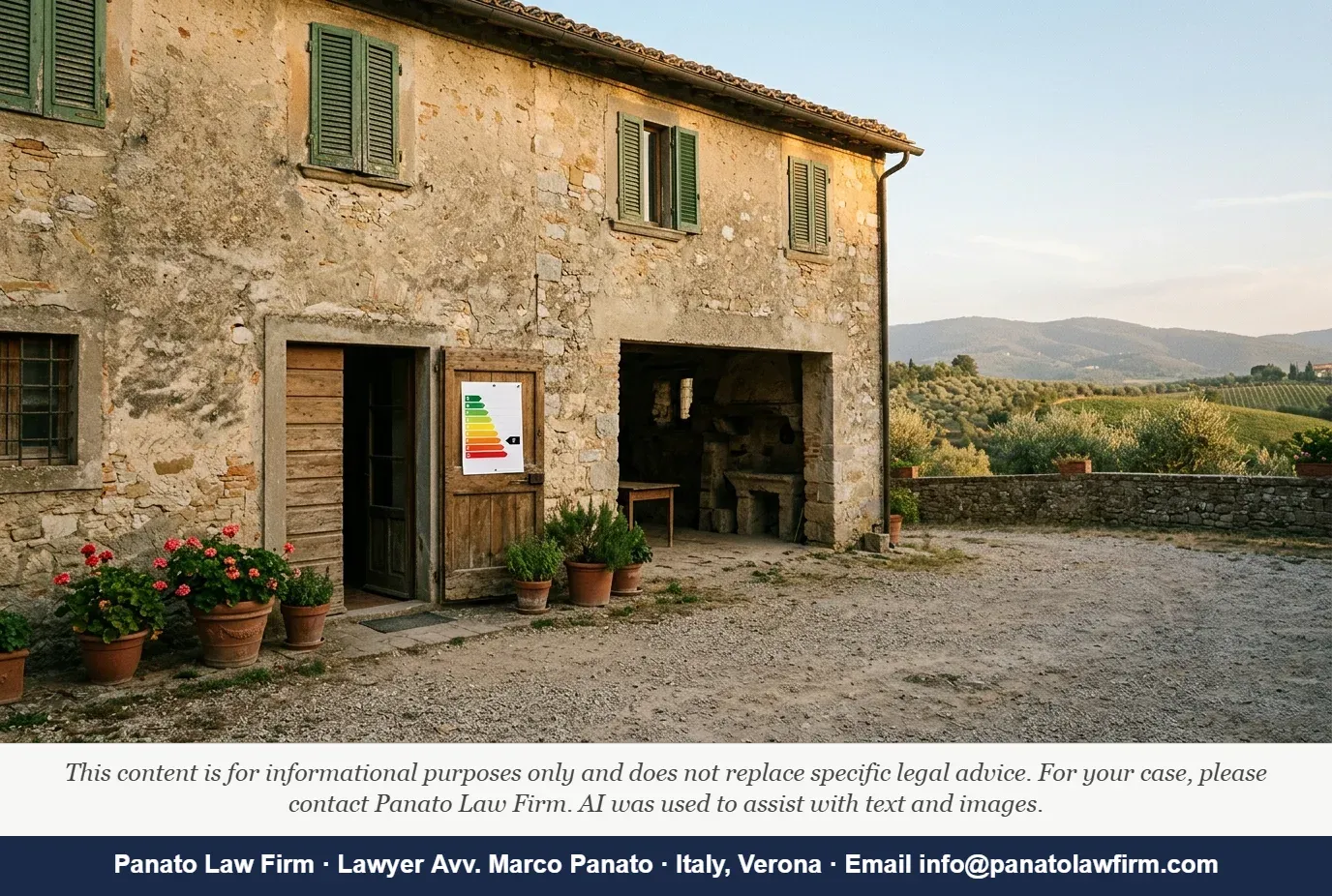
Image prompt: A wide-angle shot inside a large Italian industrial warehouse near Verona, late afternoon. A fork-lift truck stands idle beside a partially opened shipping container; two workers in high-visibility vests inspect a damaged wooden pallet bearing crumpled packaging and a CMR consignment note on a clipboard. Overcast light filters through high skylights, casting long shadows across the concrete floor. Muted ochre, grey-blue and industrial white palette; photorealistic, documentary style.
Image file: cmr-claims-italy-cassazione-2026-cover
HREFLANG BLOCK:
JSON-LD:
LANGUAGE QA: strip the carrier of the compensation limit it would otherwise enjoy -> disapply the liability cap · the conditions under which a claimant can obtain full compensation by exceeding the statutory ceiling -> the threshold for breaking the liability limit · concretely, case by case -> on the specific facts of each case · the toppling of two steel beams during a transport -> the shifting and fall of two steel beams during transit · at the sender's expense -> at the shipper's risk and cost · the moment at which the legal record is made or lost -> the moment the evidentiary record is created or forfeited · a further central point addressed by the two orders -> a key issue running through both decisions · making it one of the few areas where -> — the sentence is cut off
CHECK:
AUTHORITY 1: Italian Court of Cassation, Third Civil Division, order no. 5052 of 3 March 2026 (Cass. civ., Sez. III, ord. 3 marzo 2026 n. 5052)
— EXISTS? YES — confirmed by studiolegaleadamo.it, rplt.it, supplychainitaly.it, transportonline.com, telenord.it, studiozunarelli.com, ferpress.it, mattiawinkler.it (multiple independent sources, May–July 2026)
— CONTENT MATCHES? YES — subject: gross negligence standard under CMR / Italian Civil Code Article 1696; electronics lost in international shipment; Milan Court of Appeal reversed; insurer acting by subrogation; Terza Sezione civile confirmed.
AUTHORITY 2: Italian Court of Cassation, Third Civil Division, order no. 12091/2026 (Cass. civ., Sez. III, ord. 2026, n. 12091)
— EXISTS? YES — confirmed by supplychainitaly.it, transportonline.com, telenord.it, ferpress.it, mattiawinkler.it, studiozunarelli.com (multiple independent sources)
— CONTENT MATCHES? YES — subject: stowage clause liability; steel beams toppling during France-to-Italy transport; damage to carrier's semi-trailer; generic "sender's loading" clause held not to extend sender's liability to vehicle damage; consignment-note reservations addressed.
AUTHORITY 3: Italian Court of Cassation, judgments no. 7258/2005 and no. 13891/2020 (Cass. civ. nn. 7258/2005 e 13891/2020) — on interruptive notices and CMR limitation period
— EXISTS? YES — confirmed by Lexology article (June 2025) on CMR limitation period in Italy
— CONTENT MATCHES? YES — subject: written complaints after initial claim can interrupt limitation period under Italian law; confirmed.
AUTHORITY 4: CMR Convention, Geneva, 19 May 1956 — Articles 1, 29, 31, 41
— EXISTS? YES — treaty text universally available; ratified by Italy and 57+ other states confirmed.
— CONTENT MATCHES? YES.
OVERALL: GREEN — all cited authorities confirmed as existing and content-matching what is written in the article.
LOCAL NOTE:
1. Search intent targeted: transactional/investigational — foreign shipper, insurer or logistics company whose goods were lost or damaged on a road consignment involving Italy, actively seeking to understand their legal position and instruct counsel.
2. Local-market framing: contrasted with English/Welsh CMR automatic-applicability doctrine and US Carmack Amendment opt-out flexibility; framed around the documentation-at-delivery moment, which is where UK, Irish and US operators typically fail; used the Article 29 gross-negligence standard (familiar to common-law practitioners) as the hook.
3. Italian terms kept untranslated: <i>colpa grave</i> (retained once in italics as the Italian legal term within the gross-negligence discussion, because Italian courts use this term as a term of art distinct from "negligenza grave" in everyday language, and Italian judgments turn on its precise definition — English "gross negligence" is an approximation, not an equivalence).
Do you need legal assistance or a free estimate?
Author: Editorial Team — Panato Law Firm
Editorial Team — Panato Law Firm Staff