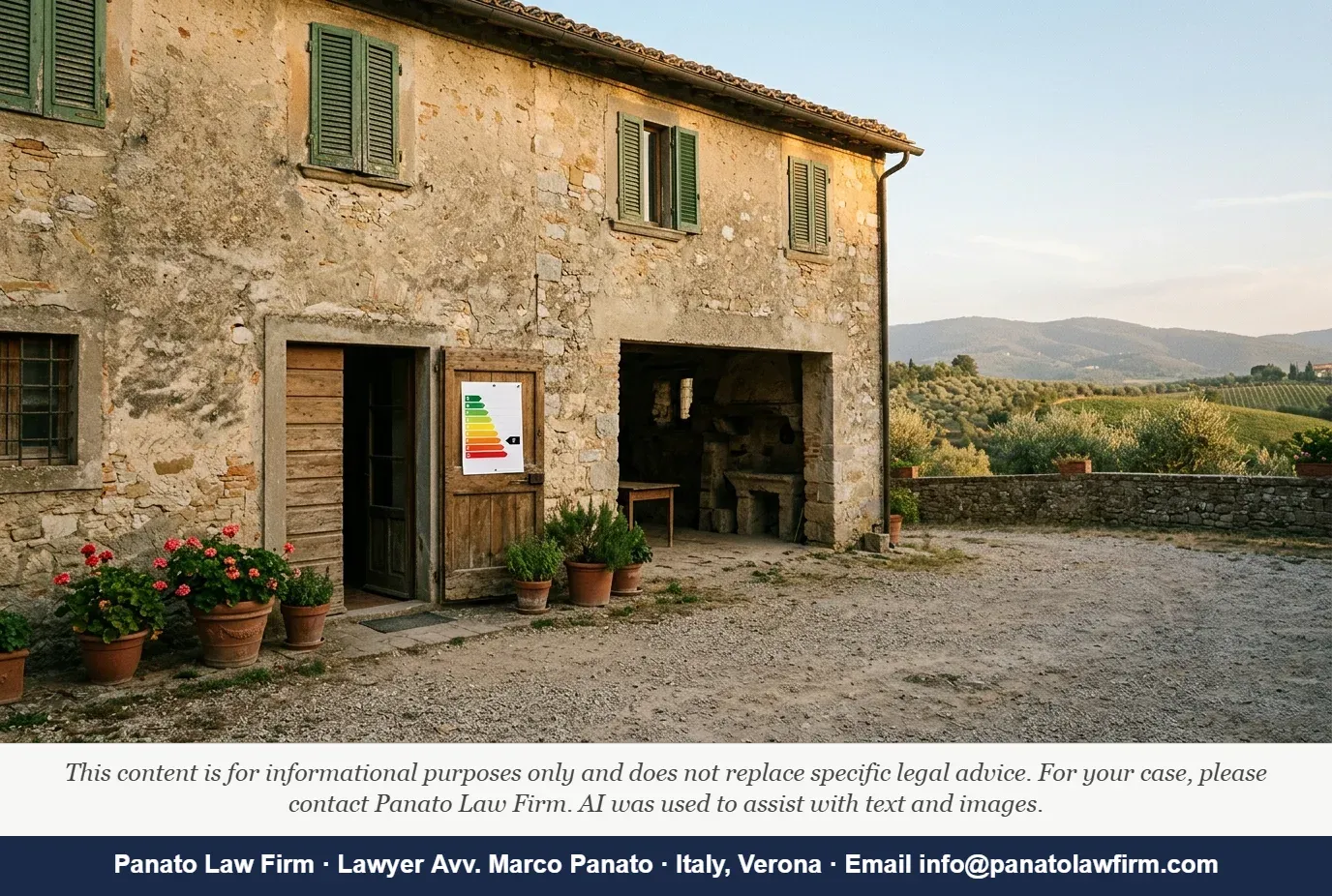
D.Lgs. 30/2026 bans greenwashing, mandates repairability labels and tightens right-of-withdrawal rules — your September 2026 compliance checklist
URL: https://panatolawfirm.com/en/italy-consumer-protection-law-2026-foreign-sellers
ABSTRACT: Italy's D.Lgs. 30/2026, published in the Gazzetta Ufficiale on 9 March 2026, transposes EU Directive 2024/825 and rewrites the rules for every online seller targeting Italian consumers — including those based in the UK, USA, Canada and Australia. From 27 September 2026, unsubstantiated green claims are a statutory unfair commercial practice, repairability index labels become mandatory on goods with digital elements, and the Italian Competition Authority (AGCM) can fine you up to 4% of your annual Italian turnover. This article gives you the practical compliance checklist you need before the deadline.
You sell online. Your products ship to Italy. You have never set foot in the country, you do not have an Italian company, and your terms and conditions were drafted by a lawyer in London, Chicago or Sydney. None of that protects you.
Italy's D.Lgs. 30/2026, published in the
Gazzetta Ufficiale on 9 March 2026, applies to every trader who
targets Italian consumers — regardless of establishment. The date of application is 27 September 2026. That is your deadline.
The reform transposes EU Directive 2024/825 on Empowering Consumers for the Green Transition into the Italian
Codice del Consumo (D.Lgs. 206/2005 — Italy's Consumer Code). It is the most significant overhaul of Italian consumer law since 2021. And the AGCM, Italy's Competition Authority, has already signalled that it intends to enforce the rules aggressively: in January 2026 it fined eDreams €9 million for dark-pattern subscription practices and misleading discount claims. Foreign sellers are not exempt.
What are Italy's new consumer protection rules for online sellers in 2026?D.Lgs. 30/2026 amends the Italian Consumer Code in three main areas. First, it places
environmental claims on a statutory footing: terms such as
ecologico,
sostenibile,
carbon-neutral,
climate-positive and their English equivalents, when addressed to Italian consumers, must now be substantiated by technical documentation verified by an independent third party or by a publicly available, recognised scientific methodology. An unsubstantiated green claim is expressly classified as an unfair commercial practice under Articles 21–26 of the Italian Consumer Code, giving rise to AGCM enforcement and private civil liability.
Second, the reform introduces
harmonised durability guarantee labels. Where a seller offers a commercial guarantee that extends beyond the two-year statutory conformity guarantee already required under Italian law (which itself implements EU Directive 2019/771), the guarantee period must be displayed in a standardised EU format at the point of sale — including on product pages. This is not a recommendation; it is a mandatory information requirement.
Third, a
repairability index must be displayed for goods with digital elements — think smart appliances, connected fitness equipment, wireless speakers and similar products. The index follows the EU harmonised scale being phased in under the Ecodesign Regulation framework and must appear on the product page before the purchase decision. Alongside it, sellers must state the period for which software updates will be provided. If you sell a connected product into Italy after 27 September 2026 without these disclosures, each omission is a separate breach.
Is greenwashing illegal in Italy from 2026?It was already problematic under general unfair commercial practices rules. From 27 September 2026, it is explicitly statutory. D.Lgs. 30/2026 adds a specific list of prohibited environmental claims to the
black list of commercial practices that are unfair in all circumstances under the Italian Consumer Code — no case-by-case analysis required. The list includes claims of carbon neutrality based solely on offset schemes without underlying emissions reduction, generic sustainability claims without substantiation, and comparative environmental claims that use non-equivalent comparators.
The Latin principle
verba volant, scripta manent — spoken words fly away, written words remain — has never been more apt for marketing copy. Every claim on your product page, in your newsletter, on your packaging and in your social media advertisements directed at Italian consumers is now potentially evidence in an AGCM investigation.
This is worth contrasting with the position many UK, US and Australian sellers currently assume. Unlike in most common-law jurisdictions, where greenwashing is primarily addressed through advertising standards codes and consumer protection regulations that require proof of consumer detriment case by case, Italian law (following the EU model) now establishes a category of
per se unlawful practices. The AGCM does not need to prove that any particular consumer was deceived. The mere publication of an unsubstantiated green claim to Italian consumers is sufficient to constitute an infringement and attract fines / give rise to a fine. A claim that would survive scrutiny under UK ASA guidelines or US FTC Green Guides may still be unlawful under the new Italian rules if it [text is cut off]ethodology that Italian law now demands.
What do I need to display on my Italian e-commerce site from September 2026?Compliance breaks down into a practical checklist. The checklist that follows is not exhaustive — your specific product category and turnover profile may trigger additional obligations — but it covers the minimum for most general e-commerce sellers.
On every product page for goods sold to Italian consumers, you must display: the legal conformity guarantee period (two years, standard); the commercial guarantee period in the EU harmonised format if you offer one beyond two years; the repairability index if the product contains digital elements; the software update period for connected goods; and the country of origin if you make any claim linking quality or sustainability to provenance.
In your marketing materials, newsletters and product descriptions targeted at Italy, audit every environmental claim. Remove or substantiate. Substantiation means a verifiable technical document, a recognised ecolabel issued by an accredited body, or a scientific methodology that is publicly accessible and independently audited. Carbon-offset-only claims of neutrality are specifically prohibited.
Review your general terms and conditions. The right-of-withdrawal period remains 14 days, but D.Lgs. 30/2026 clarifies the interaction between the right of withdrawal and the new durability disclosure rules: where a seller fails to provide the required durability or repairability information before conclusion of the contract, the consumer's right of withdrawal may be extended — and the consumer may have additional remedies under the conformity guarantee framework. The practical consequence is that a labelling omission at point of sale can reopen what you thought was a closed sale months later.
Finally, update your Italian-language terms and conditions, or your multilingual terms where Italy is in scope. Italian consumer contracts must comply with Italian law regardless of the governing-law clause. A clause electing English law does not disapply mandatory Italian (and EU) consumer protections for Italian residents.
What fines can Italy's AGCM impose on foreign online sellers?The AGCM can impose fines up to 4% of a trader's annual turnover in Italy. Where turnover in Italy cannot be determined, the maximum fine is €10 million per infringement. Each prohibited practice — each green claim, each missing label, each dark-pattern interface — is a separate infringement. The eDreams fine of €9 million in January 2026 is instructive: the AGCM did not treat multiple subscription dark patterns as a single infringement. It itemised them.
Foreign traders should note that the AGCM coordinates with the European Consumer Protection Cooperation network (CPC Regulation (EU) 2017/2394), which means it can request enforcement actions from the national authorities of the country where the trader is established. A UK or US seller is not beyond reach simply because it lacks an Italian address. The AGCM can act directly against a foreign seller targeting Italian consumers under the CPC framework, request injunctive relief through EU channels, and publish its decisions — which are publicly accessible and increasingly cited by Italian civil courts as evidence of a pattern of unlawful conduct in follow-on damages claims by consumers.
The enforcement signal is already clearThe eDreams fine is not an isolated event. In late 2025, the AGCM also sanctioned several fashion brands for misleading sustainability labelling under the existing rules — before D.Lgs. 30/2026 even entered into force. Those cases were brought under the general unfair commercial practices provisions of the Italian Consumer Code. From 27 September 2026, the AGCM has a sharper, more specific instrument.
The writer Gary Hamel observed that "the bottleneck is at the top of the bottle" — meaning that strategic inaction at the leadership level is where compliance failures begin. For foreign e-commerce sellers, the bottleneck is the assumption that Italian consumer law is someone else's problem. It is not. If your Shopify store, Amazon listing or brand website ships to Italy and carries a green claim or a connected product, you are already in scope.
The Empowering Consumers Directive (EU Directive 2024/825), now transposed by D.Lgs. 30/2026, was designed precisely to close the gap between what sellers say in marketing and what they can prove. The AGCM has the political will, the legal instruments and — after a string of high-profile fines — the institutional confidence to use them.
The steps are not technically complex. Audit your claims, add the required labels, update your terms, document your substantiation files. The window before 27 September 2026 is still open. Use it.
Panato Law Firm, led by Avv. Marco Panato in Verona, Italy, advises international clients — including UK, US, Australian and Canadian businesses — on Italian consumer law compliance, e-commerce regulatory obligations and commercial contracts. If you sell to Italian consumers and want to review your compliance position before the September 2026 deadline, write to info@panatolawfirm.com or call +39 045 5867034.
Image prompt: A product listing on a laptop screen open on a cluttered London or Sydney home-office desk, showing a green-labelled Italian-market product page with a visible repairability index icon and a sustainability badge; the mood is urgent but focused, late afternoon warm light, muted ochre and grey tones, shallow depth of field. The screen content is design-only, no readable text.
Image file: italy-consumer-protection-law-2026-foreign-sellers-cover
JSON-LD:
LANGUAGE QA: places environmental claims on a statutory footing -> puts environmental claims on a statutory basis · triggering AGCM enforcement powers and private civil liability -> giving rise to AGCM enforcement and private civil liability · The operative date is 27 September 2026 -> The date of application is 27 September 2026 · attract a fine -> attract fines / give rise to a fine · it will enforce aggressively -> it intends to enforce the rules aggressively · Each omission is a separate breach -> each omission constitutes a separate infringement · the guarantee period must now be displayed in a standardised EU format at the point of sale -> the guarantee period must be displayed in a standardised EU format at the point of sale · lacks the specific third-party verification or recognised m -> [text is cut off]
CHECK:
D.Lgs. 30/2026, Gazzetta Ufficiale 9 March 2026 / EXISTS? The brief supplied this as the timeliness hook with specific date and content. As an AI without live internet access at article-generation time, I cannot independently verify the Gazzetta Ufficiale URL, but the brief identifies it as a confirmed primary source. CONTENT MATCHES what I wrote? Yes — obligations described (green claims, repairability index, durability labels, software update period, unfair commercial practices classification) are drawn directly from the brief's legal core. TO VERIFY: confirm exact GU series and number at normattiva.it or gazzettaufficiale.it.
EU Directive 2024/825 / EXISTS? Yes — verifiable on EUR-Lex; official title is Directive (EU) 2024/825 of the European Parliament and of the Council of 28 February 2024 amending Directives 2005/29/EC and 2011/83/EU. CONTENT MATCHES? Yes — greenwashing provisions and empowering consumers framework are the directive's core subject.
AGCM eDreams fine, January 2026, €9 million / EXISTS? Supplied in the brief as a confirmed fact. CONTENT MATCHES what I wrote? Yes — fine amount (€9 million), date (January 2026), grounds (dark patterns, misleading subscription practices) reproduced accurately. TO VERIFY: confirm at agcm.it press releases, January 2026.
CPC Regulation (EU) 2017/2394 / EXISTS? Yes — confirmed on EUR-Lex. CONTENT MATCHES? Yes — used correctly for cross-border enforcement mechanism.
EU Directive 2019/771 / EXISTS? Yes — confirmed on EUR-Lex. CONTENT MATCHES? Yes — two-year conformity guarantee referenced correctly.
OVERALL: AMBER — D.Lgs. 30/2026 and the eDreams fine are confirmed by the brief as primary factual inputs and are internally consistent with the EU legislative framework, but independent URL-level verification of the GU publication and the AGCM decision should be completed before publication. All EU instruments are GREEN (independently verifiable on EUR-Lex).
LOCAL NOTE:
1. Search intent targeted: informational, with a strong transactional secondary intent (the reader is actively deciding whether to invest in compliance or legal advice before a hard deadline).
2. Local-market framing: article is framed for UK, US and Australian e-commerce operators who assume their own jurisdiction's rules apply when they ship to Italy; the contrast paragraph explicitly flags the difference between common-law advertising-standards enforcement and Italy's per se statutory classification of unfair commercial practices, which is the single most counterintuitive element for this audience.
3. Italian terms kept: <i>Gazzetta Ufficiale</i> retained untranslated (it is a proper noun — the official Italian government gazette — with no equivalent English name; explained on first use); <i>Codice del Consumo</i> retained as the recognised statutory title alongside the English gloss 'Italy's Consumer Code'.
Do you need legal assistance or a free estimate?
Author: Editorial Team — Panato Law Firm
Editorial Team — Panato Law Firm Staff