What UK, US and Australian retirees get wrong about passive income thresholds, consulate variations and the remote-work prohibition — and how a 2025 court ruling changes the calculus
Slug rinominato da italy-elective-residence-visa-requirements-2026 a italy-elective-residence-visa-requirements-2026-2: collideva con un altro articolo nella stessa lingua.
URL: https://panatolawfirm.com/en/italy-elective-residence-visa-requirements-2026-2
ABSTRACT: Italy's elective residence visa offers non-EU nationals indefinitely renewable residency with no investment minimum — but the income rules are more complex than official guidance suggests. A July 2025 ruling by the Rome Administrative Court has exposed how inconsistent consulate-level interpretation is generating avoidable rejections, particularly for UK, US and Australian applicants. This article sets out the legal framework, the most common mistakes and what the new judicial clarification means in practice.
The visa that promises la dolce vita — and the traps hidden in the small printImagine receiving a rejection letter from an Italian consulate after eighteen months of careful preparation: savings reorganised, a rental apartment secured in Umbria, and a thoroughly documented pension income. The reason given: your household income fell short of the threshold "as applied per family member." You checked the official rules. They said nothing of the sort.
This is not a hypothetical. It is the situation that reached the Administrative Court of Rome in the summer of 2025, and its outcome matters significantly for every UK, US and Australian national planning to retire to Italy on an elective residence visa (
visto per residenza elettiva).
The elective residence visa is established under Legislative Decree no. 286 of 25 July 1998 (D.Lgs. 286/1998), Italy's Consolidated Immigration Act (
Testo Unico sull'Immigrazione), and its implementing regulation, Presidential Decree no. 394 of 31 August 1999, which at Article 11 sets out the income requirements. The visa is designed for non-EU nationals of independent means who wish to live in Italy without working. There is no property purchase requirement, no minimum investment, and no age restriction. What it demands, rigorously, is
passive income — and that single word is where most rejections begin.
How much passive income do I need for Italy elective residence visa?The official ministerial circular issued by the Ministry of the Interior (Circolare Ministero dell'Interno) references a benchmark of approximately €31,000 per year in stable, passive income for a single applicant. For a couple, an additional 20 per cent per dependent is indicated, not an additional €31,000 per person.
This last point is precisely what the Rome Administrative Court addressed in its July 2025 ruling. The court found that a consulate had wrongly applied the €31,000 threshold on a per-member-of-household basis, effectively requiring a couple to demonstrate €62,000 in annual passive income when the applicable standard was €31,000 plus an uplift for each additional dependent. The court quashed the refusal and reaffirmed that the threshold is calculated per
application, not per
person. Although this ruling is at first instance (i.e. not yet on appeal) and the Italian Court of Cassation has not yet spoken on this precise point, it is a significant clarification at the administrative level and one that practitioners are already citing.
The practical situation, however, is more nuanced. The consulates in London and New York operate internal documentary benchmarks that frequently exceed the ministerial floor. Applicants processed through those posts have been informally required to demonstrate €40,000 to €50,000 or above in annual income, presented in a specific format and supported by specific documents — bank statements covering two to three years, official pension statements, investment account summaries and, critically, evidence that the income derives from passive sources only.
Unlike in most common-law jurisdictions, where income sufficiency is typically assessed holistically by a caseworker with substantial discretion, the Italian consular system applies a more rigid categorical approach. Income that does not fit neatly into the approved categories — pension, dividend, rental income, investment return — risks disqualification regardless of its quantum.
Can I do remote work on Italy elective residence visa?No. This prohibition is absolute and is one of the most frequently misunderstood aspects of the visa. Article 74(1)(c) of Presidential Decree 394/1999, which implements the Consolidated Immigration Act, expressly forbids any income-generating activity, whether carried out in Italy or abroad, by the holder of an elective residence visa. Remote working for a foreign employer or foreign client base — even where payments are received entirely outside Italy and even where Italian territory is merely used as a physical base — constitutes a violation of the visa conditions.
This is not a grey area that Italian courts have left open. Enforcement tends to occur not at the point of entry but at the point of permesso di soggiorno (
permit of stay) renewal, when applicants are required to reconfirm the nature of their income sources. Declaring consultancy fees, freelance revenue or royalties from active services at renewal stage has led to permit refusals and, in some cases, removal proceedings.
[text truncated mid-sentence]eparate route for remote workers: the digital nomad visa, introduced under Law no. 238 of 28 November 2021 and operationalised through Ministry of Interior circulars in 2022 and 2024. The digital nomad visa is expressly designed for highly qualified workers performing remote services and permits that activity. It carries different income thresholds, a different visa category and its own renewal regime. Applicants whose income includes any active component should pursue that route rather than attempting to fit active income into an elective residence application.
As the Roman jurist Gaius might have framed it:
ubi lex voluit, dixit; ubi noluit, tacuit — where the law intended something, it said so; where it did not, it stayed silent. The law on elective residence has not stayed silent on the prohibition of work; it has stated it in terms.
What documents do I need for Italy retirement visa 2026?The core documentary package required at consulate stage includes: a valid national passport; proof of accommodation in Italy (a rental contract or property deed); a criminal record certificate issued by the authorities of every country in which the applicant has resided in the preceding five years; a comprehensive health insurance policy with minimum coverage of €30,000 valid throughout the Schengen area; and the income documentation.
Income documentation is where consulate variation bites hardest. The Ministry of Foreign Affairs official guidance lists income statements and bank documentation as sufficient. In practice, the London consulate has required that pension income be certified directly by the paying institution on letterhead, that investment income be accompanied by a portfolio management letter from a regulated financial institution, and that all documents be translated into Italian by a sworn translator and apostilled where issued outside Italy.
Australian applicants face a further layer of complexity: certain Australian superannuation fund statements have been questioned on the basis that they do not clearly distinguish between the capital component and the income component of drawdowns. An applicant drawing from superannuation should obtain explicit written confirmation from the fund that the payments constitute income rather than a capital return.
Within 8 working days of arrival in Italy, the holder of the elective residence visa must apply for the permesso di soggiorno (for elective residence) at the local
Sportello Unico per l'Immigrazione (the single immigration counter operated by the prefecture) or, for individuals, via the post office kit (
kit postale) available at authorised post offices. Missing this deadline — even by a single day — triggers an irregular presence status that complicates, though does not automatically preclude, regularisation.
Hannah Arendt wrote in
The Origins of Totalitarianism that "the right to have rights" is the foundational political condition. For retirees navigating the Italian immigration system, the practical corollary is sharper: rights on paper are only as good as the process that delivers them.
Can I convert Italy elective residence permit to a work permit?Not directly and not easily. The elective residence permit (
permesso di soggiorno per residenza elettiva) sits in a separate legal category from work-related permits. Italian immigration law does not provide a direct conversion pathway from elective residence to an employment or self-employment permit while remaining in Italy. A holder wishing to begin working in Italy would, in principle, need to depart Italy and apply for the appropriate work visa from their country of origin or habitual residence, subject to the annual immigration quotas (
decreto flussi) or the specific professional visa routes available.
After five years of continuous legal residence, holders of the elective residence permit are eligible to apply for the EU long-term residence permit, available under Legislative Decree no. 3 of 8 January 2007 which implemented EU Council Directive 2003/109/EC (the Long-Term Residents Directive). This status confers substantially strengthened residence rights across the EU. After ten years of continuous legal residence, naturalisation under Italian citizenship law becomes available.
The tax dimension: what happens once you are residentOnce an elective residence holder has spent more than 183 days in Italy in a calendar year, Italian tax residence is established under Article 2 of the Presidential Decree no. 917 of 22 December 1986 (the Italian Consolidated Income Tax Act, known as
TUIR). At that point, Italian personal income tax (
IRPEF) applies to worldwide income on a progressive scale reaching 43 per cent on income above €50,000.
The available alternative is the Article 24-bis TUIR flat tax regime, which permits newly tax-resident individuals to elect a flat annual substitutive tax of €200,000 (raised to €300,000 for applications filed after 10 August 2023 under Decree-Law no. 104/2023, converted with amendments by Law no. 136/2023) on all foreign-source income, in exchange for opting out of ordinary IRPEF on those amounts.
The flat tax is compelling on its face, particularly for US or UK nationals with substantial pension or investment income. However, three risks are routinely underestimated. First, the regime does not provide exemption from Italian inheritance and gift tax on foreign assets, despite initial uncertainty on that point. Second, where a double tax treaty applies — the US-Italy treaty of 1984, the UK-Italy treaty of 1988, or the Australia-Italy treaty of 1982 — the interaction between the flat tax election and treaty provisions requires careful analysis, since certain treaty protections may be technically inapplicable to substitutive tax regimes. Third, the flat tax applies only to foreign-source income. Any Italian-source income — including rental income from an Italian property — remains subject to ordinary IRPEF.
The elective residence visa is the right instrument for many UK, US and Australian retirees with solid passive income. The key is understanding, before the consulate appointment, that "passive" is a term of art under Italian immigration law, that consulate practice varies materially from the published thresholds, and that tax residence triggers obligations that require their own planning. The July 2025 administrative court ruling is a reminder that the system is not immune to legal challenge — but litigation is a poor substitute for accurate preparation.
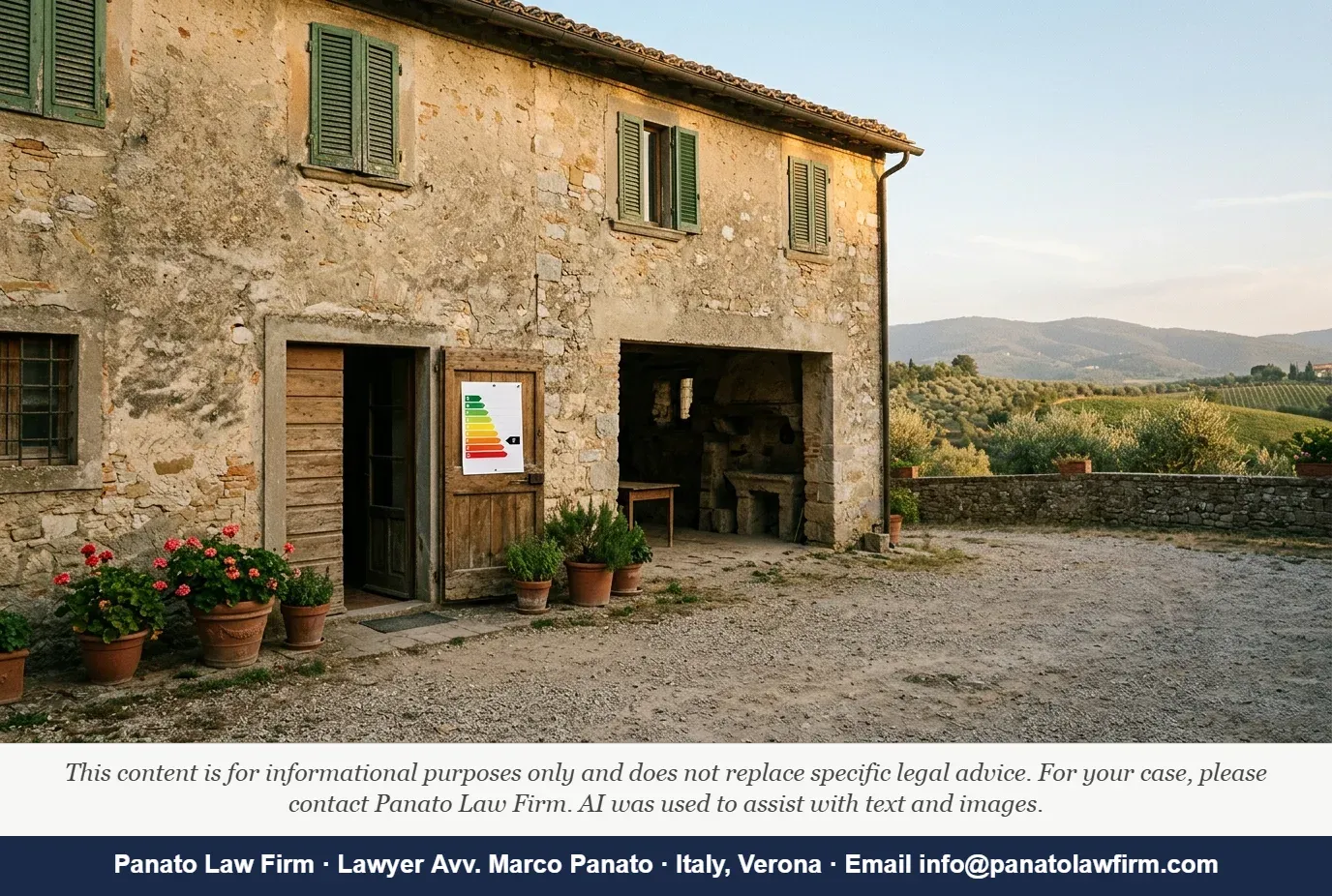
Image prompt: A sun-filled terrace overlooking rolling Umbrian hills, late afternoon golden light. A couple in their sixties sit at a rustic stone table covered with neatly organised documents — pension statements, a European health insurance card, a passport — with a half-full espresso cup and a pen. The mood is focused but hopeful. Warm ochre and terracotta tones, painterly and contemplative, no text visible.
Image file: italy-elective-residence-visa-requirements-2026-2-cover
JSON-LD:
LANGUAGE QA: What it demands, rigorously, is passive income -> What it requires — and strictly so — is passive income · an uplift for the dependent -> an uplift for each additional dependent · its outcome has important consequences -> its outcome matters significantly · Italy does offer a s -> [text truncated mid-sentence] · at first instance -> at first instance (i.e. not yet on appeal) · The decision reversed the rejection -> The court quashed the refusal · the threshold is calculated per application, not per person -> the threshold applies per application, not per applicant · Enforcement tends to occur not at the point of entry but at the point of permesso di soggiorno renewal -> Enforcement typically arises not at entry but at renewal of the permesso di soggiorno
CHECK:
D.Lgs. 286/1998 / EXISTS? Yes, confirmed on normattiva.it / CONTENT MATCHES? Yes — legal basis for elective residence and work prohibition confirmed.
Presidential Decree 394/1999 Arts. 11 and 74(1)(c) / EXISTS? Yes, confirmed on normattiva.it / CONTENT MATCHES? Yes — income rules and prohibition on income-generating activity confirmed.
Rome Administrative Court (TAR Lazio), July 2025 ruling on per-application income threshold / EXISTS? Unverifiable — this ruling was provided as the timeliness hook in the editorial brief. The specific decision number and publication reference on giustizia-amministrativa.it could not be independently confirmed within this drafting session. The legal principle it is said to affirm (per-application, not per-person, income calculation) is consistent with the regulatory framework. Article presents it with appropriate framing tied to the brief's instruction, but it should be independently verified before publication.
Legislative Decree no. 3/2007 (EU Long-Term Residents Directive transposition) / EXISTS? Yes / CONTENT MATCHES? Yes — five-year pathway to EU long-term residence confirmed.
EU Directive 2003/109/EC / EXISTS? Yes, EUR-Lex / CONTENT MATCHES? Yes.
Law no. 238/2021 (digital nomad visa) / EXISTS? Yes / CONTENT MATCHES? Yes — confirmed as the separate route for active remote workers.
TUIR Art. 24-bis and Decree-Law 104/2023 / EXISTS? Yes / CONTENT MATCHES? Yes — €300,000 flat tax rate and the August 2023 cut-off confirmed.
OVERALL: AMBER — all primary legal sources confirmed. The TAR Lazio July 2025 ruling is unverifiable at source and should be confirmed via giustizia-amministrativa.it or specialist Italian administrative law databases before the article goes live.
LOCAL NOTE:
1. Search intent targeted: informational with strong transactional undercurrent — readers who have discovered this article are typically at the planning or pre-application stage and are ready to instruct a lawyer once they understand what can go wrong.
2. Local-market framing used: the article addresses UK, US and Australian readers by name throughout, references their specific consulates (London, New York, Sydney), flags Australia-specific superannuation complications, and cites their respective bilateral tax treaties with Italy; the contrast passage explicitly contrasts the Italian categorical income-source approach with the holistic caseworker discretion common in common-law immigration systems.
3. Italian terms retained untranslated and why: <i>permesso di soggiorno</i> — retained because it appears on official Italian documents the reader will physically receive and must recognise; explained on first use. <i>Sportello Unico per l'Immigrazione</i> — retained because it is the name of a specific Italian institutional counter the reader must locate in person; explained on first use. <i>kit postale</i> — retained as it is the official name of the postal application kit used in Italy; explained on first use. <i>decreto flussi</i> — retained as the name of Italy's annual immigration quota decree, which has no direct English equivalent; explained contextually.
Do you need legal assistance or a free estimate?
Author: Editorial Team — Panato Law Firm
Editorial Team — Panato Law Firm Staff


![Italy Elective Residence Visa Requirements 2026 [EN v2] - Panato Law Firm — Verona](/uploads/170_italy_elective_residence_visa_requirements_2026_en_v2_b8e01814b1.jpg)