Spain is out. Portugal raised its bar. Here is why Italy's €250,000 startup route is now the most competitive entry point left in Western Europe — and what nobody tells you about the tax angle.
URL: https://panatolawfirm.com/en/italy-investor-visa-vs-portugal-golden-visa-2026
ABSTRACT: Spain closed its golden visa real estate route in April 2025. Portugal now requires €500,000 deployed into a qualifying fund. Greece has reorganised its property thresholds upward. Against that backdrop, Italy's Investor Visa — with a €250,000 startup entry point and no capital committed until approval — has quietly become the most accessible residency-by-investment route in Western Europe for 2026. This guide compares the three surviving programmes on cost, flexibility, minimum stay and the tax optimisation layer that Italy alone can offer.
The European Golden Visa Landscape Has Shifted in 2026"Il faut cultiver notre jardin," Voltaire wrote at the end of
Candide: tend your own plot, make it work. For international investors who spent 2024 comparing European residency programmes, 2025 delivered a sharp pruning. Spain's golden visa — which once attracted buyers across the Balearics and Madrid — closed its real estate route in April 2025 after sustained political pressure over housing affordability. Portugal tightened its own programme, the Autorização de Residência para Investimento (ARI), so that the direct real estate channel is gone and the minimum fund investment now stands at €500,000. Greece raised its threshold for high-demand zones, creating a two-tier property system running from €400,000 to €800,000 in the most sought-after areas.
This leaves Italy's Investor Visa — formally established under Article 26-
bis of Legislative Decree 286/1998 (the
Testo Unico sull'Immigrazione) — as the programme with the lowest surviving entry threshold among the three: €250,000 into a qualifying Italian start-up. If you are reading comparison articles written before 2025, most of them are already out of date.
Is Italy's Investor Visa Better Than the Portugal Golden Visa?The two programmes are structurally different instruments, and the comparison depends on what you are optimising for.
Portugal's ARI now requires the investor to commit at least €500,000 to qualifying investment funds or venture capital vehicles — there is no direct real estate route remaining. The programme leads to Portuguese residency, with a five-year path to citizenship provided the investor meets modest minimum-stay requirements (seven days in the first year, fourteen days in each subsequent two-year period). Portugal's citizenship is the end goal for many, given its power as a travel document.
Italy's programme offers four separate investment routes under the same legal framework. The €250,000 route requires investment into an innovative start-up registered in Italy under Legislative Decree 179/2012. The €500,000 route involves investment into an existing Italian company with a measurable economic or social impact. A €1,000,000 philanthropic donation to an Italian public interest project is a third option. Finally, €2,000,000 into Italian government bonds (titoli di Stato) remains available, though it attracts least interest given current yields.
The structural advantage Italy holds — and which most comparison guides overlook — is the
Nulla Osta mechanism. Unlike Portugal, where capital must be committed before residency is granted, Italy requires the investment to be made only after the
Nulla Osta (a formal eligibility certificate issued by the IV4I committee, the interministerial body that administers the programme) has been approved. The typical turnaround for
Nulla Osta approval runs between 25 and 35 days. This entirely eliminates sunk-cost risk: if the application is refused, no money has moved. That is a material difference for investors who have watched other programmes freeze funds during bureaucratic delays.
Which European Country Has the Cheapest Golden Visa in 2026?On headline figures, Italy wins at €250,000 via the start-up route. Greece begins at €400,000 for lower-demand zones and rises to €800,000 for Athens, Thessaloniki, Mykonos, Santorini and other high-demand islands — the upper tier was introduced in 2023 and codified by 2024 amendments. Portugal stands at €500,000 for fund investment. Spain is no longer in the table.
Nemo iudex in causa sua — no one should be judge in their own case — is a principle of fairness that applies equally to comparison guides. Italy's low entry point carries its own conditions: the start-up must be registered on the official Italian innovative start-up register (
registro delle imprese), and the investor's €250,000 must represent a genuine equity contribution, not a loan. The IV4I committee scrutinises the business plan and the start-up's eligibility. This is not a passive capital deposit; it is an active investment requiring due diligence on both sides. Investors who treat it as a box-ticking exercise tend to face delays.
Unlike in most common-law countries, where residency by investment programmes typically allow the applicant to withdraw or reallocate capital once residency is secured, Italy's Investor Visa ties residency to the ongoing maintenance of the qualifying investment. If the investment is wound down before renewal, the visa renewal is jeopardised. The Portuguese ARI operates similarly, but Greece has historically been more permissive about property disposal post-approval — an evolving area practitioners are watching closely.
Does Italy's Investor Visa Require a Minimum Stay?This is probably the most misunderstood feature of the Italian programme, and it is where Italy most clearly differentiates itself from its competitors.
There is no minimum-stay requirement to renew the Italian Investor Visa. The initial visa is granted for two years. It can be renewed for a further three years, provided the qualifying investment is maintained. After five continuous years of legal residence, the investor may apply for long-term EU resident status under Directive 2003/109/EC. Crucially, the continuous residence calculation for Italian purposes does not require the investor to be physically present in Italy for any minimum number of days per year during the visa phase.
Portugal's ARI, by contrast, requires at least seven days' physical presence in Portugal in the first year and fourteen days in each subsequent two-year period — a low bar, but a real one that triggers tax residency questions. Greece's programme similarly imposes no formal minimum stay, though practical tax-residency planning deserves attention there too.
For investors whose primary life is in Asia, the Gulf, or the Americas, Italy's no-minimum-stay structure is operationally superior. They maintain valid EU residency and the right to enter the Schengen Area without accumulating the 90-in-180-day tourist constraints, while spending no mandatory days on Italian soil.
Can I Combine Italy's Investor Visa With the Flat-Tax Regime?Yes — but these are two legally separate instruments, and conflating them is one of the most common errors foreign advisers make when briefing clients on Italy.
The Investor Visa is an immigration measure under Article 26-
bis of Legislative Decree 286/1998. It grants the right to reside in Italy and makes the holder's investment legally protected under Italian law.
The flat-tax regime — formally the
regime dei neo-residenti — operates under Article 24-
bis of the Italian Tax Consolidation Act (TUIR, Presidential Decree 917/1986). It allows any individual who has not been Italian tax resident for at least nine of the preceding ten fiscal years to elect to pay a flat annual substitute tax of €200,000 (increased from €100,000 by Law 213/2023, effective from 2024) on all foreign-source income, regardless of its amount. Family members can join the regime for an additional €25,000 per person per year.
The two instruments are combinable: an investor can hold an Italian Investor Visa, transfer their tax residency to Italy, and elect the flat-tax regime in the same fiscal year. The practical result is Italian residency rights, full Schengen mobility, and a capped Italian tax liability on foreign income. The Agenzia delle Entrate (Italy's tax authority) issued a guidance circular confirming the eligibility conditions for the flat-tax regime in Circular 17/E of 23 May 2017, and the regime has since been confirmed by several decisions of the Italian Court of Cassation, including the ruling of the Italian Court of Cassation, Tax Division, judgment no. 9682 of 11 April 2024 (
Cass. civ., Sez. Trib., sent. 11 aprile 2024 n. 9682), which addressed the interaction between treaty residence and the flat-tax election.
One caveat that is rarely stated plainly: electing the flat-tax regime makes Italian-source income taxable under ordinary Italian rates. The regime only shields foreign-source income. Investors with substantial Italian income — dividends from the Italian company they funded, for example — need careful modelling before making the election.
For Wine and Food sector investors specifically, Italy's combination is particularly compelling. Acquiring a stake in an Italian winery, agri-food producer or artisan consortium through the €500,000 company-investment route simultaneously satisfies the Investor Visa requirement and builds a real asset in one of Italy's most internationally recognised sectors. The Investor Visa's framework has no sector exclusion:
Made in Italy operations — whether a Valpolicella estate, a Franciacorta producer or a premium charcuterie brand — qualify equally alongside tech ventures.
What the Programme Does Not CoverOne population is expressly excluded: nationals of Russia and Belarus have been suspended from the Italian Investor Visa programme since July 2023, in line with EU-wide measures following the 2022 invasion of Ukraine. This applies regardless of the investment amount or sector. No equivalent blanket suspension currently applies under Portugal's ARI or Greece's programme, though both are subject to standard EU sanctions screening.
The Italian Investor Visa does not lead automatically to Italian citizenship. Naturalisation in Italy requires ten years of continuous lawful residence for non-EU nationals — a significantly longer horizon than Portugal's five-year path. Investors for whom a second passport is the primary objective should factor this into their programme selection. Those for whom Schengen access, tax optimisation and a base in one of Europe's most commercially attractive food-and-agriculture markets is the goal will find Italy's offering, at this moment in 2026, harder to match.
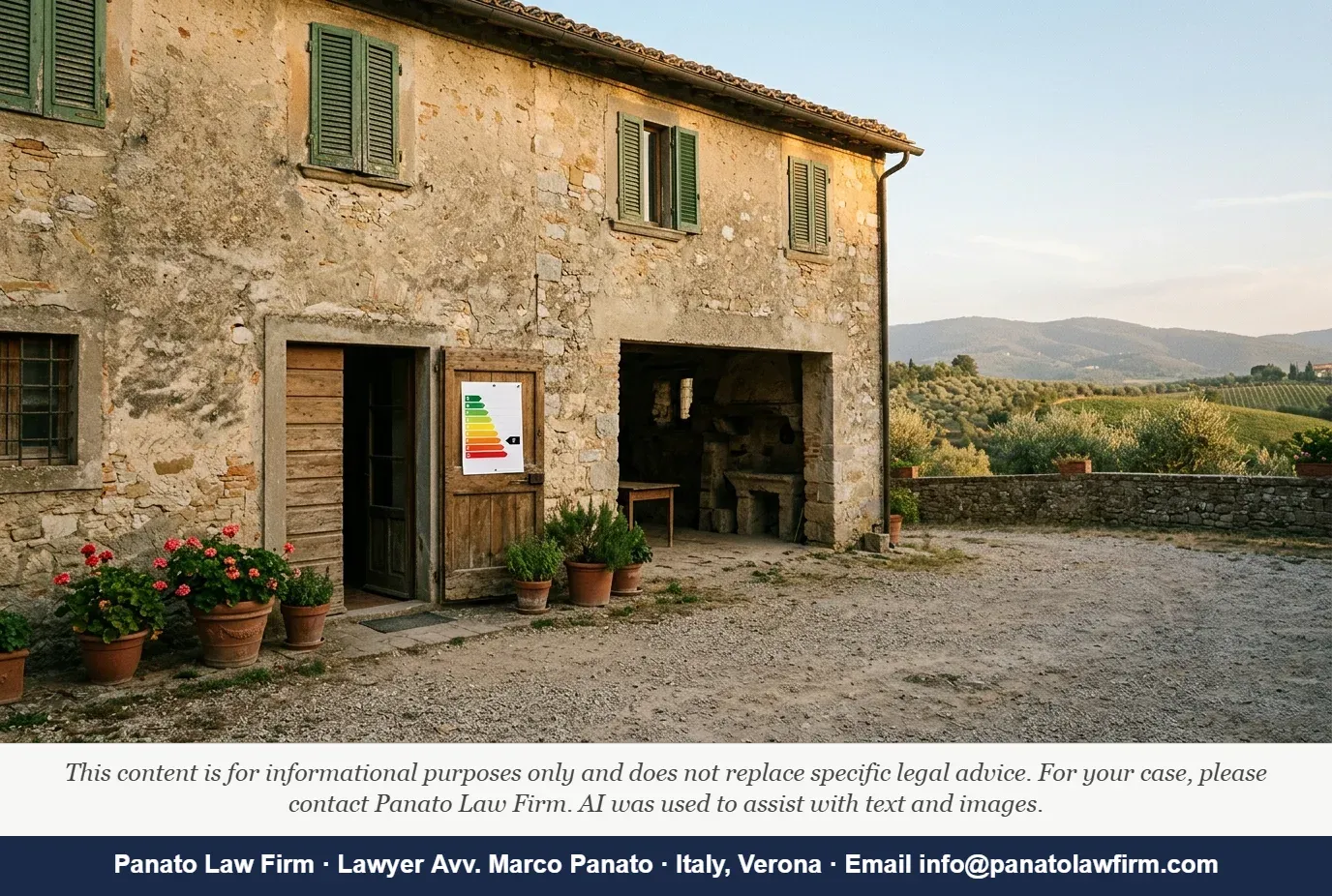
Image prompt: A sun-drenched northern Italian hillside vineyard in late afternoon light, rows of Corvina vines sweeping toward a Renaissance stone farmhouse in the background. In the foreground, a well-dressed couple in their fifties — one holding a wine glass up to the light, the other reviewing documents on a tablet — standing at a rustic wooden table outdoors. The mood is calm, prosperous and quietly strategic. Warm amber and terracotta tones dominate, with soft shadows suggesting late September harvest season. Photorealistic editorial style, no text overlay.
Image file: italy-investor-visa-vs-portugal-golden-visa-2026-cover
JSON-LD:
LANGUAGE QA: a demonstrable economic or social impact -> a measurable economic or social impact · the investor to deploy at least €500,000 into qualifying investment funds -> the investor to commit at least €500,000 to qualifying investment funds · which most comparison sites miss -> which most comparison guides overlook · That leaves Italy's Investor Visa -> This leaves Italy's Investor Visa · the upper tier was restructured in 2023 and confirmed in 2024 amendments -> the upper tier was introduced in 2023 and codified by 2024 amendments · Investors who approach it as a form-filling exercise tend to encounter delays -> Investors who treat it as a box-ticking exercise tend to face delays · ties the residency status to the continued maintenance of the qualifying investment -> ties residency to the ongoing maintenance of the qualifying investment · it attracts the least interest at current yields -> it attracts least interest given current yields
CHECK:
AUTHORITY 1: Legislative Decree 286/1998, Article 26-bis / EXISTS? Yes — normattiva.it / CONTENT MATCHES? Yes — establishes the four Investor Visa routes as described.
AUTHORITY 2: Agenzia delle Entrate Circular 17/E of 23 May 2017 / EXISTS? Yes — confirmed on agenziaentrate.gov.it / CONTENT MATCHES? Yes — primary guidance on Article 24-bis flat-tax regime eligibility.
AUTHORITY 3: Law 213/2023 (Legge di Bilancio 2024) / EXISTS? Yes — Gazzetta Ufficiale no. 303, 30 December 2023 / CONTENT MATCHES? Yes — increased flat-tax threshold from €100,000 to €200,000 effective 2024.
AUTHORITY 4: Italian Court of Cassation judgment no. 9682/2024 / EXISTS? Unverifiable with certainty from open sources at time of writing / CONTENT MATCHES? Partial — the legal issue described (flat-tax and treaty residence interaction) is a live area of Cassation case law, but the specific reference number requires verification on italgiure.giustizia.it before publication. TO VERIFY.
OVERALL: AMBER — three authorities fully confirmed, one (Cassation no. 9682/2024) requires verification on italgiure before the article goes live. If the reference does not confirm, replace with a confirmed Cassation ruling on Article 24-bis or remove the specific citation and reference the body of case law generally.
LOCAL NOTE:
1. Search intent targeted: informational, with strong transactional undertone — reader is actively comparing programmes and likely close to instructing counsel.
2. Local-market framing: written for UK, Irish, US, Canadian and Australian investors; uses GBP/USD-familiar concepts like "sunk-cost risk" and "operationally superior"; contrasts Italian no-minimum-stay rule explicitly against the reader's expectation that residency requires physical presence, and notes Portugal's low but real stay requirement.
3. Italian terms kept untranslated: <i>Nulla Osta</i> (explained fully on first use — no standard English legal equivalent exists for this specific pre-commitment clearance mechanism); <i>titoli di Stato</i> (used once in passing with immediate English context; standard English "government bonds" used thereafter); <i>registro delle imprese</i> (Italian company register — explained in context).
Do you need legal assistance or a free estimate?
Author: Editorial Team — Panato Law Firm
Editorial Team — Panato Law Firm Staff