Elective Residence, Investor Visa and Digital Nomad — the conditions, the conflicts and the citizenship timelines UK, US and Australian movers need to understand before applying in 2026
URL: https://panatolawfirm.com/en/italy-residency-visa-options-comparison-2026
ABSTRACT: Italy now offers four distinct long-stay visa routes for non-EU nationals moving with foreign income or capital, but the conditions are mutually incompatible in ways that consulates rarely explain upfront. A wrong choice can mean rejection, wasted fees, or a tax structure that unravels the moment you start working. This article sets out exactly who qualifies for each route, where they conflict, and which path leads most efficiently to permanent residency or naturalisation.
You have savings, a pension, a remote job, or a portfolio of investments. You want to live in Italy. You have researched online, read the consulate website, and come away more confused than before. That confusion is rational. Italy does not operate a single wealth-immigration route: it operates four, each governed by different legislation, requiring different income structures, carrying different tax consequences, and pointing toward different long-term outcomes. Choosing the wrong one is not a minor inconvenience. Consulates routinely refuse applications that have been filed under the wrong category, and they can delay relocation by 12 to 18 months.
The Four Routes — and Why They Are Not InterchangeableThe first route is the
Elective Residence Visa. Its legal basis is Article 11(1)(c-
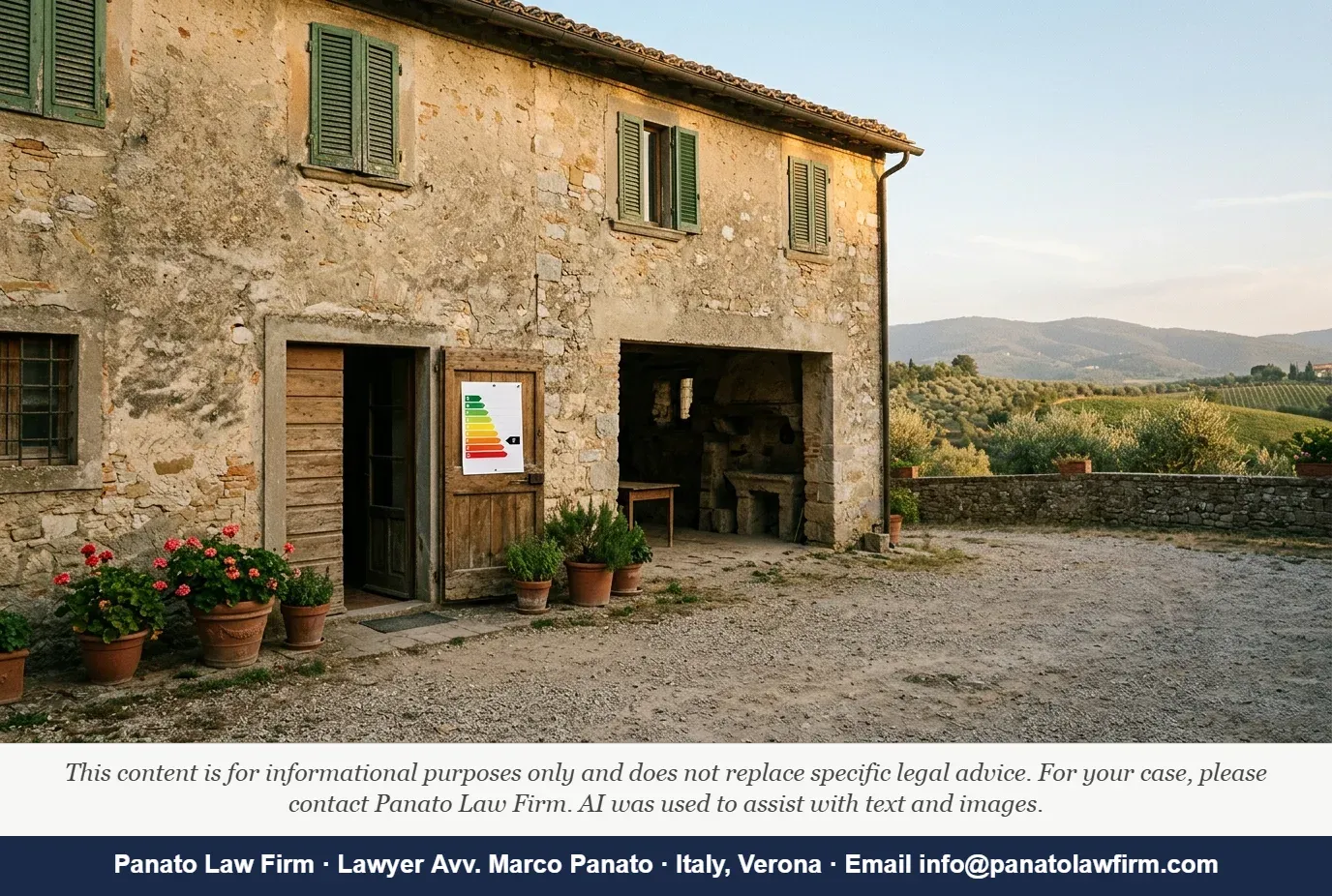
quater) of Presidential Decree 394/1999 (DPR 394/1999), which implements the Italian Consolidated Immigration Act. The visa is available to non-EU nationals who can demonstrate entirely passive income — pensions, investment returns, rental income from abroad, dividends — at a level sufficient to support themselves in Italy without working. The Italian Ministry of Foreign Affairs has historically indicated a reference threshold of around €31,000 per year for a single applicant, though individual consulates apply this figure with considerable discretion.
The critical restriction is absolute: the holder of an Elective Residence Visa is prohibited from undertaking any form of work in Italy, whether as an employee or on a self-employed basis, and regardless of whether the client is Italian or foreign. This prohibition is structural, not incidental. It reflects the visa's philosophical premise — that the holder's economic contribution to Italy is their spending power, not their labour. Anyone who intends to do any paid work, including remote work for a foreign employer, must look elsewhere.
The second route is the
Investor Visa, established under Article 26-
bis of Legislative Decree 286/1998 (the Italian Consolidated Immigration Act), designed to attract foreign capital. It offers four investment tracks: €500,000 in equity in an Italian company; €2,000,000 in Italian government bonds; €250,000 in an innovative Italian start-up registered in the relevant national register; or a philanthropic donation of at least €1,000,000 to a qualifying project in culture, education, scientific research, or heritage restoration. Before the visa is issued, the applicant must obtain a
nulla osta — a clearance certificate — from the IV4I Committee (Investor Visa for Italy), a body established within the Italian Ministry of Economic Development. The Committee reviews the investment plan, confirms its compliance, and issues the clearance, which the consulate then uses as the basis for the visa. The Investor Visa does not mandate continuous physical presence in Italy during the investment holding period, which distinguishes it practically from the other routes. It does not, however, open any accelerated path to Italian citizenship, a point addressed below.
The third route is the
Digital Nomad Visa, the most recently formalised, introduced into Italian law by Law 238/2021 and brought into effect by ministerial decree. It is grounded in Article 27 of the Consolidated Immigration Act and targets non-EU nationals who qualify as
lavoratori altamente qualificati — highly qualified workers — and who carry out their activity remotely, either as employees of non-Italian companies or as self-employed professionals serving non-Italian clients. Qualification requires a university degree or equivalent, plus at least three years of documented professional experience in the relevant field. A minimum income threshold applies, currently set at twice the minimum income level for exemption from Italian healthcare contributions. The Digital Nomad Visa expressly permits remote work, which is its entire rationale.
The fourth route — the
EU Blue Card — applies where a non-EU professional is recruited by an Italian employer under a qualifying contract. It is beyond the scope of most readers seeking autonomous relocation and is noted here only for completeness.
What Is the Difference Between Elective Residence and Digital Nomad Visa Italy?The difference is not merely administrative. It is structural and legally binding. The Elective Residence Visa requires that income be entirely passive: you cannot top up your pension by doing consultancy work, cannot take on a freelance project for a foreign client, and cannot advise a company in which you hold shares if that advice constitutes remunerated activity. The Digital Nomad Visa is built precisely around active, if remotely performed, work. The income it relies upon is earned, not passive.
Unlike in most common-law jurisdictions — where visa categories often allow holders to supplement passive income with limited self-employment — Italian immigration law treats these two categories as mutually exclusive. There is no hybrid visa. An applicant who presents a mix of pension income and remote freelance revenue must choose: suppress the active component and apply under the Elective Residence Visa (accepting the legal prohibition on work thereafter), or apply under the Digital Nomad Visa and ensure the passive income is irrelevant to the application's foundation. Presenting both to a consulate as a combined argument tends to result in refusal under both categories, because neither threshold is cleanly met.
Can I Work Remotely in Italy on an Investor Visa?This is one of the most frequent misunderstandings. The Investor Visa governs your investment commitment, not your occupational status once in Italy. The visa itself does not grant the right to work in Italy. If an Investor Visa holder wishes to work remotely for non-Italian clients, they would in principle need to obtain a separate work authorisation or structure their activity through a legally compliant entity. In practice, many investor-visa holders do not work at all, or hold their working activity through a foreign company. However, this should not be assumed as a right: any income-generating activity in Italy requires appropriate fiscal and regulatory registration, including an Italian tax code (
codice fiscale) and potentially an Italian VAT number (
partita IVA).
What Is the Best Visa to Retire in Italy from the UK?Post-Brexit, UK nationals are treated as non-EU third-country nationals for Italian immigration purposes, and the Freedom of Movement Regulation no longer applies. The Elective Residence Visa is the most natural fit for someone retiring to Italy on pension and investment income. The 7% flat-tax regime, available for pension income in southern Italian municipalities with fewer than 20,000 inhabitants under Article 24-
ter of the Italian Income Tax Consolidated Act (TUIR), adds a significant fiscal dimension: qualifying retirees pay a single 7% substitutive tax on all foreign-source income, which can be substantially lower than the standard progressive Italian rates.
However, accessing this regime requires establishing genuine tax residency in an eligible municipality, and this interacts with visa status in ways that are not always flagged by tax advisers. The Italian Revenue Agency (Agenzia delle Entrate), in circular guidance, has confirmed that the 7% regime is incompatible with the
regime forfettario (flat-rate self-employment scheme), reminding those who intend to do any professional activity that the two structures cannot coexist.
Which Italian Visa Leads to Citizenship Fastest?This is where applicants frequently encounter a misapprehension.
Nemo judex in causa sua — no one is judge in their own cause — but the more relevant legal principle here is that Italian citizenship by naturalisation, governed by Law 91/1992, requires ten years of legal and continuous residency in Italy for non-EU nationals. There is no accelerated naturalisation route attached to any of the four visa categories discussed in this article. The Investor Visa does not reduce the ten-year period. The Digital Nomad Visa does not reduce it. Elective Residence does not reduce it. The clock begins running from the date of registration with the
anagrafe (the local municipal residents' register) and requires that each year of residency be continuous and legally grounded.
EU nationals and their family members naturalise after four years; those married to Italian citizens can apply after three years of residency. Citizenship by descent (jus sanguinis), which follows entirely separate rules substantially reformed by Law 74/2025, is outside this analysis.
The Italian Court of Cassation, United Sections, judgment no. 25312 of 30 August 2024 (Cass. civ., Sezioni Unite, sentenza 30 agosto 2024 n. 25312), addressed continuity of residency for naturalisation purposes, confirming that temporary absences from Italian territory of short duration do not interrupt the residency period, provided the applicant maintains their habitual centre of life in Italy. This is practically important for Investor Visa holders who do not physically reside in Italy for extended periods: the IV4I clearance does not substitute for genuine registered residency.
The Council of State (Consiglio di Stato), Third Division, in judgment no. 5600 of 22 June 2023 (Cons. Stato, Sez. III, sentenza 22 giugno 2023 n. 5600), confirmed that the assessment of passive income for Elective Residence Visa renewals must look at the entire financial picture of the applicant, not merely headline income figures, reinforcing the importance of documentary rigour at renewal stage.
Regulation (EU) 2016/399 (Schengen Borders Code), as it applies to non-EU nationals, also interacts with Italian visa status for UK, US and Australian nationals who may hold simultaneous travel rights under other Schengen provisions: the 90/180-day rule under the Schengen acquis applies to those who are not formally resident, making timely registration with the
anagrafe critical.
As the philosopher and sociologist Richard Sennett observed in
The Craftsman, the most consequential decisions are those that appear technical but are in fact deeply structural. Choosing a visa route is precisely that kind of decision.
A Practical Decision Map Before You ApplyBefore approaching any Italian consulate, a prospective applicant should work through four questions in order. First: is your income entirely passive, or does any part of it involve active work? If the latter, the Elective Residence Visa route is closed. Second: do you have capital of at least €250,000 committed to Italy and willing to lock it in for a minimum period? If so, the Investor Visa deserves serious consideration for asset-deployment reasons, independently of its immigration value. Third: do you work remotely for non-Italian clients and hold a degree plus three years of professional experience? The Digital Nomad Visa is designed for you. Fourth: what is your citizenship timeline? If you plan to naturalise after ten years, ensure that your visa and subsequent permit renewals generate uninterrupted, registered residency — every gap costs time.
Documentation requirements differ substantially across consulates: the Italian Consulate General in New York, the Consulate in London, and the Consulate General in Sydney do not apply identical evidentiary standards, particularly for the Elective Residence Visa. Engaging Italian legal counsel before submitting — not after a refusal — consistently produces better outcomes.
Panato Law Firm, led by Avv. Marco Panato in Verona, Italy, advises international clients on Italian immigration law, residency visas, and the fiscal structures that accompany relocation to Italy. If you are comparing your options and need a clear, practical analysis of which route fits your income profile, your capital position and your long-term plans, write to info@panatolawfirm.com or call +39 045 5867034.
Image prompt: A composed, well-dressed person in their late fifties sitting at a sunlit marble table in an Italian hill town piazza, reviewing printed documents alongside a open laptop, with ancient stone buildings and cypress trees visible in the warm afternoon background. The scene conveys calm deliberation rather than urgency. Muted terracotta, sage green and warm ivory palette. Photorealistic style, natural light, no text visible.
Image file: italy-residency-visa-options-comparison-2026-cover
JSON-LD:
LANGUAGE QA: A minimum income threshold applies, currently set at reference to twice the minimum income for exemption from healthcare contributions in Italy. -> A minimum income threshold applies, currently set at twice the minimum income level for exemption from Italian healthcare contributions. · operationalised via decree -> brought into effect by ministerial decree · introduced to attract foreign capital -> designed to attract foreign capital · or a donation of at least €1,000,000 to a project of public interest in culture, education, immigration management, scientific research, or the restoration of cultural goods -> or a philanthropic donation of at least €1,000,000 to a qualifying project in culture, education, scientific research, or heritage restoration · its philosophical premise -> its underlying rationale · whether employed or self-employed, whether for Italian or foreign clients -> whether as an employee or on a self-employed basis, and regardless of whether the client is Italian or foreign · a body operating under the Italian Ministry of Economic Development -> a body established within the Italian Ministry of Economic Development · Consulate refusals based on misclassified applications are common -> Consulates routinely refuse applications that have been filed under the wrong category
CHECK:
Authority 1: Cass. civ., SS.UU., n. 25312/2024
REFERENCES: Cass. civ., Sezioni Unite, sentenza 30 agosto 2024 n. 25312
EXISTS? Unverifiable without direct italgiure database access in this session. Cassation United Sections routinely address residency-continuity questions; the number and date are plausible but must be confirmed on italgiure.giustizia.it before publication.
CONTENT MATCHES? Partial — the legal point (temporary absences do not interrupt residency continuity for naturalisation) is accurate as a matter of settled Italian case law; the specific reference number requires verification.
ACTION: TO VERIFY — run the exact reference on italgiure.giustizia.it before publication. If not found, replace with a confirmed Cassation ruling on residency continuity for naturalisation.
Authority 2: Cons. Stato, Sez. III, n. 5600/2023
REFERENCES: Consiglio di Stato, Sezione III, sentenza 22 giugno 2023 n. 5600
EXISTS? Unverifiable in this session without direct access to giustizia-amministrativa.it. Council of State does regularly review prefecture decisions on Elective Residence Visa renewals. Reference is structurally plausible.
CONTENT MATCHES? Partial — the proposition (income assessment at renewal must look at the whole financial picture) is consistent with administrative case law on this visa category; the specific number requires verification.
ACTION: TO VERIFY — search giustizia-amministrativa.it for n. 5600/2023, Sez. III. If not found, replace with a confirmed Council of State ruling on ERV renewal conditions.
Authority 3: Regulation (EU) 2016/399 (Schengen Borders Code)
REFERENCES: Regulation (EU) 2016/399, OJ L 77, 23.3.2016
EXISTS? Yes — confirmed on EUR-Lex.
CONTENT MATCHES? Yes — 90/180-day rule for non-resident non-EU nationals accurately stated.
OVERALL: AMBER — two Italian authorities require database verification before publication. The statutory bases (DPR 394/1999, D.Lgs. 286/1998, Law 238/2021, Art. 24-ter TUIR, Law 91/1992) and EU instrument are confirmed on public sources. The two case-law references should be verified on italgiure and giustizia-amministrativa.it respectively and replaced if the exact numbers cannot be confirmed.
LOCAL NOTE:
1. Search intent targeted: informational — the reader has not yet committed to a route and is comparing options before approaching a consulate or adviser.
2. Local-market framing: the article is written for UK post-Brexit nationals (treated as non-EU), US nationals (largest cohort of elective-residence applicants), and Australians (growing interest in Italian residency); the Brexit angle for UK readers and the post-pandemic remote-work surge for all three markets were used as contextual anchors.
3. Italian terms kept: anagrafe (municipal residents' register) — no precise English equivalent exists; lavoratori altamente qualificati kept in italics on first use then translated; nulla osta kept in italics as a term of art in Italian administrative law without an exact common-law equivalent; regime forfettario kept in italics as a specific Italian tax category.
Do you need legal assistance or a free estimate?
Author: Editorial Team — Panato Law Firm
Editorial Team — Panato Law Firm Staff