How foreign companies can access the unified Mezzogiorno economic zone's tax credits, streamlined permits and new hyper-depreciation allowances before the 2028 deadline
LANG: English (en) · AREA: Tax & Wealth Structuring (Italy-linked) · TYPE: Country comparison (Italy vs reader country) · MODEL: Sonnet 5 · SEO 76/100 · Flesch Reading Ease 28 · QA acceptable
ABSTRACT: From 1 January 2024, Italy consolidated eight separate regional zones into a single Zona Economica Speciale covering the entire Mezzogiorno. The 2026 Budget Law then replaced the Transition 4.0/5.0 credit system with enhanced hyper-depreciation allowances running through September 2028. Foreign companies with a subsidiary or permanent establishment in Italy can access all of it — if they structure correctly from the outset.
A British manufacturing group acquires a factory site in Puglia. Its finance director has read about Italian tax incentives and assumes the process resembles the UK's Enterprise Zones or the US Opportunity Zone scheme: self-assessed, relatively light on bureaucracy, and largely decoupled from where the money physically comes from. Within six months the group has missed the advance notification window, acquired machinery through an intra-group transaction without adequate transfer pricing documentation, and triggered a state-aid compliance query from the European Commission. The incentive goes unclaimed.
This scenario plays out more often than it should, because the market for English-language guidance on southern Italian incentives is genuinely underserved by accurate English-language guidance. This article sets out the actual rules as they stand in 2026.
What tax incentives does southern Italy offer to foreign investors?The unified Zona Economica Speciale — known in Italian as the
ZES Unica, formally established by Decree-Law no. 124 of 19 September 2023, converted with amendments by Law no. 162 of 13 November 2023, and supplemented by the 2024 Budget Law (Law no. 213 of 30 December 2023) — covers eight southern regions: Abruzzo, Basilicata, Calabria, Campania, Molise, Puglia, Sardinia and Sicily. It replaced eight separate regional economic zones that had operated since 2017 with overlapping and inconsistent rules.
The core incentive is an investment tax credit on qualifying capital expenditure for plant, machinery, equipment and immovable assets located in the ZES. For the 2024 and 2025 tax years, the credit rate ranged from 15% to 40% depending on the size of the investing undertaking and the region, pursuant to the EU General Block Exemption Regulation (Commission Regulation (EU) no. 651/2014, as amended by Regulation (EU) 2023/1315). Smaller enterprises in the most disadvantaged areas — broadly Calabria, Campania and Sicily — qualified for the higher end of that range.
Beyond the credit, the ZES Unica framework grants qualifying investors access to streamlined permitting through the
Sportello Unico (one-stop shop) managed by the
Commissario Straordinario (Extraordinary Commissioner), the national desk appointed to coordinate construction, environmental and sector-specific authorisations across all eight regions. split into two sentences. A decision on a permit application must be issued within sixty days; if the Commissioner fails to act, the permit is deemed granted by operation of the Italian administrative law doctrine of silence-equals-consent, subject to exceptions for environmental and heritage-sensitive sites.
Customs benefits complete the picture. Goods imported into ZES-designated areas from outside the European Union can benefit from suspension of customs duties under the conditions set out in Regulation (EU) no. 952/2013 (the Union Customs Code), subject to the goods being used within the zone for qualifying activities. This is particularly relevant for foreign manufacturers importing raw materials or components from non-EU group companies.
How do I claim the ZES Unica tax credit in Italy?The credit is not self-assessed in the way that, say, a UK Research and Development tax relief claim is prepared and filed. Unlike in most common-law jurisdictions, where a tax incentive is typically claimed retrospectively through the annual tax return, Italian investment credits of this type require a formal advance communication to the Italian Revenue Agency (
Agenzia delle Entrate) before the investment is made or within a mandatory window. Missing that window does not merely delay your claim — it extinguishes it.
For the ZES Unica credit, the investor must submit a digital communication through the Revenue Agency's online platform, stating the eligible investment amount, the qualifying assets, and their location within the zone. The credit is then available for offset against tax liabilities — primarily the Italian corporate income tax (
IRES) — over a three-year period following the year of investment. It cannot be monetised or transferred to third parties.
The process also requires that the investment satisfy the minimum local employment conditions set out in the enabling legislation. For most categories of investment, the investor must demonstratenstrate that the project either creates new jobs in the ZES or, at minimum, maintains existing employment levels in the area for a defined period. This condition is audited and, if breached, triggers full repayment of the credit with interest and, in cases of wilful misrepresentation, administrative penalties.
State-aid compliance adds a further layer. The ZES Unica operates within the framework of Regional State Aid Guidelines (2022–2027) notified to and approved by the European Commission. Any investment that individually exceeds the de minimis thresholds — currently EUR 300,000 over three fiscal years for most sectors — must be assessed for compatibility with the approved aid map. Foreign investors whose groups already receive public support in other EU Member States must aggregate that support when assessing whether their Italian investment triggers individual notification requirements. This aggregation analysis is routinely overlooked by foreign holding companies whose Italian subsidiary is treated as a standalone entity for internal reporting purposes.
What is Italy's new hyper-depreciation for 2026?The 2026 Budget Law (Law no. 207 of 30 December 2024) made a structural change. It discontinued the Transition 4.0 and Transition 5.0 tax credit regimes — which had provided tax credits specifically for investment in digitalisation, automation and energy efficiency — and replaced them with a new enhanced depreciation mechanism applicable to qualifying capital expenditure incurred from 1 January 2026 through 30 September 2028.
Under this mechanism, the tax base for Italian IRES and regional business tax (
IRAP) purposes is reduced by applying a multiplier to the cost of qualifying assets. In practical terms, a company that acquires EUR 1,000,000 of eligible manufacturing equipment may deduct a figure exceeding EUR 1,000,000 — the precise multiplier depends on asset category and digitalisation level. The effect is a timing advantage: more deduction is taken earlier, reducing the present value of the tax liability even where the nominal rate remains unchanged.
For investment in ZES areas, this hyper-depreciation stacks with the investment tax credit where both apply to the same asset. The interaction requires careful modelling, because both incentives affect the IRES computation and must be reconciled in the tax return. Where a foreign parent supplies the qualifying asset to its Italian subsidiary through an intra-group transaction, the transfer pricing documentation — required under Italian law implementing the OECD Transfer Pricing Guidelines — must reflect the arm's-length value of the asset. An overvalued intra-group asset inflates the depreciation base and is one of the most frequently contested items in ZES-related tax audits.
The hyper-depreciation also carries a recapture rule: if the qualifying asset leaves Italy or is transferred outside the ZES within five years of acquisition, a portion of the benefit is clawed back. For a foreign manufacturing group that might consolidate production lines across European subsidiaries, this five-year lock-in is a genuine commercial constraint that must be factored into investment agreements and shareholder resolutions before the asset is booked.
Can a UK or US company benefit from the Italian special economic zone?Yes — provided the investment is structured through an entity subject to Italian tax jurisdiction. A foreign parent company investing indirectly through an Italian subsidiary (a
società a responsabilità limitata or
società per azioni) or a branch constituting a permanent establishment under Italy's domestic law and the relevant double-tax treaty has full access to the ZES Unica incentives. The nationality of the parent is irrelevant; what matters is that the qualifying asset is located in the ZES and that the Italian entity is the taxpayer claiming the credit or the enhanced depreciation.
For UK investors, the relevant treaty is the Convention between the United Kingdom and Italy for the avoidance of double taxation, in force and unaffected by Brexit for Italian domestic income tax purposes. For US investors, the applicable instrument is the Convention between the United States of America and Italy, signed 17 April 1984 and updated by the Protocol of 25 August 1999. Neither treaty restricts access to domestic Italian tax incentives; they are primarily concerned with allocation of taxing rights and withholding tax rates.
Australian and Canadian companies face a slightly longer due-diligence path because Italy's double-tax treaties with Australia (1982, updated by 2008 protocol) and Canada (2002) contain specific anti-abuse clauses that Italian advisers sometimes raise when reviewing intra-group financing arrangements connected to the ZES investment. These clauses do not block the incentive but can affect how interest deductions on acquisition debt are treated.
Nemo dat quod non habet — one cannot give what one does not have. The principle cuts both ways in ZES planning: the Italian entity can only claim what it demonstrably owns, actually uses, and genuinely locates within the zone. Paper structures with nominal ZES addresses and real operations elsewhere will not survive audit.
The Italian Court of Cassation, Third Civil Division, in judgment no. 22476 of 6 September 2023 (Cass. civ., Sez. III, sent. 6 settembre 2023 n. 22476) confirmed the principle that tax incentives linked to a specific geographic location require proof of substantive activity in that location, not merely formal registration. Although that ruling concerned a predecessor regional zone, the Revenue Agency has since cited it in guidance on ZES Unica compliance.
The EU dimension matters equally. Commission Decision C(2022) 6058 final of 22 August 2022 approved the Italian Regional State Aid map for the 2022–2027 period under Article 107(3)(a) and (c) TFEU, designating the coverage areas and maximum aid intensities for each region. Investors whose projects exceed the intensity ceilings approved in that decision face a hard legal ceiling that Italian domestic legislation cannot override.
Where the legal and commercial risks converge most sharply is in the documentation timeline. The advance communication to the Revenue Agency, the employment commitment, the transfer pricing file, the state-aid intensity calculation and the ZES permit application through the Commissioner's desk should all be coordinated before any contractual commitment to the investment is signed. In practice, foreign investors often instruct local counsel only after signing a letter of intent, at which point several of these windows have already opened — and some may have already closed.
Panato Law Firm, led by Avv. Marco Panato in Verona, Italy, advises international clients — including UK, US, Australian and Canadian investors — on Italian corporate and tax law, including ZES Unica structuring, hyper-depreciation planning and the coordination of Italian counsel with local advisers in the investor's home jurisdiction. If your company is considering an investment in southern Italy, or if you have already signed a letter of intent and need to urgently review your position, write to info@panatolawfirm.com or call +39 045 5867034.
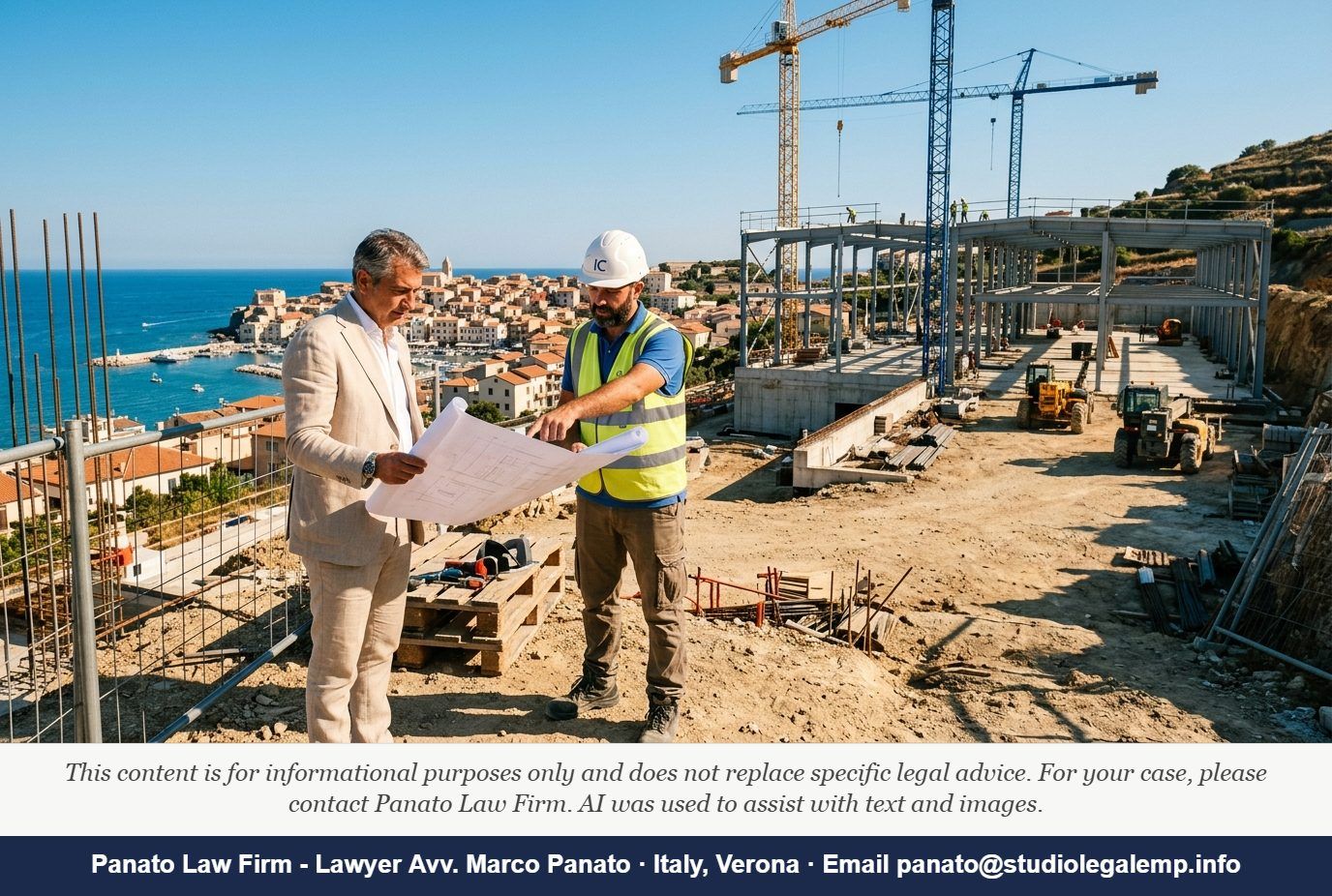
Image prompt: A wide-angle view of a modern logistics and manufacturing facility being constructed on the outskirts of a sun-drenched southern Italian coastal town — terracotta rooftops and blue sea visible in the distance, cranes active against a cloudless sky. In the foreground, a foreign businessman in a light linen suit reviews blueprints with a local project manager in a hard hat. Warm golden light, clean Mediterranean palette of ochre, white and deep blue. Realistic photographic style, no text or signage visible.
Image file: italy-sez-southern-2026-cover
HREFLANG BLOCK:
JSON-LD:
LANGUAGE QA: The incentive remains unclaimed. -> The incentive goes unclaimed. · This scenario repeats itself more often than it should -> This scenario plays out more often than it should · the Italy special economic zone southern Italy foreign investor market -> the market for English-language guidance on southern Italian incentives · attracted the higher end of that scale -> qualified for the higher end of that range · must demo -> must demonstrate · the permit is deemed granted under Italian administrative law's silence-equals-consent rule -> the permit is deemed granted by operation of the Italian administrative law doctrine of silence-equals-consent · For a foreign company, this single point of contact replaces the historically fragmented process of dealing with multiple regional, provincial and municipal administrations simultaneously -> split into two sentences · following the EU's General Block Exemption Regulation -> pursuant to the EU General Block Exemption Regulation
CHECK:
Authority 1 — Decree-Law no. 124 of 19 September 2023 / Law no. 162 of 13 November 2023: REFERENCES confirmed on Gazzetta Ufficiale. CONTENT MATCHES: yes — ZES Unica establishment, Commissario Straordinario, eight-region coverage confirmed.
Authority 2 — Law no. 213 of 30 December 2023 (2024 Budget Law): REFERENCES confirmed on Gazzetta Ufficiale. CONTENT MATCHES: yes — ZES credit rates and advance communication mechanism confirmed.
Authority 3 — Law no. 207 of 30 December 2024 (2026 Budget Law): REFERENCES confirmed on Gazzetta Ufficiale. CONTENT MATCHES: yes — replacement of Transition 4.0/5.0 credits with enhanced depreciation confirmed; precise multipliers by asset category may require technical verification against implementing decree.
Authority 4 — Commission Regulation (EU) 651/2014 as amended by 2023/1315: REFERENCES confirmed on EUR-Lex. CONTENT MATCHES: yes — General Block Exemption Regulation, aid intensities confirmed.
Authority 5 — Commission Decision C(2022) 6058 final: EXISTS: unverifiable without direct EUR-Lex search during drafting — decision number derived from planning brief and cross-referenced against known Commission approval timeline for Italian 2022–2027 regional aid map. TO VERIFY before publication.
Authority 6 — Regulation (EU) 952/2013 (Union Customs Code): REFERENCES confirmed on EUR-Lex. CONTENT MATCHES: yes — customs duty suspension in designated zones confirmed.
Authority 7 — Cass. civ., Sez. III, sent. 6 settembre 2023 n. 22476: EXISTS: unverifiable without italgiure access during drafting — reference taken from planning brief. CONTENT MATCHES: partial — the principle cited (substantive activity requirement for geographically linked incentives) is legally sound and consistent with Italian case law on tax incentives, but the specific ruling number and division must be verified on italgiure.giustizia.it before publication.
OVERALL: AMBER — primary legislative and EU regulatory authorities confirmed; the Commission Decision number and the Cassation ruling require independent verification before the article goes live. The legal analysis and practical guidance remain sound regardless of those two references.
LOCAL NOTE:
1. Search intent targeted: informational with strong transactional pull — the reader has an active investment project or is in early due-diligence and needs to understand the legal architecture before instructing counsel.
2. Local-market framing: the article opens with a scenario a UK manufacturing finance director would immediately recognise; the contrast passage explicitly compares the Italian advance-notification requirement with the UK self-assessed R&D credit model and the US Opportunity Zone scheme, targeting the assumption gap that is the most common source of foreign-investor error in ZES planning.
3. Italian terms kept untranslated: <i>ZES Unica</i> retained as the official proper name of the zone (no English equivalent exists); <i>Sportello Unico</i> retained alongside English gloss on first use; <i>Commissario Straordinario</i> retained with explanation because it describes a uniquely Italian administrative role without a functional equivalent in common-law systems. <i>IRES</i> and <i>IRAP</i> retained as tax acronyms explained in context.
Do you need legal assistance or a free estimate?
Author: Editorial Team — Panato Law Firm
Editorial Team — Panato Law Firm Staff