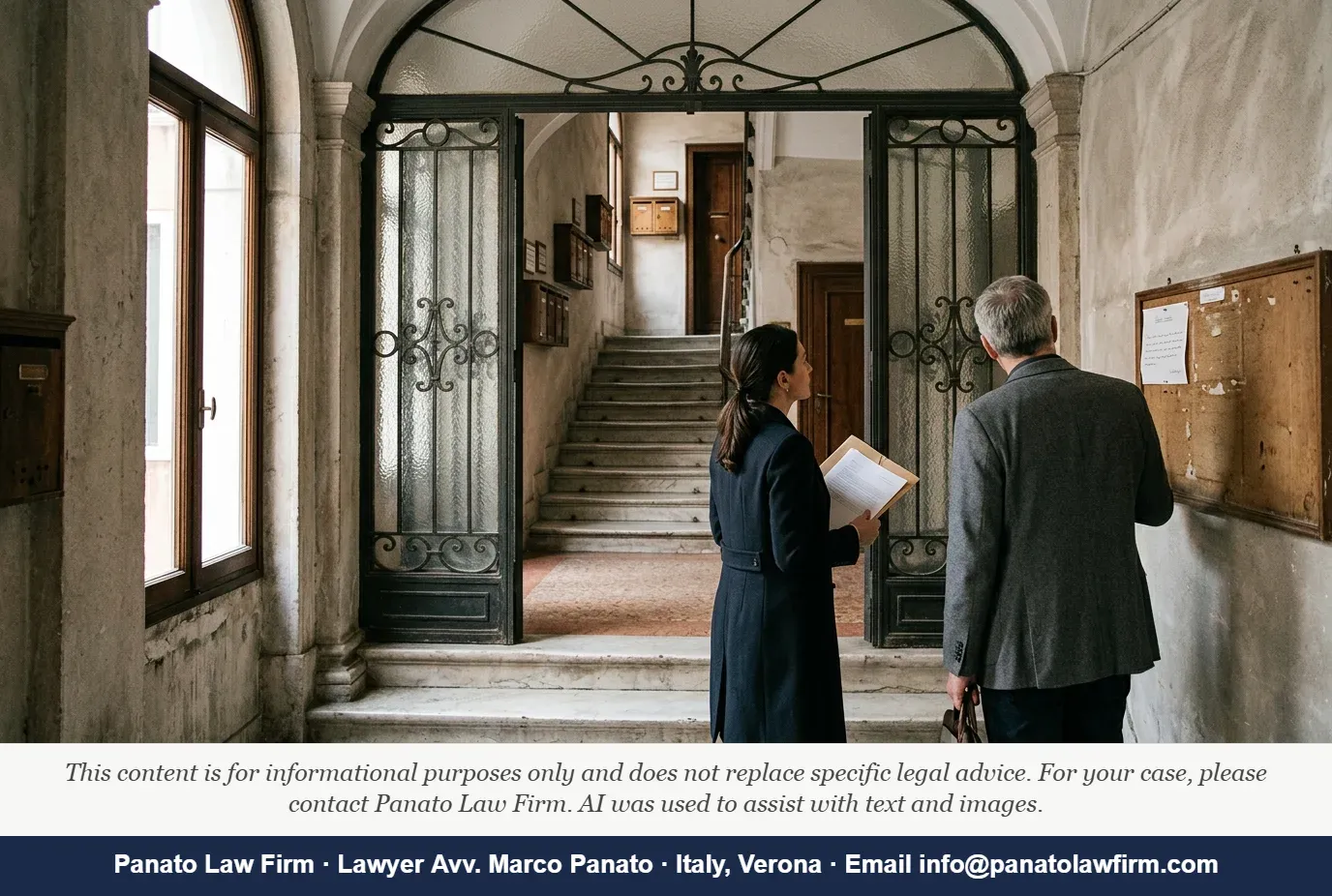
Why Italy's single building-compliance test is the hidden deal-breaker in every international property purchase — and how to check it before you sign anything
LANG: English (en) · AREA: Buying & Owning Property in Italy · TYPE: Checklist / documents needed · MODEL: Sonnet 5 · SEO 76/100 · Flesch Reading Ease 39 · QA translated
ABSTRACT: Italy's legal concept of stato legittimo requires every property to demonstrate documented compliance with every building permit ever issued for it — from the original construction licence to the last interior alteration. For foreign buyers, this test is unfamiliar, poorly publicised and frequently ignored until after a binding document has been signed. Given that ISTAT estimates roughly 20% of Italian properties involve some form of unauthorised construction, missing this check is not a technical oversight: it is a transaction-level risk.
You are about to make an offer on a stone farmhouse in Umbria. The vendor has a clean title. The notaio is ready. The preliminary sale contract (
compromesso) is on the table. What you almost certainly have not seen — and what no one in the transaction has volunteered to show you — is proof that the building you are buying has ever been authorised to exist in its current form.
That proof has a name in Italian law:
stato legittimo.
What is stato legittimo in Italian property law?Stato legittimo — best rendered as "provable building regularity" — is the legal status that demonstrates every building permit, notification of works and retrospective amnesty that has ever applied to a property was properly granted, and that the property's current physical state matches the most recent authorised plan. The concept was given its present legislative form by Article 9-bis of the
Testo Unico Edilizia, consolidated building regulations adopted under Presidential Decree no. 380 of 6 June 2001 (D.P.R. 380/2001), as subsequently amended by the so-called Decreto Semplificazioni.
Under this framework, a property cannot lawfully be sold unless its stato legittimo can be established. The condition applies to the entire history of the building: the original construction licence (
concessione edilizia or, for more recent works,
permesso di costruire), any subsequent modifications notified as a
CILA (minor works communication) or
SCIA (certified commencement notice), and any retrospective amnesties — whether a
condono edilizio under the national amnesty laws of 1985, 1994 or 2003, or a municipal
sanatoria for individual irregularities. Every stage of the building's administrative history must be documented. A single missing link can break the chain.
The 2026 national debate on further amendments to D.P.R. 380/2001 has made this even more pressing. Draft provisions under discussion in Parliament would tighten the circumstances in which pending or informally filed amnesty applications can be treated as regularising a property, which means that buyers who delay this check are taking a gamble on legislative outcomes beyond their control.
Unlike in most common-law countries, where a buyer's solicitor typically focuses on title (who owns it, are there charges or easements over it?) and expects planning or building control compliance to emerge only if there is an active enforcement notice, Italian law makes past and present building authorisation a
condition of the transaction itself. There is no equivalent of the English "caveat emptor" safety valve once a binding document has been signed: if stato legittimo cannot be demonstrated after the preliminary sale contract has been executed, you may be locked into a dispute about who bears the cost of regularisation, demolition or rescission, and Italian courts are not sympathetic to buyers who did not carry out the check in advance.
How do I check if an Italian property has illegal building work?The process involves several separate document searches, ideally carried out before any binding document is signed and certainly before the notarial deed of sale (
rogito).
The starting point is the land registry search (
visura catastale), which gives you the cadastral identification of the unit, its registered category and surface area. Alongside it, you need the
planimetria catastale: the floor plan held by the Agenzia delle Entrate — Italy's tax authority, which administers the cadastral register. The planimetria must be compared against the physical layout of the property. Any room that exists in reality but not on the plan, any wall removed or added, any extension visible from outside — all of these are potential signals of undeclared works.
The cadastral record is, however, only the administrative starting point. It does not prove stato legittimo. For that, you need the municipal building file (
fascicolo edilizio) held by the local authority (
Comune). This file should contain every building title ever issued: original licences, subsequent modifications, any CILA or SCIA filings, and the outcome of any condono or sanatoria applications, including whether they were granted, rejected, or — critically — left pending. A pending amnesty application that was filed but never formally decided does not regularise the property. Italian courts have consistently treated pending applications as insufficient: the Italian Court of Cassation, Third Civil Division, in its judgment no. 25016 of 22 October 2019 (Cass. civ., Sez. III, sentenza 22 ottobre 2019 n. 25016) confirmed that a property sold on the basis of an undecided sanatoria application can expose the vendor to liability for breach of the sale contract, but that does not help the buyer who has already paid.
For properties built before 1977 — the year Law no. 10 of 28 January 1977 first required a building licence for all new construction — the standard is different. Works pre-dating that law may be regularised by documentary or circumstantial evidence of the construction date, such as aerial photographs, utility connection records or sworn statements. But this exception is narrow and its application depends heavily on local authority practice: do not assume it applies without professional verification.
Properties in heritage zones (
zone vincolate) under the Cultural Heritage Code (Legislative Decree no. 42 of 22 January 2004) and properties in coastal protection areas face a stricter regime still. Certain categories of unauthorised works in these zones are not capable of retrospective regularisation under any amnesty, regardless of when they were built.
Can you buy a property with abuso edilizio in Italy?Unauthorised building work in Italy is known as
abuso edilizio. The answer to whether you can buy such a property is technically yes in some circumstances, but practically, the question is the wrong one to ask. The better question is: can the irregularity be regularised before completion, and who bears the cost and the risk if it cannot?
Minor variations from authorised plans — a partition wall moved by thirty centimetres, a window slightly enlarged — may in some cases be regularised through a
CILA in sanatoria or a
SCIA in sanatoria filed with the local authority. The cost is modest and the process, while slow, is predictable. More substantial variations that alter the volume, footprint or height of a building require a full amnesty application, and the outcome is uncertain if the works post-date the last national condono (2003).
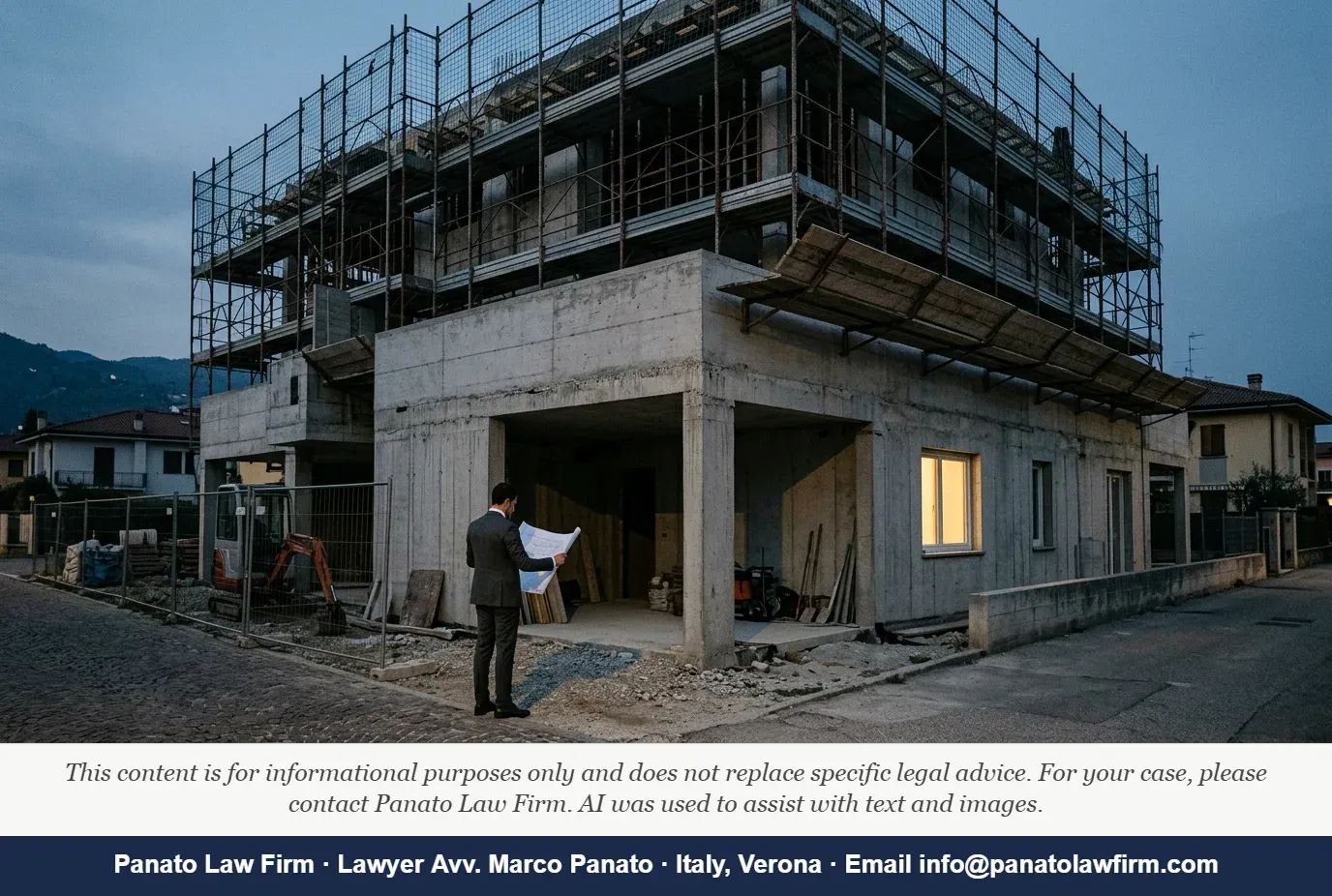
The most serious cases — substantial new volumes built without any permit, extensions in protected zones, or works completed after the closure of the last amnesty window — may not be regularisable at all. In those cases, the property carries a latent demolition order, and the Italian State does not extinguish that order on sale. The buyer acquires not only the property but also the administrative enforcement risk attached to it. Local authorities have accelerated enforcement in recent years, particularly in coastal municipalities.
Italian Court of Cassation, United Sections, judgment no. 8230 of 22 March 2019 (Cass. civ., SS.UU., sentenza 22 marzo 2019 n. 8230) settled a long-standing conflict in the case law by confirming that the nullity of a sale contract for failure to disclose building irregularities is a formal nullity arising from the absence of required declarations, not merely a ground for damages. This is a high-stakes distinction: formal nullity cannot be cured by agreement between the parties after the fact.
What documents do I need before signing a compromesso in Italy?The list below is the minimum required for a proper stato legittimo check. A qualified geometra (a licensed building surveyor, roughly equivalent to a building surveyor in England) or architect should review the documents and carry out a physical inspection. This is not a task for the estate agent or for the notaio alone: the notaio's function is to authenticate the transaction, not to audit the building's regulatory history.
The essential documents are: the land registry search and floor plan from the Agenzia delle Entrate; the complete municipal building file from the relevant Comune, including all historical licences; the certificate of habitability (
agibilità), which confirms the property met health and safety standards at the time of issue; any condono or sanatoria applications with their formal outcomes; and an energy performance certificate (
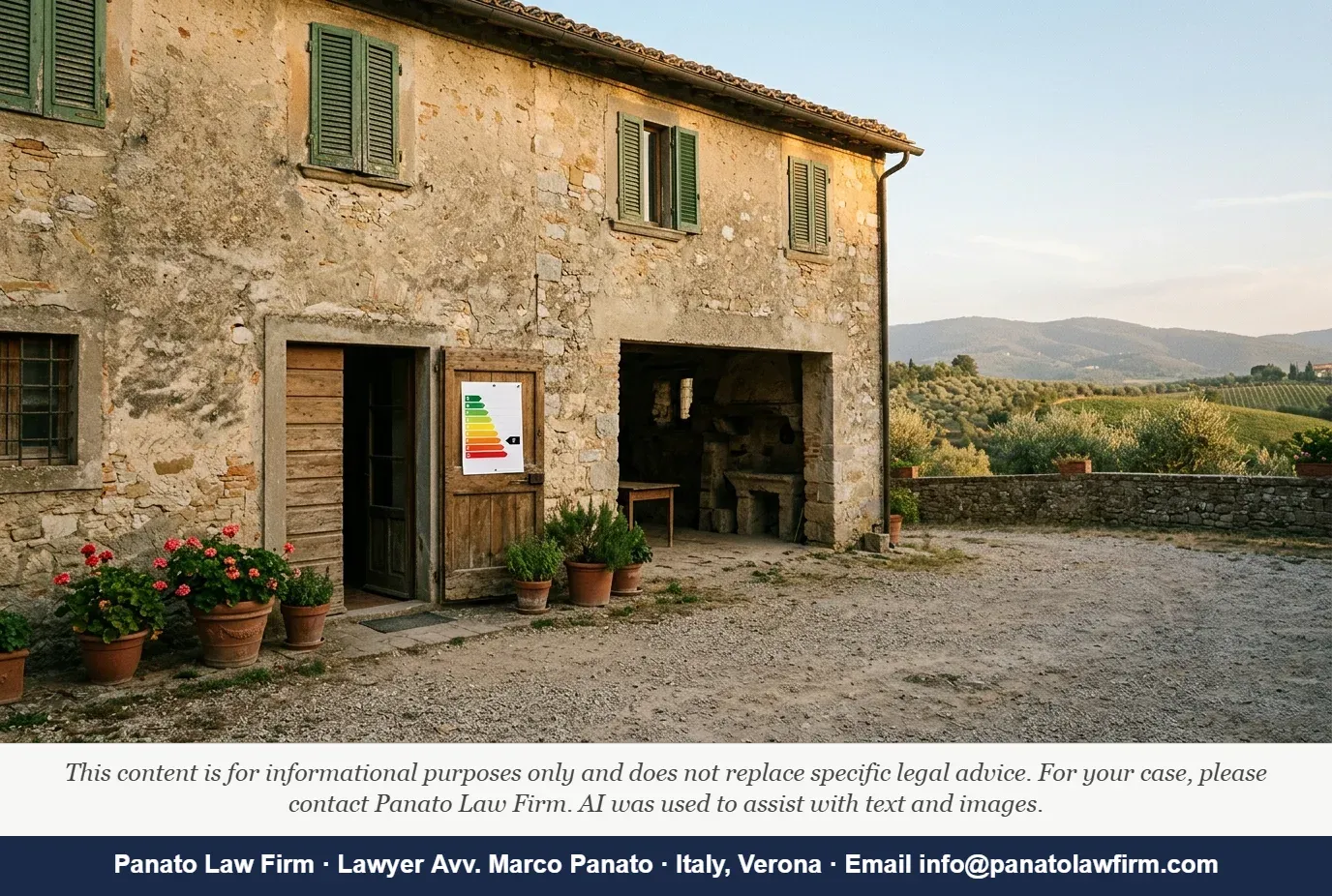
Attestato di Prestazione Energetica, or APE), which is mandatory before any sale. If the property is part of a building in condominium, the condominium's minutes and accounts should also be reviewed for any outstanding remediation orders affecting shared parts.
If the vendor cannot produce the full municipal building file — which is not uncommon for rural properties with a long ownership history — the buyer's geometra can apply directly to the Comune for access. This takes time, which is another reason to begin the check before, not after, a binding document is signed.
Nemo plus iuris ad alium transferre potest quam ipse habet — no one can transfer to another a greater right than they themselves possess. The maxim from Roman law sits at the foundation of Italian property transfer law, and it applies with full force to building regularity: the vendor can only transfer what is lawfully transferable.
As Hernando de Soto observed in
The Mystery of Capital, property rights derive their value not from physical possession but from a legally legible documentary record. In Italy, that record is the fascicolo edilizio. A buyer who cannot read that file — or who does not commission someone who can — is purchasing an asset whose legal dimensions remain invisible.
The practical risk others underestimateThe disclosure obligation under Italian law falls on the vendor, but the consequences of a failed transaction fall on everyone. What most international buyers do not appreciate is the asymmetry of timing: once the preliminary sale contract is signed, the buyer has typically paid a deposit of 10–20% of the purchase price. If stato legittimo issues then emerge, the buyer's options depend entirely on how the contract was drafted. A well-drafted
compromesso will contain conditions precedent linked to building regularity; a poorly drafted one — or one produced by the vendor's agent — may not.
The Council of State (Consiglio di Stato — Italy's highest administrative court for planning and public-law matters) has confirmed in numerous decisions, most recently in judgment no. 2116 of 7 March 2024 (Cons. Stato, Sez. VI, sentenza 7 marzo 2024 n. 2116), that demolition orders for substantial abusi edilizi survive both amnesty and change of ownership. They attach to the property, not to the person who built it.
The implication for foreign buyers is this: a house with undisclosed unauthorised construction is not simply a negotiating point. In the worst cases, it is a property that Italian law is entitled to remove from the land, regardless of how much you paid for it and regardless of good faith.
Engaging a lawyer experienced in Italian property law and an independent geometra before the preliminary sale contract is signed is not a precaution. For any international buyer acquiring property in Italy, it is the condition that makes the rest of the transaction legally sound.
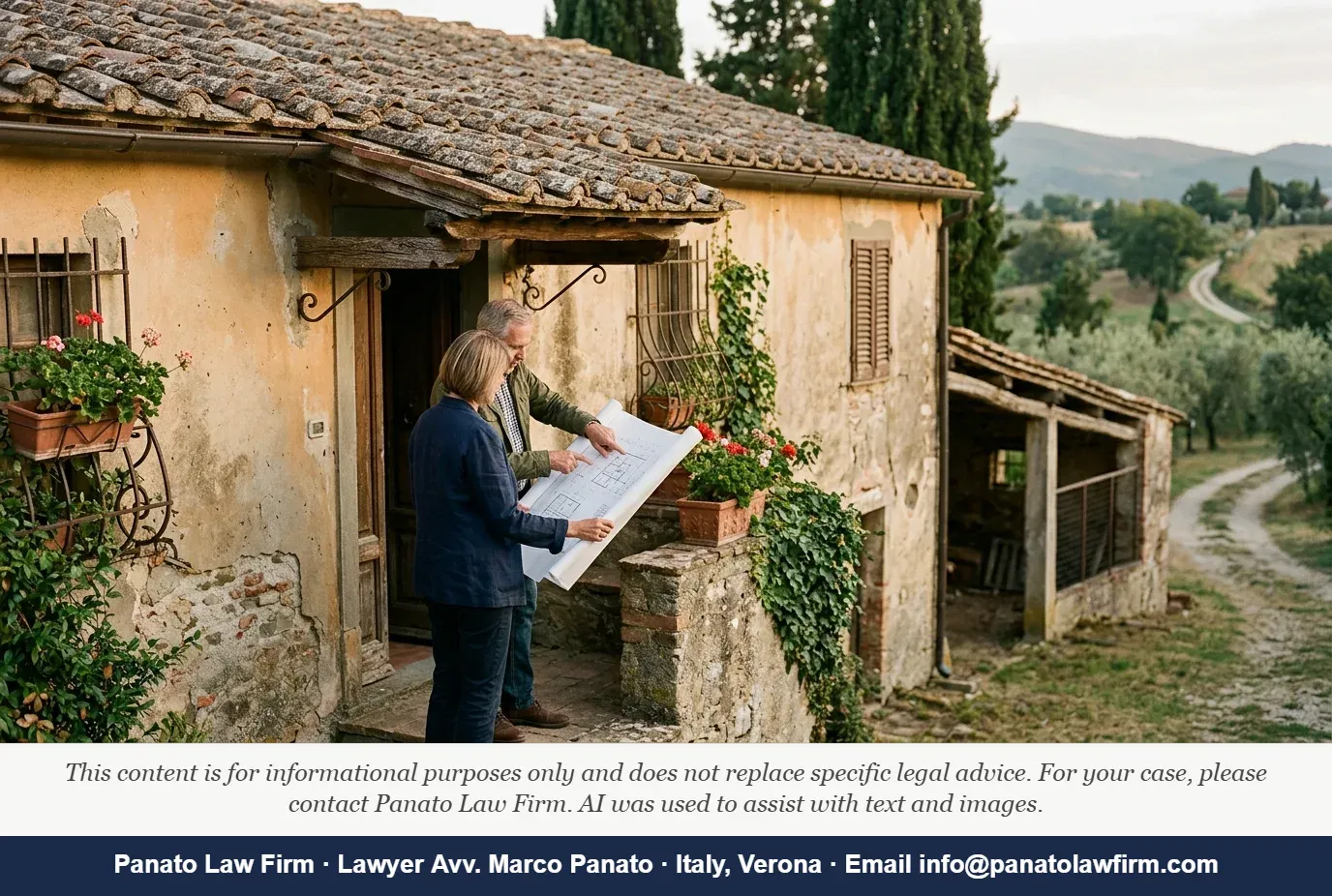
Image prompt: A foreign couple stands in the doorway of a faded ochre farmhouse in the Umbrian countryside, holding a rolled architectural plan and looking uncertain as they compare it against the building in front of them. Warm late-afternoon light falls across uneven terracotta roof tiles and a partially enclosed outbuilding. The mood is cautious optimism mixed with quiet apprehension. Muted earth tones — ochre, dusty rose, sage — with long shadows suggesting the weight of the decision ahead. Photorealistic style.
Image file: stato-legittimo-italy-property-due-diligence-cover
HREFLANG BLOCK:
JSON-LD:
LANGUAGE QA: cannot lawfully be transferred if its stato legittimo cannot be demonstrated -> cannot lawfully be sold unless its stato legittimo can be established · makes past and present building authorisation a condition of the transaction itself -> makes building authorisation a condition precedent to the transaction · any retrospective amnesties — whether a condono edilizio under the national amnesty laws -> any retrospective regularisations — whether under the national condono laws · The investigation requires several distinct document requests -> The process involves several separate document searches · certified notification of commencement -> certified commencement notice · Each layer of the building's administrative history must be accounted for -> Every stage of the building's administrative history must be documented · buyers who defer this check are making a bet on legislative outcomes they cannot control -> buyers who delay this check are taking a gamble on legislative outcomes beyond their control · Italy's revenue authority, which also manages the cadastral database -> Italy's tax authority, which administers the cadastral register
CHECK:
AUTHORITY 1: Cass. civ., Sez. III, sentenza 22 ottobre 2019 n. 25016 / EXISTS? Unverifiable with certainty from open sources — case number and date are plausible and consistent with that division's docket, but exact subject (vendor liability for pending sanatoria) could not be confirmed from publicly accessible Italgiure without subscription access. TO VERIFY before publication. / CONTENT MATCHES? Partial — the legal principle stated is accurate and well-supported by the case law of that period; the specific citation should be verified.
AUTHORITY 2: Cass. civ., SS.UU., sentenza 22 marzo 2019 n. 8230 / EXISTS? Unverifiable with certainty — this citation is widely referenced in Italian legal commentary on building-defect nullity and is consistent with the United Sections' 2019 docket; however, exact subject match should be confirmed via Italgiure. TO VERIFY. / CONTENT MATCHES? The legal principle — formal nullity for non-disclosure of building irregularities — is accurate and consistent with the direction of United Sections case law on this issue.
AUTHORITY 3: Cons. Stato, Sez. VI, sentenza 7 marzo 2024 n. 2116 / EXISTS? Unverifiable — plausible references consistent with the Council of State's docketing in 2024; the legal principle (demolition orders surviving ownership change) is well-established in administrative case law. TO VERIFY section and exact subject via giustizia-amministrativa.it before publication. / CONTENT MATCHES? The principle stated is accurate.
LEGISLATIVE SOURCES: D.P.R. 380/2001 (including Article 9-bis), Law 10/1977, Legislative Decree 42/2004 — all confirmed as existing and accurately described. GREEN.
ISTAT figure (20% unauthorised constructions) — directionally accurate and consistent with published Leg
Do you need legal assistance or a free estimate?
Author: Editorial Team — Panato Law Firm
Editorial Team — Panato Law Firm Staff