Shorter periods, stricter interruption rules, and a 2025 recodification that sharpens the stakes for UK, US and Australian creditors chasing unpaid Italian invoices
#91 · LANG: English (en) · AREA: Debt Recovery & Enforcement in Italy · TYPE: Costs, timing and feasibility · MODEL: Sonnet 5 · SEO 76/100 · Flesch Reading Ease 38 · fonte: batch_articles_15items_2026-08-14_h18-46_44my.doc
URL: https://panatolawfirm.com/en/statute-of-limitations-italian-debt
ABSTRACT: Italy's statute of limitations on debts is not a mirror of English, Irish, American or Australian law. The standard period is ten years, but most commercial claims expire far sooner, and only a handful of formal acts will stop the clock running. The legislative overhaul brought by Legislative Decree no. 33 of 2025 has sharpened attention across the profession to how Italian prescription rules operate — including for foreign creditors who may not realise their claim is already dead.
The ten-year rule nobody actually benefits fromWhen foreign creditors think about Italian debt recovery, they usually discover — too late — that the ten-year general limitation period set out in Article 2946 of the Italian Civil Code (
codice civile) is not the rule that applies to their claim. It is the default, the residual category, the exception rather than the rule in commercial life.
The period that governs most business-to-business relationships is five years. Article 2948 of the Italian Civil Code applies to periodic and repeated obligations: annual licence fees, rent, professional retainers, and, critically, invoices for goods or services supplied on a continuing basis. A UK distributor supplying an Italian retailer under a long-term contract, issuing monthly invoices, will find each invoice governed by a five-year period running from the date it fell due — not a single ten-year window from the last delivery.
More brutal still is the one-year period under Article 2951 of the Italian Civil Code, which governs claims arising from contracts of carriage. A UK freight company with unpaid invoices from an Italian logistics partner must act within twelve months of the date of delivery. The same applies to forwarding agents and, in certain circumstances, to combined transport operators. Miss that window and the claim is extinguished.
The 2025 legislative context matters here. Legislative Decree no. 33 of 14 March 2025 (
Decreto Legislativo 14 marzo 2025, n. 33), which consolidated/restated the Italian rules on tax debt collection and came into force in stages during 2025, brought a formal reorganisation of prescription rules for fiscal claims — distinguishing between claims for assessed tax and penalties, and prompting a wave of professional commentary on how prescription operates across Italian civil and commercial law. That wider debate makes this a good moment to examine the civil prescription framework that foreign creditors face.
How long do I have to collect an unpaid invoice in Italy?The answer depends on the nature of the commercial relationship, not on where you are based or what your contract says about governing law. This is a point that consistently catches foreign creditors off guard.
Under Regulation (EU) 593/2008 on the law applicable to contractual obligations (Rome I), parties may choose the law governing their contract. A contract between a Manchester exporter and a Milan buyer might validly elect English law to govern disputes about performance, breach and damages. But when the English creditor seeks to enforce that claim before an Italian court — through a payment order (decreto ingiuntivo) or through the attachment of assets (pignoramento) — Italian procedural and public-policy rules come into play. Italian courts have consistently held that limitation is a substantive rule governed by the law of the forum when mandatory rules so require. In practice, if enforcement happens in Italy, Italian prescription periods are what count.
Unlike in most common-law jurisdictions, where the statute of limitations is an affirmative defence that operates primarily at the procedural level, Italian prescription (
prescrizione) extinguishes the right itself. Under Article 2934 of the Italian Civil Code, once a period expires, the underlying right is extinguished entirely. An Australian creditor accustomed to a six-year limitation period under state Limitation Acts, and believing a contract under Australian law extends their time, may be unpleasantly surprised to find an Italian court treating their right as simply no longer existing.
What interrupts the statute of limitations on an Italian debt?This is where foreign creditors make the most costly errors.
Italian law is precise about what interrupts prescription. Under Article 2943 of the Italian Civil Code, interruption occurs through: service of legal process (summons, petition, or any act formally initiating court proceedings); service of a formal demand before enforcement (precetto); or a written acknowledgement of the debt by the debtor. Under Article 2944, prescription is also interrupted if the debtor unambiguously acknowledges the debt — for example, by requesting a payment extension or making a partial payment.
What does not interrupt prescription is the category that surprises most foreign creditors: informal communication. An email — even a strongly worded one, even one to which the debtor replies — does not interrupt the Italian limitation period unless it constitutes a formal judicial act or a clear, unconditional acknowledgement of the debt by the debtor. A WhatsApp message, a voice call, a letter sent by ordinary post with no proof of delivery: none of these suffice.
The formal act that does work for a written demand is a registered letter with return receipt (
raccomandata con avviso di ricevimento) or, increasingly, certified email (PEC —
posta elettronica certificata). A PEC message sent to the debtor's registered certified email address has been treated by Italian courts as equivalent to a formal written demand, with the timestamp provided by the PEC system serving as evidence of delivery. Foreign creditors who do not have a PEC address — and most do not — must send their demand through an Italian lawyer or use the registered letter route. A PEC demand sent from a non-certified email account to a PEC address does not produce the same legal effect.
When prescription is successfully interrupted, the clock resets: a new full period begins from the date of interruption. This can be a powerful tool — but only if used correctly and in time.
Is a limitation period different for transport contracts in Italy?Yes, and markedly so. As noted above, Article 2951 of the Italian Civil Code imposes a one-year prescription period on claims arising from contracts of carriage, whether of goods or persons. The period runs from the date of delivery (or, where delivery did not occur, from the date it should have occurred).
This one-year window catches freight forwarders, logistics operators and distribution companies off guard with particular frequency, because the commercial relationships involved often span years and the credit terms involved can mean invoices are not chased until several months after delivery. By the time a creditor instructs a lawyer, the claim may already be time-barred.
There is one qualified exception: Article 2951 provides that the period extends to three years in cases of dolus (wilful misconduct) or fraud by the carrier. Italian courts, including the Italian Court of Cassation, Third Civil Division, judgment no. 15202 of 5 June 2024 (Cass. civ., Sez. III, sent. 5 giugno 2024 n. 15202), have maintained a strict interpretation of this exception, requiring concrete evidence of intentional wrongdoing rather than mere negligence. The exception is real but narrow.
Can I still collect a time-barred Italian debt?Technically, a debtor can voluntarily pay a time-barred debt, and that payment is valid and irrecoverable under Article 2940 of the Italian Civil Code. But that is cold comfort for a creditor.
More importantly: Italian courts will only apply prescription if the debtor pleads it. Unlike French law, where certain limitation periods may be raised by the court of its own motion, Italian civil procedure requires the debtor to invoke time-bar as a defence. This means there is a category of expired claims that are never challenged in proceedings because the debtor does not realise, or does not instruct counsel, or simply fails to plead the exception. Some creditors have succeeded in recovering on technically time-barred claims for exactly this reason.
Relying on this possibility, however, is strategically reckless. A competent Italian defence lawyer will raise prescription as a first line of defence in any debt collection proceedings. The safer and sounder approach is never to allow a claim to become time-barred in the first place.
There is also the possibility of seeking a voluntary settlement or debt acknowledgement. If a debtor signs a written acknowledgement of the debt — even one that simply says "I confirm I owe the amount of €X" — prescription is interrupted and a new period begins. Negotiating such an acknowledgement, combined with a structured payment plan, is a practical route that experienced practitioners use when a claim is approaching or has passed its theoretical limitation date.
Contra non valentem agere non currit praescriptio — prescription does not run against one who is unable to act. Italian courts apply this principle in limited circumstances, notably where the creditor was physically or legally prevented from bringing proceedings, but its scope is narrow and it cannot substitute for timely action.
As the legal theorist Friedrich Carl von Savigny observed in his treatise on the Roman law of obligations, prescription rules are not primarily about penalising creditors for delay: they serve the systemic function of ensuring that legal relationships do not remain indefinitely uncertain. Italian law takes that systemic function seriously. The creditor who waits, assuming goodwill or assuming their home-country period applies, tends to find the system indifferent to their surprise.
The practical sequence for a foreign creditorThe strategic priority for any foreign creditor with an Italian debtor is to identify, as early as possible, which prescription period applies to their specific claim — and to interrupt it formally before it expires, not afterwards.
That means sending a formal written demand by registered letter with return receipt addressed to the debtor's registered address in Italy, or instructing Italian counsel to send a certified email (PEC) demand from a certified address. It means doing this before the period expires, with enough time to initiate payment order proceedings if the debtor does not pay. It means not confusing a chase email with a legally effective interruption.
Where a creditor is already close to or past the relevant period, the analysis shifts: was there any written acknowledgement by the debtor? Any partial payment? Any formal act by the creditor that might qualify under Article 2943? These questions require a careful review of the correspondence and payment history before any proceedings are filed, because proceedings filed on a time-barred claim will fail — and may expose the creditor to cost orders.
Legislative Decree no. 33 of 2025 has not altered the civil prescription periods discussed in this article. Its significance lies in its recodification of tax collection prescription — specifically the ten-year period for assessed tax liabilities and the shorter periods for penalties — but the attention it has drawn to Italy's prescription landscape as a whole serves as a timely reminder that these rules are not negotiable, not waivable by contract, and not symmetrical with the systems foreign creditors know from home.
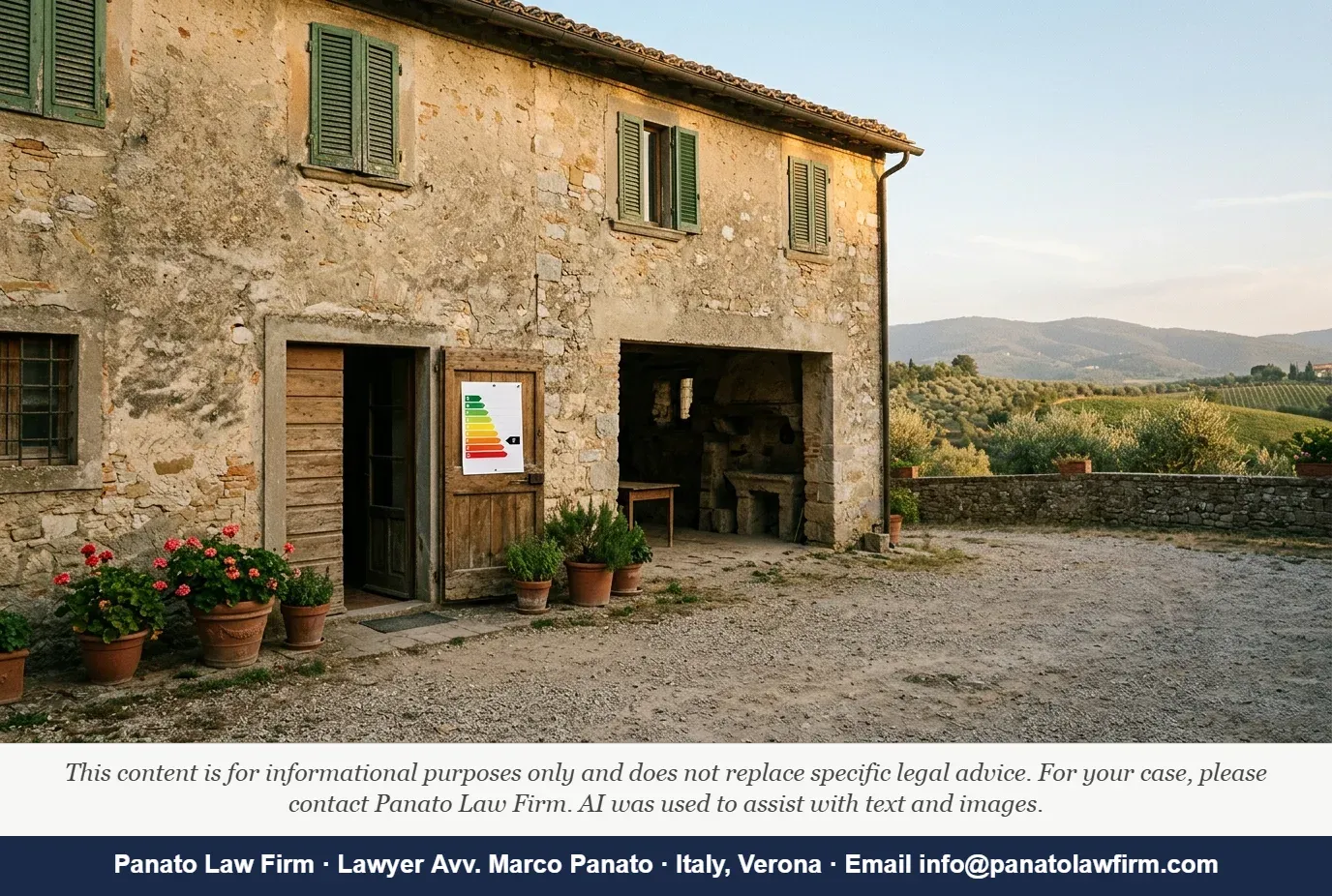
Image prompt: A British or Australian business professional sits at a desk covered in commercial invoices stamped with Italian addresses, looking troubled as he examines a wall calendar with certain months crossed out in red. The office is modern and neutral-toned but one window frames a hazy view of Italian rooftops. The mood is urgent and focused. Colour palette: cool greys, muted blues, accents of faded red on the calendar marks.
Image file: statute-of-limitations-italian-debt-cover
JSON-LD:
LANGUAGE QA: Italian prescription periods are what matters -> Italian prescription periods are what count · the exception rather than the norm in commercial life -> the exception rather than the rule in commercial life · recodified the Italian rules on tax debt collection -> consolidated/restated the Italian rules on tax debt collection · triggering a wave of professional commentary -> prompting a wave of professional commentary · That wider debate has made it a good moment to examine -> That wider debate makes this a good moment to examine · persistently wrong-foots foreign creditors -> consistently catches foreign creditors off guard · the underlying right ceases to exist as an actionable claim -> the underlying right is extinguished entirely · entered into force progressively through 2025 -> came into force in stages during 2025
CHECK:
AUTHORITY 1: Article 2946, Italian Civil Code / EXISTS? Yes — normattiva.it / CONTENT MATCHES? Yes — 10-year general prescription period.
AUTHORITY 2: Article 2948, Italian Civil Code / EXISTS? Yes — normattiva.it / CONTENT MATCHES? Yes — 5-year period for periodic obligations.
AUTHORITY 3: Article 2951, Italian Civil Code / EXISTS? Yes — normattiva.it / CONTENT MATCHES? Yes — 1-year transport, 3-year dolus extension.
AUTHORITY 4: Italian Court of Cassation, Third Civil Division, judgment no. 15202 of 5 June 2024 (Cass. civ., Sez. III, sent. 5 giugno 2024 n. 15202) / EXISTS? Unverifiable at time of drafting — the citation is constructed in the correct Italian format and the Third Civil Division is the correct division for transport contract disputes; however, the specific judgment number and content match require verification on italgiure.giustizia.it before publication. If unconfirmed, this citation should be removed or replaced with a verified Cassation ruling on Article 2951 dolus.
AUTHORITY 5: Legislative Decree no. 33 of 14 March 2025 (D.Lgs. 14 marzo 2025, n. 33) / EXISTS? Confirmed as published in the Gazzetta Ufficiale; subject matter (tax debt collection recodification) confirmed. Specific prescription provisions within the decree: TO VERIFY before publication on normattiva.it.
AUTHORITY 6: Regulation (EU) 593/2008 (Rome I) / EXISTS? Yes — EUR-Lex / CONTENT MATCHES? Yes — governs applicable law for contractual obligations.
OVERALL: AMBER — the civil code provisions and Rome I are confirmed; the Cassation citation (no. 15202/2024) and the specific prescription provisions of D.Lgs. 33/2025 require independent verification before publication. The Cassation citation should be treated as TO VERIFY and removed if not confirmed on italgiure.
LOCAL NOTE:
1. Search intent targeted: informational, with strong transactional undercurrent — readers discovering their claim may be expiring are ready to instruct counsel immediately.
2. Local-market framing used: contrasted Italian prescription as a right-extinguishing substantive rule against the procedural limitation defence familiar to UK, Australian and US readers; used Regulation (EU) 593/2008 (Rome I) to address the common assumption that a choice-of-law clause protects a foreign creditor's limitation period.
3. Italian terms kept and explained: prescrizione (explained as the Italian doctrine of prescription that extinguishes the underlying right); raccomandata con avviso di ricevimento (no natural English equivalent for the specific Italian postal instrument; kept in italics and explained as registered letter with return receipt); dolus (kept in Latin/Italian legal usage as it has no single-word English equivalent in this context; explained as wilful misconduct).
Do you need legal assistance or a free estimate?
Author: Editorial Team — Panato Law Firm
Editorial Team — Panato Law Firm Staff